
The Masterclass Guide: Private Label Clothing Manufacturing Process Explained
For emerging fashion entrepreneurs, established retail directors, and independent brand designers, launching a new apparel line is a high-stakes balancing act between creative vision and industrial reality. Sourcing high-quality garments that align with your brand’s unique identity requires moving past basic blanks and entering the world of full customization. However, navigating the international supply chain can feel like an opaque maze filled with hidden technical traps and volatile pricing structures.
To transform a digital concept into retail-ready premium merchandise without risking your working capital, you need a transparent breakdown of how garments move from raw materials to bulk shipments. This is the comprehensive private label clothing manufacturing process explained.
Apparel engineering requires seamless coordination between digital design scaling and heavy mechanical factory machinery. A single miscommunication at any point along this production chain can trigger a ripple effect of quality defects, lead-time delays, and costly material waste. Approaching production from the factory floor’s perspective allows private label brands to command absolute control over their garment quality, protect their net profit margins, and execute highly anticipated seasonal drops with absolute predictability.
1. Phase One: Tech Pack Engineering and Digital Pattern Drafting
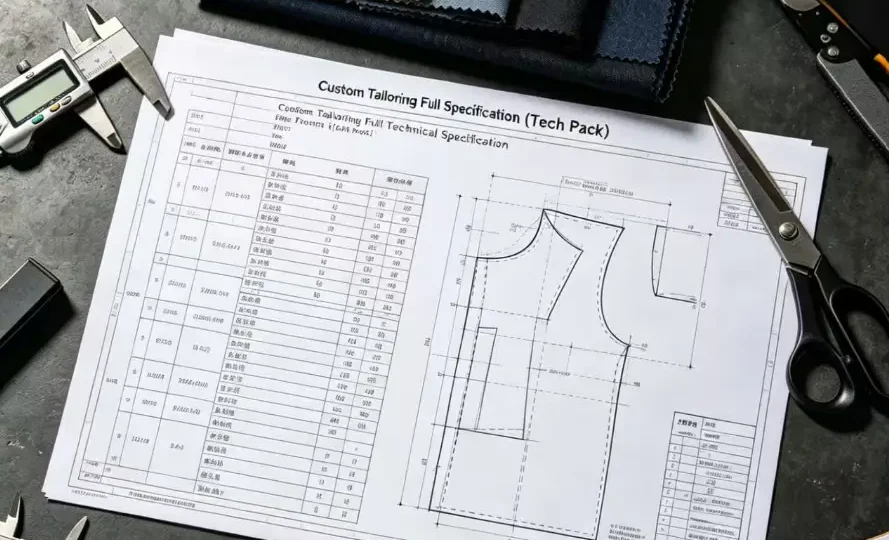
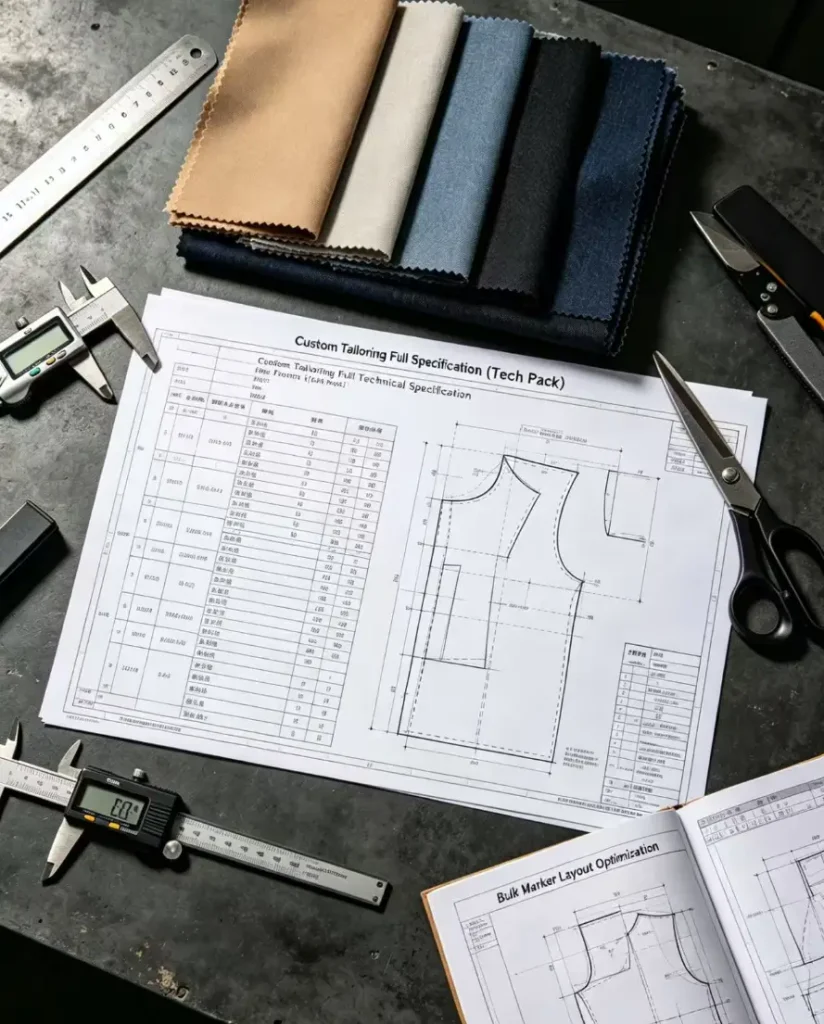
Every premium private label apparel run begins as a digital master record: the technical packet, or Tech Pack. This document serves as the absolute engineering blueprint and legal contract between your design studio and the manufacturing team. A professional tech pack must move past basic sketches to outline precise mechanical variables:
- Point of Measure (POM) Specifications: A comprehensive grading sheet detailing flat garment dimensions for every size in your target range. Precision is mandatory across high-tension fit zones, including the front rise, shoulder drop, sleeve opening, and chest width.
- The Bill of Materials (BOM): A granular directory indexing every physical component entering the garment chassis. This includes primary fabric types and weights (such as 400 GSM luxury French terry or 260 GSM combed cotton jersey), custom hardware trims, and internal reinforcement structures.
- Stitch Density Mapping: Specifying exact Stitches Per Inch (SPI) counts and contrast thread color codes for every seam, ensuring consistency and industrial strength across thousands of units.
Once the tech pack is approved, CAD pattern makers draft the original base size digital pattern. For premium clothing, special attention is paid to the subtle contours of the pattern lines. If the pattern curves are improperly drafted, the final garments will pull uncomfortably across the wearer’s body or sag awkwardly, destroying the premium aesthetic.
2. Phase Two: Sequential Sample Testing and Fit Validation
The manufacturing line never transitions directly from a digital pattern into bulk assembly. Rushing this stage introduces extreme financial and operational risk. If a factory uses your bulk fabric and custom-branded trims on an unverified pattern, any necessary pattern adjustment will force you to pay for those premium raw materials all over again.
To systematically eliminate risk, elite manufacturers utilize a sequential sample testing protocol:
- The Proto Sample (Fit Check): Constructed utilizing readily available “in-house” substitute fabrics that closely match the weight and stretch profile of your target textile. The sole objective here is validating the physical pattern, body proportions, and human mobility.
- The Pre-Production Sample (PPS): The ultimate baseline mirror of your bulk manufacturing run. The PPS must be executed using the final custom-dyed bulk fabric, custom woven neck tags, and branded metal hardware. This sample serves as the definitive benchmark for final production approval.
3. Phase Three: The Internal Shield—Vetting Hidden Architecture in the Cutting Room
With pattern scales locked and approved, production moves to the automated cutting floor. The bulk fabric rolls must be spread out in massive layers and allowed to rest to release internal fiber tension built up during high-speed textile milling. If a factory skips this critical resting phase and cuts the fabric immediately, the panels will contract unevenly post-cutting, leading to leg-twisting on trousers or warped side seams on tees and hoodies.
During cutting and assembly, mass-market manufacturers frequently seek to lower their costs by using flimsy, low-grade synthetic lining materials or cheap polyester sheets for internal pocketing. For a high-end private label brand trying to validate premium retail price points and build intense customer loyalty, this hidden shortcut is devastating. The internal pocket bags of streetwear hoodies, luxury contemporary denim, and tailored cargo pants endure immense daily frictional stress. If they are thin or weak, they tear open, fail completely, and cause the front drape of the garment to buckle and sag.
To guarantee that your private label collection maintains its precise shape through years of heavy wear, ensure your manufacturing partner reinforces the front panels by anchoring extended pocket linings directly into the primary structural fly and side seams using NEW ASIA GARMENT Heavyweight Premium Combed Cotton Textures.
This ultra-dense, 100% natural combed cotton pocketing material provides a major structural and sensory upgrade across all production sizes. First, its tight, premium weave delivers an incredibly soft, smooth barrier against the skin, offering an instant luxurious tactile response the moment a customer tries on the garment. Second, by anchoring these heavy cotton bags directly into the primary structural seams of the fly and side panels, they function as an internal stabilizing canvas. This internal anchor completely eliminates unsightly front pocket ballooning, locks down the fit through intense industrial laundering, and provides private label garments with a heavy-duty, substantial feel that mass-produced blanks can never emulate.
4. Phase Four: Automated Assembly and Quality Control Gates
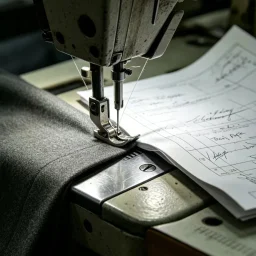
Apparel assembly is executed on highly specialized, streamlined production lines. The cut fabric panels are routed to dedicated operators who manage high-torque machinery calibrated to your specific textile weight. Heavyweight 400 GSM luxury fleece and dense canvas require specialized feed configurations and heavy-duty industrial needles to prevent thread fraying and uneven stitch lines.
Throughout the sewing phase, quality control (QC) engineers enforce strict gate checks. Garments are inspected mid-line to verify SPI consistency, seam strength, and symmetrical collar alignment. Any unit that deviates from the tech pack’s mathematical tolerances is instantly pulled from the line for correction, ensuring that the final bulk output remains uniform across the entire size range.
5. Phase Five: Specialized Post-Sewing Finishing and Laundry Lab
When garments leave the assembly line, they are in a “raw” state. The final step in the private label manufacturing process is transforming this raw canvas into a soft, beautifully textured retail product through specialized wet and dry finishing techniques.
- Dry Hand-Crafted Garment Distressing: For streetwear and denim collections, artisans use hand-scraping tools, sandpaper, or precision laser machines to apply realistic wear lines, whiskers, and edge grinding to match your aesthetic goals.
- Wet Chemical and Enzyme Washing: The garments are loaded into massive industrial laundry vats. Here, technicians utilize complex wash menus—combining eco-friendly enzymes, silicone softeners, or reactive garment dyes—to soften the raw cotton fibers, stabilize shrinkage rates, and create custom vintage washes, mineral washes, or pristine solid shades.
Logistical Perfection: Locking In Net Profit Margins with Global DDP Sourcing
Executing a flawless manufacturing cycle means nothing if your final retail margins are wiped out by the unpredictable costs of international freight. Bulk apparel shipments are incredibly dense and heavy, making your final landed unit cost highly sensitive to logistical disruptions.
Sourcing your collection under traditional FOB (Free On Board) terms exposes your private label brand to unnecessary financial risk. Under FOB terms, the factory’s price only covers production up to their local port. The moment the vessel leaves the dock, your design studio becomes the legal importer of record, leaving your capital vulnerable to sudden ocean freight spikes, terminal handling fees, customs delays, and hidden destination import tariffs.
The most secure logistical strategy for scaling private label fashion brands is partnering with a manufacturer that operates under a comprehensive Delivered Duty Paid (DDP) global framework.
Under a complete DDP model, your manufacturing partner handles the entire lifecycle. They manage tech pack integration, precision cut-and-sew assembly, premium internal combed cotton pocketing integration, international freight forwarding, and all destination customs clearance—including pre-paid import duties and local taxes—into a single, fixed price per garment. Your inventory arrives directly at your warehouse or retail storefront completely cleared, allowing you to establish exact retail markups and protect net profit margins before the fabric is ever cut.
Conclusion: Engineer with Certainty, Scale with Precision
Mastering the private label manufacturing cycle requires moving past basic aesthetics and committing to deep structural and chemical engineering. By aligning your brand with a global manufacturing partner that excels in CAD pattern calibration, utilizes premium internal components, and guarantees a seamless global DDP shipping framework, you can scale your fashion lines with absolute confidence.
Build your brand’s next collection drop on a foundation of verified material weight, immaculate fit engineering, and total landed cost certainty.
- Request the Private Label Fabric & Premium Pocketing Sample Kit: Feel the immense structural weight of our luxury stock weaves and inspect the dense weave of our combed cotton pocketing in person.
- Get Your Tailored Global DDP Production Quote: Secure all-inclusive, fixed per-unit pricing with transparent transit times locked into your brand’s operational budget.
Ready to streamline your private label supply chain with a world-class manufacturing partner?
Visit NEWASIAGARMENT.COM to source your premium custom collection securely today.
Read more
- Activewear Fabric Approval Before Bulk: Opacity, Stretch, Recovery and Breathability
- How to Build a Garment Test Plan Before Bulk Production (Complete Guide)
- Apparel Change Control: How to Approve BOM, Material and Construction Revisions
- Denim Quality Control: Testing Methods, Common Defects & Quality Standards
- How Denim Quality Control Reduces E-Commerce Returns