

Choosing a clothing manufacturer is not just about finding the lowest price per garment. Two factories can quote the same design at very different prices because of differences in fabric quality, sampling, production quantities, packaging, shipping terms, and other charges.
For US apparel brands, the real question is: What will the order actually cost to produce and deliver, and can the manufacturer meet your specifications?
A reliable comparison starts with a standardized tech pack, a clear breakdown of included and excluded costs, and a consistent delivery destination. It also considers minimum order quantities (MOQs), production lead times, payment terms, and quality requirements.
In this guide, you’ll learn how to compare clothing manufacturer quotes, calculate your total apparel manufacturing cost, identify hidden expenses, and choose a supplier based on both price and production requirements.
Looking for a clothing manufacturing quote? Prepare your tech pack, estimated order quantity, fabric requirements, and delivery destination before contacting New Asia Garment’s manufacturing team to discuss your project.
1. Standardize Your Tech Pack Before Requesting Quotes
The first step in comparing clothing manufacturer quotes is making sure every supplier is pricing the same garment.
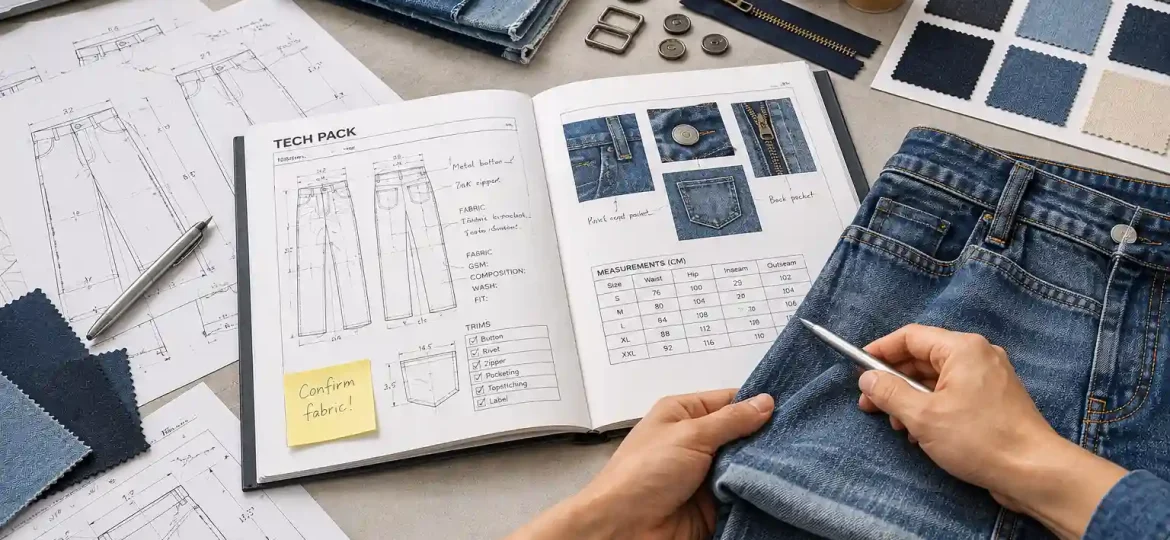
A design sketch alone may not specify enough information for an accurate production quote. Without a detailed technical package, manufacturers may make different assumptions about materials, construction, measurements, and finishing.
Your tech pack should include the following wherever applicable:
| Specification | Details to confirm |
|---|---|
| Fabric | Fiber composition, fabric construction, weight, and finish |
| Garment construction | Fit, measurements, stitching, and construction details |
| Order quantity | Total units and size breakdown |
| Colors | Colorways, color standards, and dyeing requirements |
| Printing and embroidery | Artwork, placement, dimensions, and application method |
| Trims and accessories | Labels, buttons, zippers, drawcords, and other components |
| Washing and finishing | Garment dyeing, washing, distressing, or special finishes |
| Packaging | Folding, hangtags, individual bags, cartons, and labeling |
| Quality requirements | Measurement tolerances, inspection criteria, and testing |
| Delivery | Required destination, delivery schedule, and applicable Incoterm |
Why fabric specifications affect manufacturing costs
A quote for “100% cotton” is not necessarily comparable to another quote for the same fiber composition.
Fabric weight, yarn construction, knitting or weaving method, finishing, and material quality can all affect cost and garment performance.
Ask each manufacturer to confirm the exact material being quoted. If a supplier proposes an alternative fabric, request its specifications and price separately.

Confirm MOQ by style, color, and fabric
A manufacturer may have different minimum order requirements for each style, colorway, or fabric.
For example, a supplier might accept a total order of 1,000 garments but require a minimum allocation for each color. Small production runs may also incur additional setup or material costs.
Ask for the MOQ, available price tiers, and any charges associated with splitting an order across multiple colors or sizes.
2. Check What Is Included in Each Clothing Manufacturing Quote
A lower quoted price may exclude services that another manufacturer includes.
Before comparing prices, request a written breakdown of included, excluded, and unconfirmed items.
Common cost categories include:
- Pattern development and size grading.
- Prototype, fit, size-set, and pre-production samples.
- Additional sample revisions.
- Fabric sourcing and color development.
- Custom labels, trims, and packaging.
- Printing, embroidery, washing, and finishing.
- Laboratory testing and third-party inspection.
- Screens, molds, tooling, and setup fees.
- Freight, insurance, customs clearance, and import charges.
- Bank fees and other transaction costs.
- Agreed rework or replacement arrangements.
Do not automatically treat an unlisted item as free or as an unavoidable extra charge. Ask the supplier to clarify the scope and identify the costs that actually apply to your order.
For example, if Supplier A includes two sample rounds and Supplier B includes one, confirm the cost of any additional sampling you expect to need.
The objective is to compare equivalent offers—not simply to choose the quote with the longest list of included services.
3. Separate Fixed Costs From Per-Unit Manufacturing Costs
Clothing production quotes often combine one-time development expenses with costs that increase according to the number of garments produced.
| Cost category | Typical examples |
|---|---|
| One-time or project costs | Pattern development, initial grading, artwork setup, tooling |
| Quantity-dependent costs | Fabric, sewing, trims, labels, printing, and packaging |
| Potential additional costs | Testing, inspection, extra samples, freight, duties, and transaction fees |
This classification depends on the supplier’s actual quotation. Some costs may be charged per colorway, repeated for new production runs, or included in the quoted unit price.
Avoid double-counting. If the supplier has already included a setup fee in the unit price, do not add that same fee again as a separate charge.
For each item, record whether it is included, charged separately, paid directly to another provider, not required, or still awaiting confirmation.
4. Calculate the Total Cost of Each Apparel Order
The quoted unit price is only one part of the buying decision.
Use this formula to estimate the total cost of a comparable order:
Total order cost = Goods cost + required separate charges + additional delivery and import costs + other required expenses not already included.
Goods cost is generally calculated as:
Goods cost = Quoted unit price × Order quantity
For imported garments, select a consistent comparison destination, such as your designated US warehouse. Then include the applicable costs needed to reach that destination, without adding expenses already covered by the quotation.
Example: Why the lowest unit price may not be the cheapest option
The figures below are hypothetical and are provided for illustration only.
| Cost item | Supplier A | Supplier B |
|---|---|---|
| Order quantity | 1,000 | 1,000 |
| Quoted unit price | $8.00 | $8.70 |
| Goods cost | $8,000 | $8,700 |
| Separate setup fees | $600 | $100 |
| Additional logistics costs | $1,200 | $800 |
| Other required charges | $400 | $300 |
| Total expected order cost | $10,200 | $9,900 |
| Effective cost per purchased unit | $10.20 | $9.90 |
Supplier A offers the lower factory unit price, but Supplier B has the lower estimated total cost under these assumptions.
This comparison is valid only if the garments, specifications, quantities, delivery endpoint, and cost categories are equivalent.
Account for excess inventory
Suppose your brand needs 800 garments, but a manufacturer requires a minimum order of 1,000 units.
Consider both measures:
- Cost per unit purchased: Total order cost ÷ units purchased.
- Cost per unit required: Total order cost ÷ units actually needed.
The second measure helps show the financial impact of buying more stock than the current plan requires.
However, excess units may eventually be sold, discounted, retained for future orders, or written off. Consider your inventory plan before deciding whether a higher MOQ is commercially acceptable.
5. Compare Shipping Terms and Import Costs
International apparel quotes may use Incoterms to allocate specified delivery responsibilities, costs, and risks between the seller and buyer.
Common terms include:
- FCA (Free Carrier): The seller delivers the goods to the carrier or other nominated party at the agreed place, according to the rule’s requirements.
- FOB (Free On Board): The seller delivers the goods on board the vessel at the named port of shipment. FOB is intended for sea and inland waterway transport.
- DAP (Delivered at Place): The seller arranges delivery to the named destination, while the buyer generally handles import clearance and applicable import duties.
- DDP (Delivered Duty Paid): The seller assumes broader delivery and import-related responsibilities under the rule, including applicable duties, subject to the agreed arrangements and applicable law.
Always confirm the named place and the applicable Incoterms version. An Incoterm does not independently determine every payment obligation, product quality requirement, or contractual remedy.
An FOB quotation and a DDP quotation should not be compared by headline price alone. Normalize both offers to the same destination and account for the applicable freight, insurance, customs clearance, duties, and other charges.
For US-bound apparel, verify the applicable tariff classification, country of origin, customs valuation, and import requirements with a qualified customs broker or trade specialist. Import costs can vary according to the product and its origin.
Reference: International Trade Administration — Know Your Incoterms.
6. Calculate the Break-Even Order Quantity
A manufacturer with a lower unit price may charge higher initial setup fees. Another may have a higher unit price but lower fixed costs.
If both offers have stable unit prices and fixed charges over the relevant quantity range, a break-even calculation can help identify when one becomes less expensive than the other.
Let:
- UA = Supplier A’s unit price.
- UB = Supplier B’s unit price.
- FA = Supplier A’s fixed costs.
- FB = Supplier B’s fixed costs.
- Q = Order quantity.
Then:
Supplier A total cost = UA × Q + FA
Supplier B total cost = UB × Q + FB
The break-even quantity is:
Q = (FB − FA) ÷ (UA − UB)
For example, Supplier A charges $5 per garment and $1,000 in fixed costs. Supplier B charges $7 per garment and $100 in fixed costs.
The break-even quantity is:
($1,000 − $100) ÷ ($7 − $5) = 450 garments.
Below 450 garments, Supplier B has the lower modeled cost. Above 450 garments, Supplier A has the lower modeled cost, assuming both suppliers maintain the stated pricing.
If prices change at different order quantities, minimums apply, or shipping costs vary by volume, calculate the actual total cost for each relevant price tier instead.
7. Use a Clothing Manufacturer Quote Comparison Checklist
A standardized worksheet helps you identify differences before committing to production.
A. Specifications and commercial terms
For each supplier, record:
- Fabric composition, weight, and construction.
- Garment measurements and sewing requirements.
- Order quantity and size/color breakdown.
- Washing, printing, embroidery, and finishing.
- Labels, trims, and packaging.
- MOQ and price breaks.
- Sample requirements and approval stages.
- Production lead time and its starting point.
- Incoterm, named place, and version.
- Currency and quotation validity period.
B. Included and excluded services
Record the actual scope of sampling, grading, tooling, testing, inspection, packaging, and other required services.
Instead of writing “sampling included,” specify which samples are included, how many revision rounds are covered, and whether any fees are credited toward a production order.
C. Total order cost
Compare the goods cost, separate charges, delivery costs, applicable import expenses, and other required costs.
Use the same destination and currency for each supplier. If a charge remains unknown, mark it as pending confirmation instead of entering zero.
Download or request your supplier quote comparison checklist to organize these details before your next production order.
8. Evaluate Lead Times, Payment Terms, and Quality Risks
The lowest total cost does not automatically make a supplier the right choice.
Production lead time
Ask when the production lead time begins. Thirty days after pre-production sample approval is different from thirty days after purchase-order confirmation.
Confirm whether the estimate includes material procurement, sample approval, testing, production, and shipment preparation.
Payment terms and cash flow
Compare deposits, balance payment milestones, currency, and payment deadlines.
A lower-priced order may still place greater pressure on your cash flow if it requires a larger advance payment.
Quality and rework responsibilities
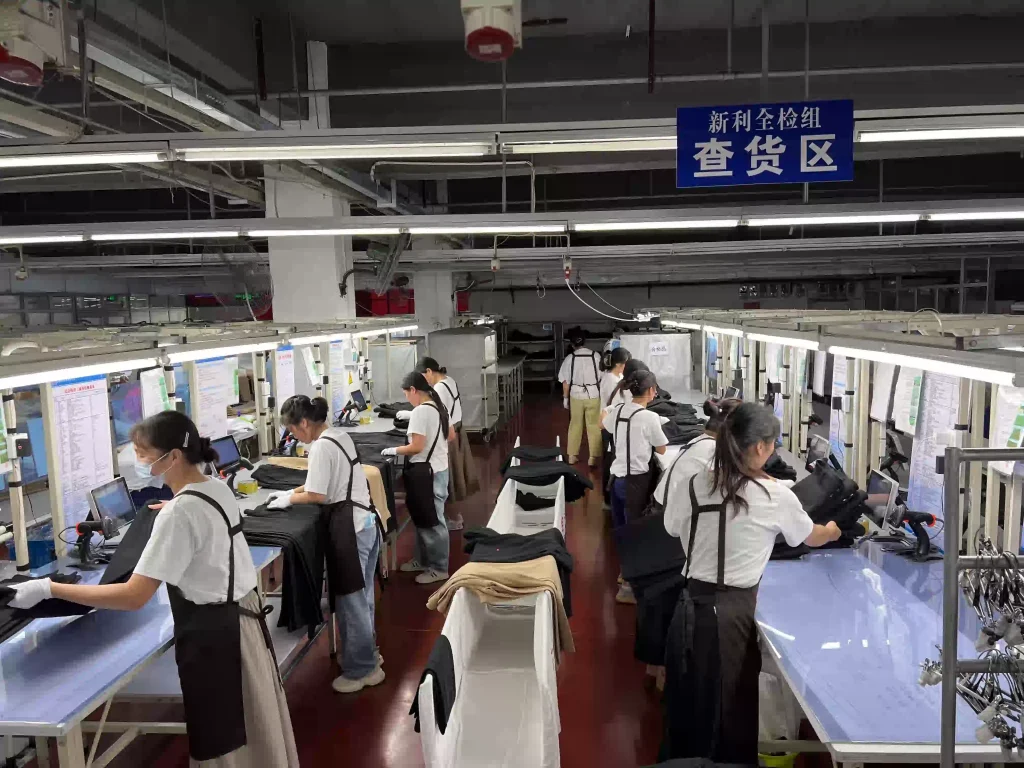
Confirm the agreed inspection process, acceptance criteria, and procedures for addressing defective goods, shortages, or production deviations.
Clarify who is responsible for rework, replacement, and associated costs under the proposed agreement.
Separate documented costs from potential risks. Do not treat a speculative rework expense as a confirmed supplier charge.
9. Questions to Ask Before Approving a Production Quote
Before choosing a clothing manufacturer, obtain written answers to these questions:
- Is the quote based on our latest approved tech pack and material specifications?
- Which services and costs are included, excluded, or still unconfirmed?
- What is the MOQ for each style, colorway, and fabric?
- Are development, sampling, setup, and testing fees charged separately?
- Which fabric or component substitutions, if any, are proposed?
- Which Incoterm, named place, and version apply?
- When does the quoted production lead time begin?
- What are the payment terms, currency, and quotation validity period?
- How will quality issues, shortages, and required rework be handled?
- Which approvals and documents are needed before production begins?
Clear written answers help you evaluate the commercial offer and reduce avoidable misunderstandings. They do not, by themselves, guarantee supplier performance.
10. Choose a Manufacturer Based on the Entire Order
A good manufacturing decision balances cost, quality, production capability, and commercial risk.
Before approving a supplier, assess:
- Specification conformity: Can the manufacturer produce the garment to the agreed requirements?
- Total expected cost: Are all necessary expenses accounted for?
- MOQ and inventory exposure: Does the order quantity fit your demand plan?
- Sampling and approvals: Are the required development stages clearly defined?
- Delivery schedule: Can the proposed timeline meet your launch or replenishment plan?
- Cash flow: Are the payment terms manageable?
- Quality responsibilities: Are inspection, corrective action, and acceptance terms documented?
Resolve significant differences in specifications and unpriced costs before ranking suppliers.
Need a Quote for Your Clothing Collection?
New Asia Garment supports apparel brands with OEM/ODM development, sampling, and production.
If you are planning a new clothing line or preparing a repeat order, sharing the right project information can help establish a clearer quotation scope.
To discuss your project, prepare:
- Your tech pack, design drawings, or garment reference.
- The estimated order quantity and size/color breakdown.
- Fabric, trim, printing, embroidery, and finishing requirements.
- Your target delivery date and destination.
- Any special quality, packaging, or testing requirements.
Request a Clothing Manufacturing Quote from New Asia Garment
Specific pricing, MOQs, production lead times, services, and commercial terms must be confirmed for the individual project.
Frequently Asked Questions
Q1:Why do clothing manufacturers quote different prices for the same design?
Manufacturers may make different assumptions about fabric, construction, quantity, sampling, finishing, packaging, or delivery. A standardized tech pack and written cost breakdown make these differences easier to identify.
Q2:Should I choose the clothing manufacturer with the lowest unit price?
Not automatically. Compare the total expected order cost at your required quantity and delivery destination. Also evaluate specification conformity, MOQ, lead time, payment terms, and quality requirements.
Q3:How do I compare manufacturers with different MOQs?
Calculate the actual order quantity each manufacturer will accept, the resulting total cost, and the impact of excess inventory. Do not assume a quoted unit price applies to every quantity.
Q4:Should sample fees be included in the total manufacturing cost?
Include required sampling fees if they are charged separately and have not already been included elsewhere. Confirm whether sample costs are refundable, credited toward production, or incorporated into the quoted price.
Q5:Can I compare FOB and DDP quotations directly?
Not by comparing headline prices alone. Normalize both offers to the same destination and account for the applicable delivery, customs, and import costs. Confirm the specific named locations and Incoterms version.
Q6:What information should I provide to get an accurate apparel manufacturing quote?
Provide the latest tech pack, material specifications, order quantity, size and color breakdown, finishing and packaging requirements, target delivery schedule, and delivery destination. The more clearly the scope is defined, the easier it is to clarify assumptions and compare offers.
This article provides general B2B apparel sourcing information and is not a supplier quotation, customs valuation opinion, or legal advice. Confirm project-specific costs, import requirements, and contractual terms independently.
Read More
- How to Compare Clothing Manufacturer Quotes: A Cost Checklist for Apparel Brands
- How to Build Durability Tests Around High-Stress Garment Areas
- How to Control Fabric Shade Variation Before Bulk Production
- What US Apparel Brands Should Verify About Care Labels Before Bulk Production
- Size Set Approval Before Bulk Production: How to Catch Pattern Grading Problems Early