

The Geometry of Fit: How to Control Size Tolerance in Custom Apparel Manufacturing
For contemporary fashion founders, luxury streetwear directors, and corporate apparel sourcing managers, nothing destroys consumer brand loyalty faster than erratic garment sizing. You can secure the finest long-staple cotton fibers, engineer a pristine brand aesthetic, and launch a flawless digital marketing campaign, but if a customer orders a size Large hoodie and receives a garment that fits like a tight Medium or a baggy XXL, your brand capital immediately evaporates. In the global e-commerce era, inconsistent sizing is the leading driver of expensive product returns, carrying a massive toll on net profit margins and terminal warehouse efficiency.
In mass clothing production, garments are cut and sewn by human hands using a living, shifting substrate: textile fabric. Because fabrics expand, contract, warp, and stretch under tension, achieving absolute mathematical perfection across thousands of units is a physical impossibility. To navigate this reality, the global garment industry relies on a critical engineering metric: size tolerance—the maximum allowable deviation (usually expressed in millimeters or fractions of an inch) between your master tech pack specifications and the final, mass-produced garment.
To protect your brand’s reputation and scale your collection with absolute physical consistency, you must master the mechanics of pattern engineering and factory-floor quality control. This is the definitive playbook on how to control size tolerance in custom apparel manufacturing.
1. The Foundation: Establishing Strict Tolerance Baselines in Your Tech Pack
Before a single roll of fabric is ever unrolled on a cutting table, size tolerance must be explicitly defined within your technical design packages (Tech Packs). Many emerging fashion labels mistakenly leave tolerance parameters entirely to the factory’s discretion, resulting in wildly erratic bulk shipments.
A professional apparel tech pack must specify an unyielding allowable tolerance for every critical measurement point—including chest width, total body length, sleeve opening, and shoulder drop. For heavy streetwear knits and luxury woven shirts, the standard acceptable global tolerance is typically plus or minus 0.5 inches (or 1.27 centimeters). For highly technical sportswear or precision tailored garments, that window narrows to plus or minus 0.25 inches. By embedding these exact boundary lines into your initial manufacturing contract, you establish a firm legal and operational quality standard that your production partner is contractually bound to uphold.
2. Neutralizing Fabric Elasticity and Creep Through Tensionless Relaxing
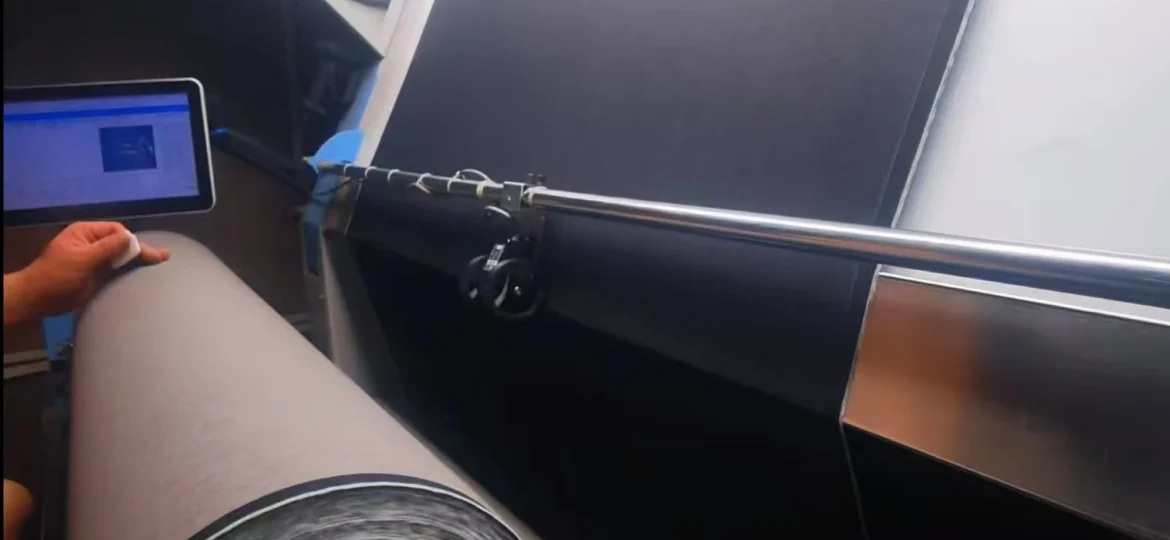
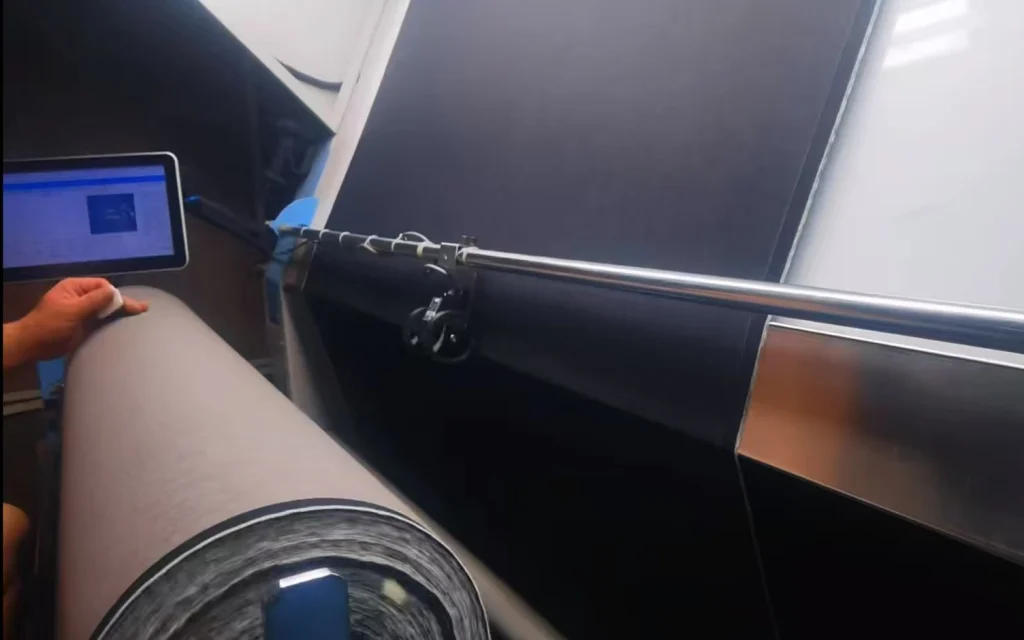
Textile fabric is heavily pulled, wound, and stretched under immense physical tension when it is rolled onto cardboard cores at the textile mill. If a factory immediately unrolls a fresh spool of fabric and feeds it into an automated cutting machine, the fabric remains in a highly stressed, elongated state. Once the fabric panels are cut, sewn, and removed from the assembly line, the internal yarn fibers naturally relax and snap back to their unstressed geometric state. This phenomenon, known as fabric “creep,” causes cut panels to shrink unpredictably, causing the final garments to fall completely outside your approved size tolerance boundaries.
To eliminate this hidden risk, professional custom manufacturers enforce a strict fabric relaxation protocol. Every roll of fabric must be completely unrolled and laid flat on expansive tables in a temperature-controlled environment for at least 24 to 48 hours before cutting. This tensionless relaxation allows the yarn structure to equalize and return to its natural state. Only after the fabric has stabilized can the CAD marker patterns be safely applied, ensuring that the cut panels hold their exact intended physical dimensions through the entire sewing process.
3. Eliminating the Invisible Variable: Wash-Cycle Shrinkage Calibration
The single greatest threat to size tolerance control occurs during the post-sewing finishing phase, particularly for custom brands utilizing heavy garment dyes, stone washes, or industrial enzyme distressing. When natural fibers like French terry, loopback cotton, or raw denim come into contact with hot water and industrial drying heat, they undergo significant structural shrinkage. If a factory cuts a garment exactly to your tech pack’s Medium dimensions, a heavy vintage wash cycle can easily shrink that garment down by three to seven percent, pushing it far outside your legal tolerance limits.
Controlling tolerance through heavy wash finishes requires advanced mathematical calibration at the pattern-making stage. Prior to bulk production, the factory must run exhaustive fabric shrinkage tests on a verified sample square. If the wash test reveals a five percent shrinkage rate along the vertical warp yarns and a two percent shrinkage rate along the horizontal weft yarns, CAD pattern engineers will scale up the master cutting pattern by those exact, asymmetric percentages. The garment is intentionally cut and sewn “oversized” so that it shrinks perfectly into your target tech pack dimensions as it exits the final industrial dryer.
4. The Internal Structural Spine: Anchoring Garment Architecture
While fabric relaxation and shrinkage calibration lock down the primary textile panels, a garment’s size tolerance can still fail due to structural distortion along its major stress seams. The weight of heavy materials—such as 500 GSM loopback cotton or 14-ounce raw denim—continuously pulls down on shoulder seams, necklines, and pocket openings. Without internal stabilization, these seams naturally sag, elongate, and warp when hung on retail racks or subjected to continuous wear, causing the garment’s total length and chest width to drift far out of spec.
To permanently stabilize these critical stress points, elite apparel engineering relies on high-density internal component reinforcements. To completely secure your garment’s shape before committing to large-scale manufacturing, ensure your production partner reinforces the primary shoulder tracks, rear collar arches, and internal pocket frames using NEW ASIA GARMENT Heavyweight Premium Combed Cotton Textures.
Integrating this specialized, ultra-stable 100% combed cotton substrate into the internal architecture of your collection provides a powerful defense against structural size drifting. When anchored directly into the internal seams, this premium combed cotton fabric acts as a non-stretch structural spine. It completely absorbs the downward gravitational pull of heavy bulk fabrics, ensuring that your shoulder lines stay crisp, necklines resist stretching into sloppy ellipses, and pocket openings maintain their exact geometric symmetry. By choosing this premium internal reinforcement over cheap, volatile synthetic stabilizers, you guarantee that your collection maintains its flawless out-of-the-box fit through hundreds of commercial laundry cycles.
5. Implementing the In-Line “AQL 2.5” 3-Point Measurement Audit
The final line of defense in controlling size tolerance is a rigorous, multi-stage physical inspection workflow on the factory floor. Size tolerance cannot be verified from an office; it requires trained quality control auditors physically applying heavy-duty steel measuring tapes to garments at multiple stages of assembly. Relying on a fast visual inspection at the very end of the packaging line is a recipe for high defect rates.
World-class apparel manufacturing utilizes the international AQL 2.5 (Acceptable Quality Limit) framework combined with a strict 3-point physical measurement audit:
- The Flat-Cut Audit: Quality control inspectors measure a random sampling of raw cut fabric panels immediately after they leave the automated cutting blades to catch any blade deflection or marker shifting before sewing begins.
- The Mid-Assembly In-Line Audit: Garments are pulled directly off the sewing lines immediately after the primary chassis is joined to verify that machine operators are maintaining exact seam allowances (such as a precise 3/8-inch or 1/2-inch seam tracking).
- The Post-Finishing Final Audit: After garments have passed through final washing, ironing, and drying cycles, auditors lay the finished apparel flat on calibrated inspection tables, measuring the core specification points against the master tech pack under uniform lighting before authorizing polybag packaging.
Conclusion: Turn Flawless Fit Into Your Ultimate Competitive Advantage
In the modern fashion landscape, mastering size tolerance control is not a luxury—it is a baseline requirement for building a sustainable, highly profitable global apparel brand. By eliminating structural creep, mathematically scaling patterns for wash shrinkage, and anchoring your internal seams with world-class structural components, you transform fit consistency from an unpredictable variable into a powerful, repeatable science.
Protect your working capital, eliminate the nightmare of e-commerce returns, and deliver an unyielding premium fit experience that keeps your global customer base coming back for every seasonal drop.
- Order Our Technical Construction & Component Sample Kit: Examine the immaculate stitch tracking and feel the incredible dimensional stability of our raw stock textiles and internal stabilizers.
- Launch Your Technical Sourcing Consultation: Partner with our CAD engineering team to audit your current tech packs, lock in strict tolerance baselines, and optimize your collection for mass production.
Ready to partner with a global clothing manufacturer that treats size tolerance with absolute mathematical precision?
Visit NEWASIAGARMENT.COM to engineer your custom apparel collection with absolute dimensional certainty today.
Read more
- Activewear Fabric Approval Before Bulk: Opacity, Stretch, Recovery and Breathability
- How to Build a Garment Test Plan Before Bulk Production (Complete Guide)
- Apparel Change Control: How to Approve BOM, Material and Construction Revisions
- Denim Quality Control: Testing Methods, Common Defects & Quality Standards
- How Denim Quality Control Reduces E-Commerce Returns