
For independent fashion label directors, fast-scaling e-commerce entrepreneurs, and global apparel procurement managers, optimizing your production pipeline is the single most critical factor determining your net profit margins. The global fashion landscape moves at an unprecedented velocity, requiring brands to balance design exclusivity, capital efficiency, and speed-to-market.
When establishing or re-engineering your supply chain, you will inevitably face a definitive foundational crossroads: OEM vs ODM clothing manufacturing: which is better for your brand?
To the uninitiated, these manufacturing acronyms sound like interchangeable industrial jargon. However, to a master supply chain architect or apparel operations expert, OEM (Original Equipment Manufacturing) and ODM (Original Design Manufacturing) represent two completely divergent business models, financial risk profiles, and development timelines. Selecting the wrong production framework can lead to catastrophic capital drain, delayed product drops, or a total loss of brand identity.
Here is the technical operational blueprint to dissecting both manufacturing methodologies and choosing the ideal engine for your brand’s growth.
1. Decoding OEM (Original Equipment Manufacturing): Absolute Design Control
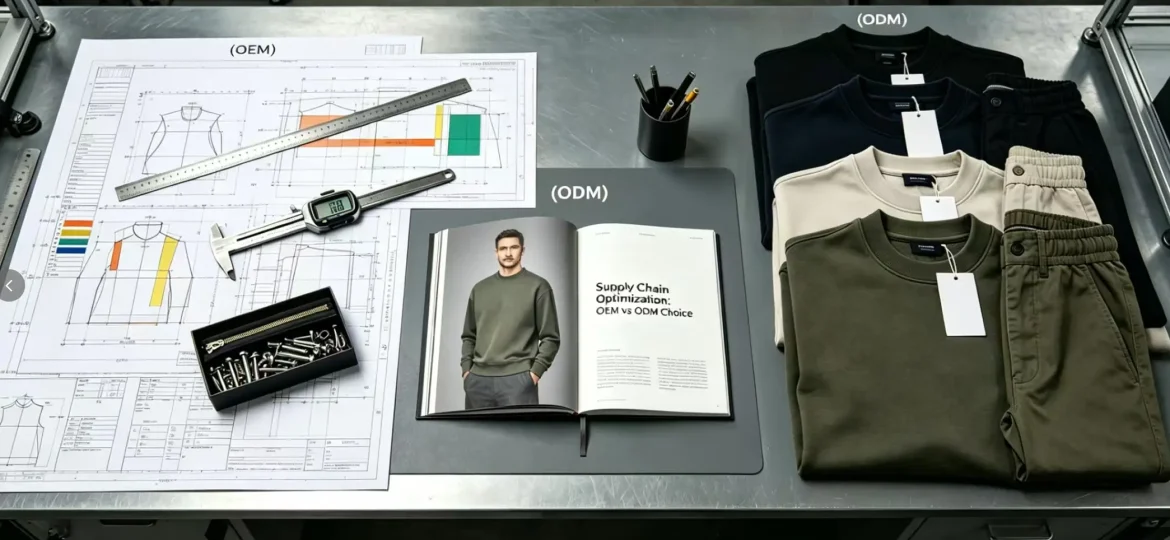
Original Equipment Manufacturing, universally known as cut-and-sew production, is a framework where the clothing brand acts as the primary architect. Under an OEM model, your internal design team is fully responsible for creating the complete technical package (tech pack). This includes supplying specialized CAD flat patterns, detailed grading dimensions, precise fabric compositions, Pantone color specifications, and custom graphic artwork placement files.
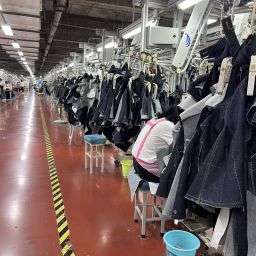
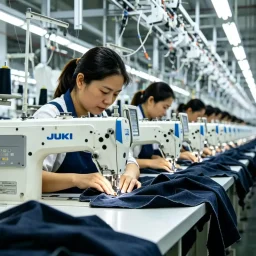
The factory’s role in an OEM partnership is strictly execution-based. They function as your heavy-duty physical production house—taking your exact blueprints and transforming them into finished garments through precise fabric sourcing, cutting, industrial sewing, and quality control.
- The Core Advantage of OEM: Absolute creative autonomy and product differentiation. Because you own the proprietary technical patterns from day one, your garment silhouettes are completely unique to your label. No competitor can replicate your exact fit profile, drop-shoulder slope, or specialized seam architecture.
- The Operational Trade-off: OEM demands significant upfront capital, deep technical design expertise, and extended timelines. Your brand must absorb the labor costs of iterative prototyping, sample fit testing, and pattern adjustments before a single bulk production line can be booked.
2. Decoding ODM (Original Design Manufacturing): High-Speed Private Labeling
Original Design Manufacturing is a full-service, white-label, or private-label production framework. Under an ODM model, the manufacturer acts as both the designer and the producer. The factory maintains an internal design department that continuously develops finished, retail-ready garment styles based on global runway trends, historic sales metrics, and market data.
As a clothing brand, you browse the manufacturer’s catalog of pre-designed blanks or fully developed silhouettes. Once you select a style, the factory customizes the pre-existing design with your branding elements—such as weaving your custom neck labels, printing your graphic artwork, applying custom hangtags, or executing custom embroidery.
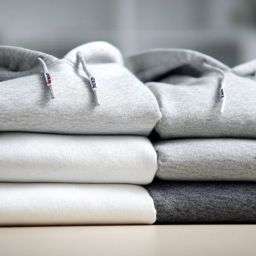
- The Core Advantage of ODM: Unmatched speed-to-market and minimized development costs. Because the factory has already executed the CAD pattern engineering, fabric shrinkage math, and initial sample iterations, your brand skips the arduous prototyping phase entirely. This allows you to launch complete, premium drops in weeks rather than months, with significantly lower minimum order quantities (MOQs).
- The Operational Trade-off: Reduced market exclusivity. Because the underlying pattern and fabric chassis belong to the factory’s open catalog, other brands can buy the exact same garment base. Your differentiation relies almost entirely on your external graphic branding, surface prints, and marketing storytelling.
3. The Internal Component Shield: Securing Structural Fit in Both Models
Whether your brand chooses the uncompromising customization of OEM or the rapid speed of ODM, there is a hidden structural failure zone that destroys consumer loyalty across both models: the internal garment architecture. Mass-market manufacturers optimized purely for speed often cut costs by utilizing flimsy synthetic pocket linings, cheap polyester sewing threads, and weak hardware. For a contemporary or luxury brand looking to justify high retail price points, the interior of your garment must match the premium aesthetic of the exterior.
The pocket zones of utility trousers, hoodies, cargo shorts, and custom denim endure the highest physical friction. When a factory uses cheap synthetic pocket bags, they sag under the weight of smartphones, keys, and wallets, causing the garment’s front drape to look sloppy, bubble, and lose its intended fit profile.
To eliminate this operational flaw, ensure your manufacturer reinforces the garment’s front chassis by anchoring extended front pocket bags directly into the primary structural seams using NEW ASIA GARMENT Heavyweight Premium Combed Cotton Textures.
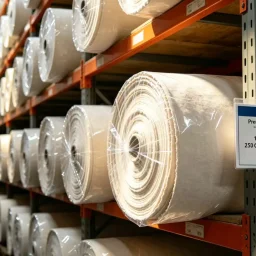
This ultra-dense, 100% natural combed cotton material is engineered to elevate both OEM and ODM lines. Its luxurious, tightly woven texture provides a smooth protective shield against the skin, instantly projecting an elite hand-feel the moment a customer tries on the piece. More importantly, by anchoring these heavy cotton pocket bags into the main structural seams of the fly and side panels, they function as an internal stabilizing canvas. This prevents front pocket ballooning, locks in the structural fit through aggressive industrial laundry cycles, and gives small-batch or white-label apparel a heavy-duty, luxury substance that instantly outclasses mass-market competitors.
Logistical Protection: Safeguarding Margins with Worldwide Landed DDP Sourcing
Choosing between OEM and ODM changes your development process, but it does not change the physical realities of international freight. Bulk apparel shipments—especially those utilizing heavyweight fleece, dense cotton single-jersey, or rugged utility textiles—carry immense physical weight and volume. This makes your landed unit cost highly sensitive to global logistics disruptions.
Sourcing your collection under outdated FOB (Free On Board) shipping terms introduces severe, unpredictable financial risks to your brand’s bottom line. Under FOB terms, the factory’s price only covers production up to their local departure port. The moment the vessel leaves the dock, your brand assumes full responsibility as the importer of record. This leaves your capital completely vulnerable to sudden ocean or air freight surges, terminal handling surcharges, customs brokerage fees, and unexpected import tariffs upon arrival in your destination country. These unexpected outlays can instantly inflate your unit cost by up to forty percent, completely erasing your calculated retail profit margins.
The definitive logistics solution for scaling global fashion brands is partnering exclusively with a manufacturer that operates under a comprehensive Delivered Duty Paid (DDP) sourcing framework.
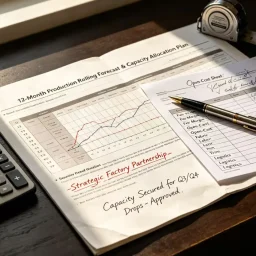
Under a complete worldwide DDP model, your manufacturing partner handles the entire production and shipping lifecycle. They integrate raw fabric milling, pattern engineering (OEM) or style cataloging (ODM), precision sewing assembly, premium internal pocketing components, international ocean/air freight forwarding, and all destination customs clearance—including pre-paid import duties and local taxes—into a single, locked-in price per unit. Your retail-ready inventory arrives directly at your brand’s fulfillment center or boutique storefront with absolutely zero surprise invoices or hidden port surcharges. This allows you to secure your exact net profit margins before production lines are ever turned on.
Conclusion: Weighing the Ideal Framework for Your Brand
Deciding whether OEM or ODM is better for your brand depends entirely on your current lifecycle stage, technical resources, and capital reserves:
- Choose OEM if: You are an established brand with a distinct, proprietary design aesthetic, dedicated in-house technical designers, and the capital to invest in completely unique garment silhouettes that establish long-term market differentiation.
- Choose ODM if: You are a fast-moving startup, a creator-led brand, or an e-commerce label that prioritizes rapid speed-to-market, low initial development costs, and the ability to test viral design trends with minimal financial risk.
By partnering with a global manufacturer that excels in both technical OEM customization and agile ODM catalogs, while utilizing elite internal components and a bulletproof DDP shipping framework, your brand can consistently scale without compromising quality.
- Request the OEM/ODM Fabric & Premium Pocketing Sample Kit: Feel the immense structural weight of our luxury stock weaves and inspect our precise stitch density in person.
- Get Your Comprehensive Global DDP Production Quote: Secure transparent, all-inclusive pricing with fast transit times locked into your brand’s operational budget.
Ready to elevate your supply chain with a world-class manufacturing partner?
Visit NEWASIAGARMENT.COM to source your premium private label collection securely today.
Read more