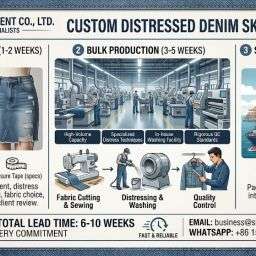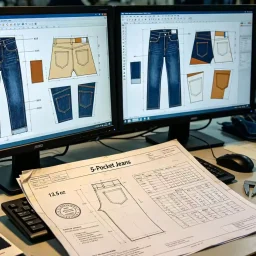

For contemporary fashion directors, direct-to-consumer (DTC) startup founders, and sourcing executives globally, establishing a denim collection is a highly profitable venture—but it is also an operationally unforgiving financial challenge. Unlike basic jersey knits or simple fleece hoodies, jeans are highly engineered, construction-heavy structural products. They require specialized machinery, precise shrinkage mathematics, and multi-stage industrial chemical finishing to achieve consumer-ready aesthetics.
If you are planning your collection budget, understanding exactly how much does it cost to manufacture jeans at a commercial factory level is the single most critical factor in safeguarding your retail margins. Approaching production blindly often results in unexpected surcharges for pattern adjustments, hardware failures, or volatile shipping fees that destroy your cash flow.
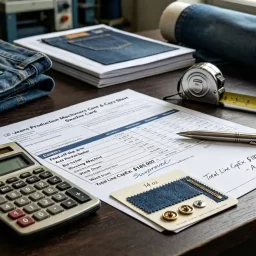
Globally, the direct production cost of a standard pair of 12-ounce denim jeans typically ranges between $10 and $50 per unit. However, where your specific quote lands within this bracket depends on raw material selection, artisanal wash processing, batch volumes, and shipping frameworks. This comprehensive engineering breakdown covers the hidden line items that dictate your final factory invoice.
1. Raw Materials: The Heavyweight Foundation of Denim Cost (40% to 55%)
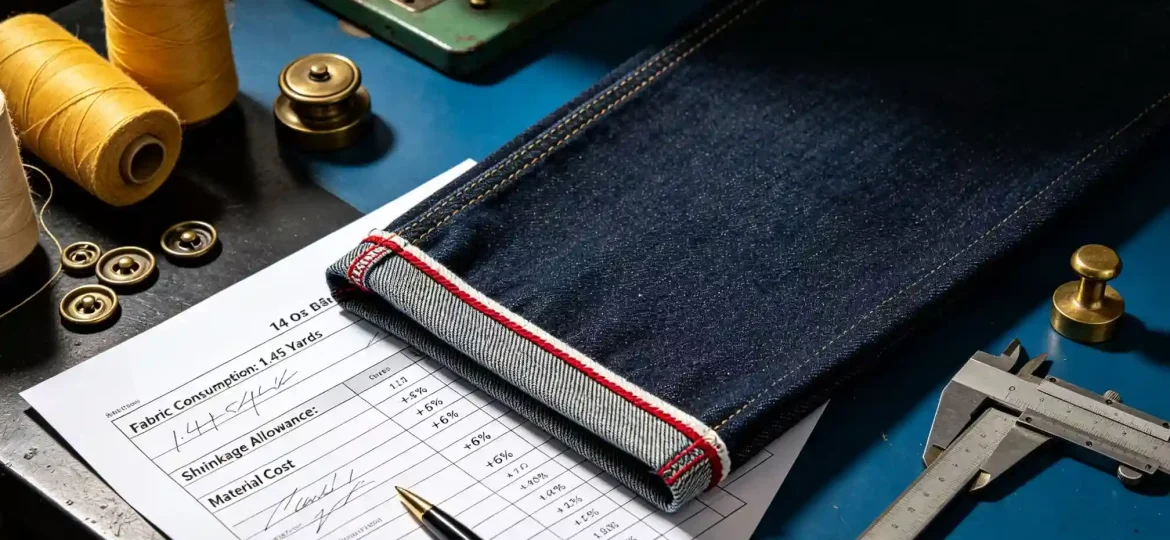
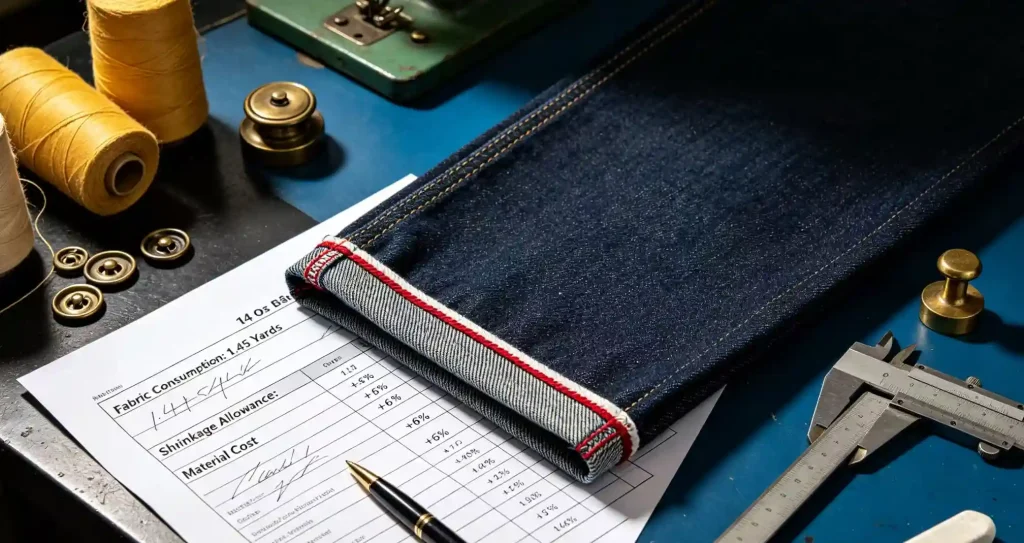
The primary driver behind your per-unit manufacturing quote is the denim fabric itself, which typically commands 40% to 55% of the total production budget. Denim is purchased by the linear yard or meter, and a standard adult pair of jeans requires approximately 1.3 to 1.6 yards of wide-goods fabric, depending on pattern grading and cutting waste.
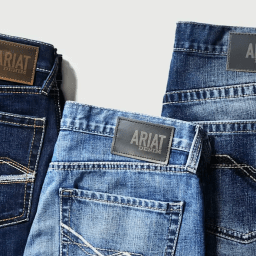
The cost of denim fabric is dictated by weight (measured in ounces) and weave complexity. Standard, everyday 12-ounce rigid cotton denim generally runs between $4.50 and $7.00 per yard. Sourcing stretch denim—which blends natural cotton fibers with 1% to 3% elastane or Lycra for skinny or slim fits—escalates the material cost to $5.00 to $8.00 per yard due to the technical spinning processes required.
For luxury, heritage, or high-street streetwear brands, authentic selvedge denim woven on traditional narrow shuttle looms presents a premium alternative, ranging from $8.00 to over $20.00 per yard. Because shuttle looms weave fabric at a fraction of the speed of modern projectile looms, the material costs multiply rapidly, fundamentally shaping your initial budget allocation.
2. Labor and Assembly Complexity: The Sewing Floor Realities (20% to 30%)
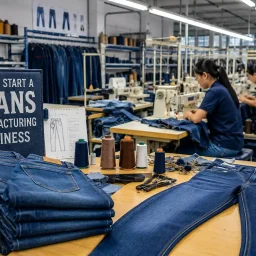
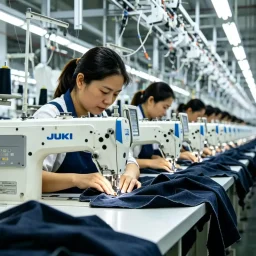
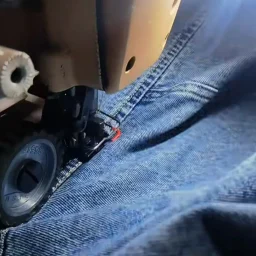
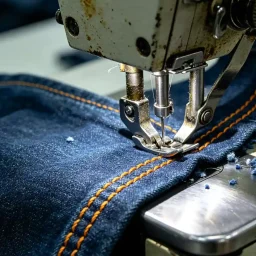
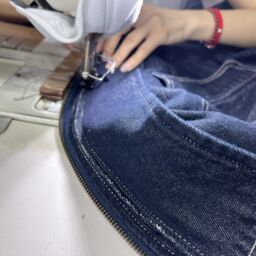
Sewing flat denim panels into a curved, stress-resistant, three-dimensional pair of jeans represents roughly 20% to 30% of your factory costs. Denim assembly requires specialized heavy-duty machinery that basic clothing workshops do not possess. This includes multi-needle chain-stitch machines for strong felled inseams, automated rear pocket setters, and high-pressure hydraulic metal tack rivet machinery.
The structural complexity of your design directly controls the sewing floor labor time. A classic, minimalist 5-pocket slim jean is highly efficient to sew, keeping labor costs low. However, adding modern elements like cargo utility side pockets, intricate multi-panel paneling, distressed raw hems, or decorative heavy-gauge topstitching increases assembly time by 20 to 30 minutes per garment, raising your production costs.
Geography also plays an immense role in shaping these labor costs. Factories in Western countries like the United States or Italy offer fast domestic logistics and ethical marketing narratives, but their labor rates run between $20.00 and $40.00 per hour, forcing unit costs to $40.00 to $100.00+ per pair.
Conversely, highly integrated vertical manufacturing hubs in East Asia deliver premium-grade construction and advanced automation at scale for a highly competitive $12.00 to $20.00 per unit. Fully vertical ecosystems combine spinning mills, automated CNC cutting tables, and sewing floors in close proximity, cutting down on international material transit risks and reducing overhead costs.
3. The Hidden Structural Skeleton: Securing Inner Integrity
While founders often focus entirely on the outer look of their denim, the inner structural boundaries of a pair of jeans are where unverified factories frequently cut corners to inflate their profit margins. To present an alluringly cheap initial quote, low-tier workshops often substitute thin synthetic polyesters or flimsy mesh inside the high-friction structural zones of the garment, such as the waistband tracks, zipper fly boundaries, and internal pocket bags.
Under the intense physical and chemical stress of industrial wash wheels, these cheap synthetic components shrink unevenly or fray. This forces the heavy outer denim shell to buckle and warp out of shape, causing twisted seams and inconsistent fits that lead to high e-commerce return rates.
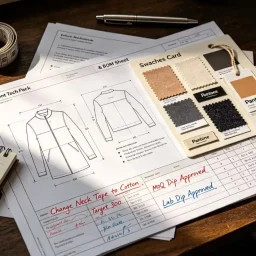
The inner waist track and pocket lining function as the structural anchor of your entire pattern. To safeguard your silhouette and ensure a luxury tactile experience, your tech packs should explicitly mandate the integration of high-density, long-staple components. Sourcing these premium foundations through a dedicated supplier like New Asia Garment Heavyweight Premium Industrial Cotton Lining Textiles provides a durable internal skeleton. This tight, high-density cotton weave acts as a stabilizer that holds your custom patterns perfectly in place, resisting distortion during heavy washing while giving the consumer a smooth, comfortable barrier against the skin.
4. Industrial Wash Artistry and Post-Processing Finishes
Raw denim off the sewing machine is naturally stiff, abrasive, and saturated with uniform dark indigo dye. Over 70% of a jean’s commercial value and shelf appeal comes from post-processing, which is divided into dry craftsmanship and wet chemical treatments.
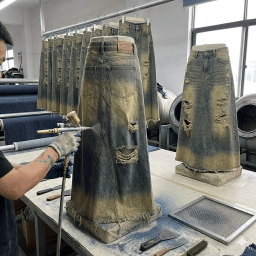
Dry craftsmanship involves manual techniques performed by skilled artisans before the garments are washed. This includes hand-scraping with specialized sandpaper to create authentic thigh fading, manual grinding along pocket lips to simulate vintage wear, and 3D tacking to form permanent creases. These manual techniques add to your labor budget based on their complexity.
Wet chemical processing utilizes large industrial washing carousels to alter the fabric’s texture and color tone. While basic stone-washing or acid bleaching is affordable, modern sustainable brands favor enzyme washing and ozone technology. Enzyme washing utilizes organic proteins to soften the dense cotton fibers and reveal high-contrast indigo high-and-low textures without damaging the underlying yarns. Utilizing advanced, eco-friendly closed-loop wash houses ensures your wash patterns look premium and helps you avoid environmental compliance fines.
5. Volume Dynamics: Managing MOQs and Fixed Overhead Costs
Your final production cost is heavily influenced by your Minimum Order Quantity (MOQ). Every custom denim production run requires significant fixed setup costs, including digital CAD pattern grading, automated marker printing, and configuring industrial washing carousels with precise chemical formulas.
When producing a small micro-batch of 50 to 100 units per style, these fixed engineering and setup overheads are spread across fewer pieces, driving your per-unit cost up. Scaling your order volume to a mid-range run of 300 to 500 units per style allows the factory to run continuous assembly lines and optimize cutting efficiency, reducing fabric waste. This volume tier balances manufacturing flexibility with meaningful cost savings, making it an ideal choice for growing fashion labels.
6. Protecting Your Bottom Line with Secure DDP Sourcing
Perfecting your wash techniques and calculating your raw fabric consumption means very little if your retail margins are wiped out by volatile ocean freight rates, terminal handling fees, and customs brokerage charges at your domestic border. Because denim is heavy and dense, its shipping costs are highly sensitive to international logistics disruptions.
Sourcing your collection under traditional FOB (Free On Board) terms requires your brand to act as the legal importer of record the moment the cargo leaves the manufacturer’s local port. This leaves your business exposed to sudden freight surcharges, complex customs paperwork, and unexpected import duties or tax assessments at your home border.
The definitive solution to lock in your exact cost of goods sold (COGS) is partnering with an established manufacturer that provides a comprehensive, all-inclusive Delivered Duty Paid (DDP) Shipping Framework. Under a full DDP agreement, the factory manages the entire international freight forwarding process, handles customs clearance, and pays all import tariffs and local taxes. Your final, store-ready denim inventory is delivered directly to your warehouse with no hidden fees or surprise invoices, allowing you to establish your retail pricing structure with total financial clarity.
To secure your production lines with transparent pricing, direct-factory visibility, and verified material quality, Visit NewAsiaGarment.com to request a detailed production quote for your custom denim line today.
Read more
- Movement Fit Testing for Apparel: How to Check Ride-Up, Slippage, and Range of Motion
- Pre-Production Sample Approval: What Brands Should Lock Before Bulk Production
- Custom Sports Jersey Manufacturing Quality Control: A Global Manufacturing Guide
- Bulk Print and Embroidery Quality Control for Custom Apparel
- Activewear Fabric Approval Before Bulk: Opacity, Stretch, Recovery and Breathability