
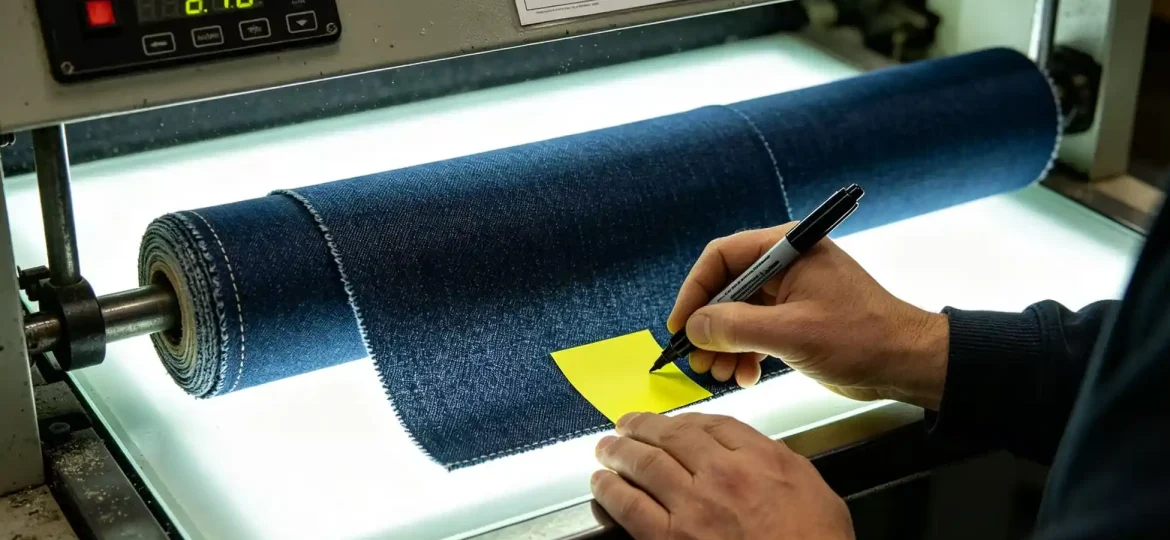
Clothing Factory Quality Control
How New Asia Garment Controls Apparel Quality From Approved Sample to Final Packing
Garment quality control should not begin when finished products reach the final inspection table. Effective quality management starts before bulk production and continues through material inspection, cutting, sewing, finishing, measurement, final inspection and packing.
At New Asia Garment, production quality is controlled against the approved physical sample, current product specification and applicable buyer requirements. These references help production and inspection teams evaluate whether bulk garments are consistent with what has been confirmed for the order.
Because every apparel project is different, there is no single inspection method or tolerance that should automatically be applied to every garment. Fabric type, construction, washing process, decoration, measurements, order requirements and buyer standards can all affect the appropriate quality-control plan.
Our objective is straightforward: identify potential problems as early as possible, maintain clear production references and verify finished garments against the agreed requirements before shipment preparation.
1. Approved Sample & Specification Control
Consistent bulk production starts with a clear production reference.
Before manufacturing begins, the relevant specifications should be reviewed so that the development, production and quality-control teams are working from the same approved information.
Depending on the project, these references may include:
Current tech pack or written product specification
Approved physical sample
Measurement chart and agreed tolerances
Fabric and trim requirements
Color or shade references
Artwork specifications
Print or embroidery placement
Wash or finishing reference
Labels and branding requirements
Folding and packing instructions
The approved sample is particularly important because written specifications do not always communicate every visual or construction detail of a garment.
For products involving washing, garment dyeing, distressing or other appearance-sensitive processes, the approved physical sample can also provide an important reference for color, hand feel, finishing and overall appearance.
Managing Specification Changes
Specifications sometimes change after initial approval.
A measurement may be adjusted, a fabric may be substituted, artwork may be repositioned or a trim may be updated.
When this happens, the affected information should be documented and communicated before the changed operation is repeated through bulk production.
Using the latest approved information helps prevent production teams from working against outdated samples, measurement charts or artwork files.
2. Incoming Fabric & Trim Inspection
Quality control begins before fabric reaches the cutting table.
Incoming fabrics, trims and other components should be reviewed against the confirmed order requirements before they are released into bulk production.
Fabric Inspection
Fabric rolls can be inspected for visible defects and other characteristics relevant to the product.
Depending on the material and buyer requirements, inspection points may include:
Visible fabric defects
Shade consistency
Fabric width
Surface appearance
Lot identification
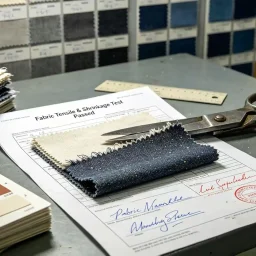
Shrinkage
Dimensional stability
Colorfastness
Other agreed material requirements
The exact inspection method depends on the fabric type, product, intended finishing process and agreed quality plan.
A rigid inspection formula should not be assumed for every fabric.
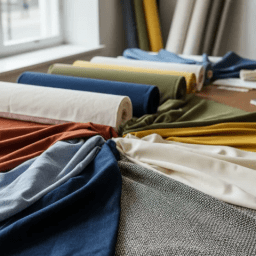
Shade & Lot Control
Shade variation can become particularly visible when garment panels from different fabric lots are combined.
Where shade consistency is important, fabric lots should be identified and reviewed before cutting and assembly.
This is especially relevant to products where color differences are easily visible across adjoining panels.
For denim, garment-dyed products and other process-sensitive materials, shade control may continue through washing and finishing because the final garment appearance can change after processing.
Trim Verification
Applicable garment components should also be checked against the approved requirements before use.
These may include:
Buttons
Zippers
Rivets and snaps
Drawcords
Elastic
Main labels
Size labels
Care labels
Hangtags
Patches
Packaging materials
Other product-specific components
Checking components before production helps reduce the risk of discovering an incorrect trim, label or accessory only after garments have already been assembled.
3. Cutting & Pre-Production Checks
Once materials are approved for production, quality control continues through fabric preparation and cutting.
Fabric Preparation
Some fabrics require relaxation or other preparation before cutting so that dimensional changes do not create unnecessary variation later in production.
The appropriate handling method depends on the fabric and production process.
Pattern, Marker & Cutting Review
Before or during bulk cutting, relevant requirements may be reviewed for:
Pattern accuracy
Marker preparation
Fabric direction
Matching requirements
Cut-part shape
Alignment
Component consistency
Applicable shade or lot separation
Cutting accuracy matters because sewing cannot fully correct components that were already cut to the wrong shape or dimensions.
First-Piece & Pre-Production Checks
For applicable styles, a first-piece or pre-production check can be used before full-line production proceeds.
This provides an opportunity to confirm that important construction details are aligned with the approved sample and current specification.
Typical review points may include:
Garment construction
Seam type
Measurement
Component placement
Pocket position
Collar or waistband construction
Hardware application
Print or embroidery placement
Applicable wash or finishing requirements
Problems identified at this stage can be addressed before the same issue is repeated across a larger quantity of garments.
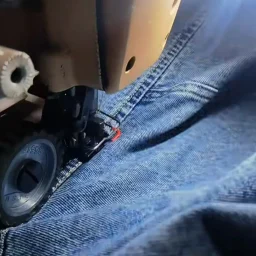
4. In-Line Sewing & Workmanship Inspection
Final inspection is important, but quality problems are generally easier to correct while production is still in progress.
During sewing and assembly, in-line inspection focuses on operations that can affect garment appearance, construction, durability, fit and consistency.
Typical checkpoints may include:
Seam construction
Seam allowance
Stitch quality
Stitch tension
Panel alignment
Pocket alignment
Collar construction
Waistband construction
Openings and plackets
Bartacks
Reinforcement at high-stress points
Zippers
Buttons
Rivets
Snaps
Print placement
Embroidery placement
Branding details
Visible workmanship defects
The relevant checkpoints depend on the garment.
A basic T-shirt, structured jacket, denim jean and washed hoodie do not have the same construction risks, so their inspection priorities should not be identical.
Correcting Recurring Problems During Production
One of the main purposes of in-line quality control is to identify repeated defects before they continue through the entire production run.
If the same workmanship problem appears repeatedly, the affected operation should be reviewed and corrected during production.
This approach is more effective than allowing the issue to continue and relying entirely on sorting finished garments at the end.
5. Measurement & Fit Control
Garment measurements should be evaluated against the current measurement specification and approved sample rather than against one generic factory tolerance.
Different products can require different measurement tolerances depending on:
Fabric properties
Garment construction
Product category
Washing or finishing process
Measurement location
Buyer requirements
For this reason, one universal tolerance should not automatically be applied to every garment or point of measure.
Key Points of Measure
Relevant measurements are checked at appropriate production stages according to the garment and inspection plan.
Depending on the product, these may include measurements such as:
Chest or bust
Body length
Shoulder
Sleeve length
Waist
Hip
Front rise
Back rise
Inseam
Leg opening
Other style-specific points of measure
The actual points checked should follow the approved measurement specification for the style.
Measurement After Washing or Finishing
Products that undergo garment washing, garment dyeing or other dimensional-change processes may need additional measurement review after finishing.
This is particularly important where shrinkage or finishing can affect:
Garment length
Width
Waist measurement
Inseam
Rise
Sleeve length
Overall fit
For these products, measurements should be assessed in the applicable finished condition rather than relying only on measurements taken before processing.
Related Guide:
Size Tolerance Control in Apparel Manufacturing
6. Wash, Finishing & Decoration Control
Many garments require additional processes after sewing.
These may include:
Garment washing
Denim washing
Garment dyeing
Printing
Embroidery
Distressing
Special finishing
Hardware application
Pressing
Each additional process introduces its own potential quality variables.
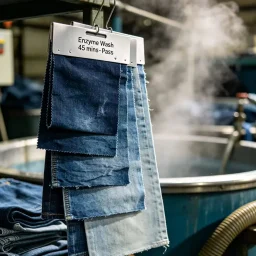
Wash & Finishing Inspection
Depending on the garment and process, inspection may include:
Wash appearance
Color
Shade
Finished hand feel
Dimensional change
Distressing consistency
Special-effect consistency
Hardware condition
Pressing
Overall finished appearance
For products such as denim, visual comparison with the approved physical sample is particularly important because written color descriptions alone may not accurately communicate the intended wash appearance.
Print & Embroidery Inspection
Where printing or embroidery is included, applicable checks may include:
Artwork position
Artwork size
Alignment
Color
Appearance
Embroidery workmanship
Stitch coverage
Placement relative to garment seams or panels
These requirements should follow the approved artwork and sample rather than assumptions made during bulk production.
7. Final Inspection & Packing Verification
After production and applicable finishing processes are complete, final inspection is used to verify finished garments against the approved requirements before shipment preparation.
The exact inspection scope depends on the product and buyer quality plan.
Typical final inspection points may include:
Finished garment appearance
Workmanship
Key measurements
Color consistency
Shade consistency
Wash appearance
Print or embroidery
Labels
Branding
Size assortment
Color assortment
Accessories
Garment components
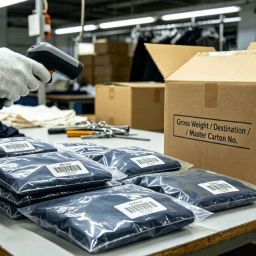
Folding
Polybag requirements
Carton quantity
Carton marks
Packing configuration
Metal detection where applicable
Final inspection should be considered the last verification stage rather than the only quality-control stage.
Problems that could have been identified during materials, cutting or sewing should ideally be controlled earlier in the production process.
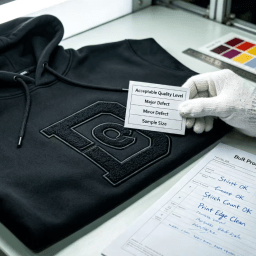
AQL & Statistical Sampling
Some buyers require statistical sampling as part of their final inspection process.
Where applicable, an AQL-based inspection plan can be agreed for the order.
The appropriate:
AQL level
Sample size
Defect classification
Acceptance criteria
Inspection scope
should be determined according to the buyer specification and project requirements.
AQL 2.5 should not automatically be presented as the mandatory inspection standard for every garment order.
Different buyers, products and risk levels may require different inspection criteria.
What Does Apparel Quality Control Actually Protect?
Quality control is not simply about finding defective garments.
A structured apparel QC process helps manage several different types of production risk.
Product Consistency
Bulk garments should remain reasonably consistent with the approved product in construction, measurements, materials and appearance.
Measurement Accuracy
Incorrect measurements can affect fit even when workmanship looks visually acceptable.
Measurement control therefore requires its own inspection checkpoints.
Workmanship
Construction defects can affect garment appearance, durability and customer experience.
Controlling them during production reduces reliance on end-of-line sorting.
Material Consistency
Fabric shade, shrinkage, trims and other materials can affect the finished product before sewing quality is even considered.
Brand Presentation
Labels, artwork, packaging and carton requirements are part of the finished product delivered to the buyer.
They should therefore be included in the applicable quality plan.
Quality Control Depends on the Product
There is no single QC checklist that is equally appropriate for every apparel category.
For example, a basic cotton T-shirt may place more emphasis on:
Fabric
Shrinkage
Measurements
Neck construction
Printing
General workmanship
A pair of denim jeans may require additional attention to:
Fabric shade
Panel matching
Pocket position
Waistband construction
Hardware
Bartacks
Wash appearance
Dimensional change after washing
A structured jacket may involve more detailed checks for:
Panel alignment
Lining
Collar construction
Sleeve setting
Zippers
Pocket construction
Pressing
Finished shape
This is why quality requirements should be defined around the actual product rather than reduced to one generic factory checklist.
Buyer Requirements Should Be Confirmed Before Bulk Production
Quality standards are easier to manage when they are agreed before production begins.
If your company has specific inspection requirements, these should ideally be provided together with the product specifications.
Useful information may include:
Tech pack
Measurement chart
Approved sample
Reference garment
Fabric requirements
Color standards
Testing requirements
Artwork files
Trim specifications
Packaging requirements
Inspection checklist
AQL requirements, where applicable
Clear requirements reduce interpretation and help both sides understand what will be used to evaluate the finished order.
Frequently Asked Questions About Garment Quality Control
When does garment quality control start?
Quality control should start before bulk production rather than only at final inspection.
The process can begin with specification and sample approval, followed by material inspection, cutting checks, in-line sewing inspection, measurement control, finishing inspection and final packing verification.
Do you use AQL 2.5 for every apparel order?
Not necessarily.
AQL requirements should follow the buyer’s inspection standard and agreed quality plan. AQL 2.5 may be used for some projects, but it should not automatically be treated as the universal acceptance level for every garment order.
Are all garments measured 100%?
Measurement requirements depend on the agreed inspection plan.
Unless an order specifically requires and documents 100% measurement inspection, it is more accurate to define the applicable measurement checkpoints and sampling requirements according to the product and buyer specification.
What is used as the reference for bulk garment quality?
The current approved physical sample and confirmed written specification are important production references.
Depending on the project, additional references may include measurement charts, artwork files, fabric standards, trims, wash references and packing instructions.
How do you control garment measurements after washing?
For washed or process-sensitive garments, relevant measurements can be reviewed after the applicable finishing process.
This allows dimensional changes to be evaluated against the finished-garment requirements and agreed tolerances.
Can buyers provide their own quality standards?
Yes.
Buyer-specific measurement tolerances, inspection criteria, testing requirements, defect classifications and sampling plans should be reviewed before production so that the applicable requirements can be incorporated into the project quality plan.
Review Your Quality Requirements Before Bulk Production
Every apparel project has different quality risks, measurement tolerances and inspection requirements.
Send us your tech pack, approved sample or reference garment, measurement chart, material requirements and applicable quality standards.
Our team can review the relevant production and inspection checkpoints before sampling or bulk manufacturing begins.
Start a Production Quality Review
Related Manufacturing & Quality Resources
Size Tolerance Control in Apparel Manufacturing
Learn how garment measurement tolerances can be defined and controlled during custom apparel production.
Read the Size Tolerance Guide →
OEM Clothing Manufacturing
Explore our OEM apparel development and manufacturing process for custom clothing projects.
Explore OEM Clothing Manufacturing →
Garment Manufacturing Capabilities
Review our broader apparel manufacturing capabilities, from product development and sampling to bulk production.
View Garment Manufacturing Capabilities →
Denim Manufacturing & Quality Control
Explore denim development, garment construction, washing, finishing and production quality considerations.