

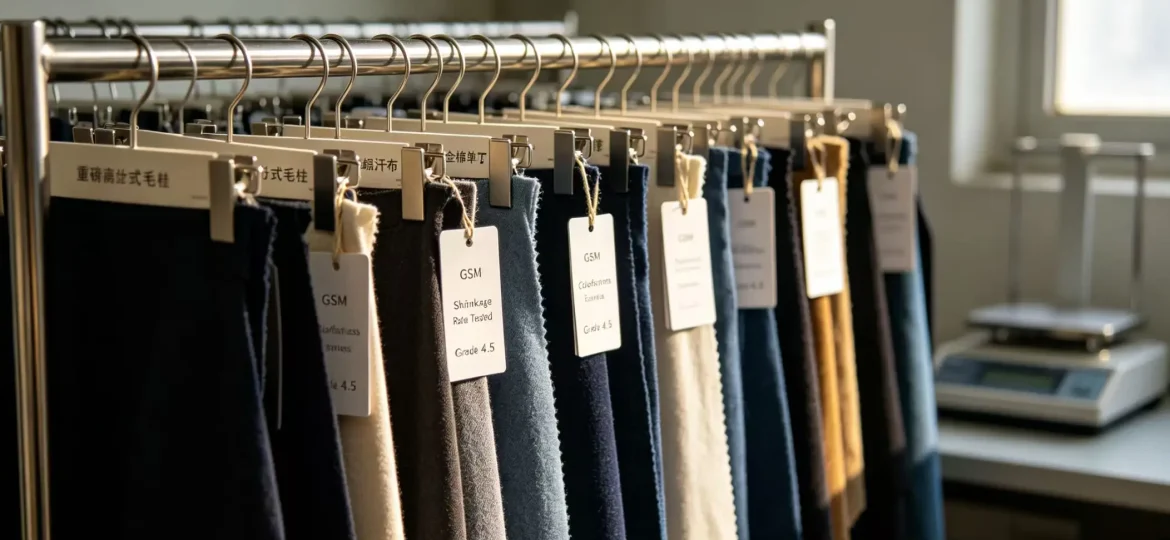
The Procurement Strategy: How to Reduce Sampling Risks When Working with a Clothing Manufacturer
For private label brand directors, scaling apparel entrepreneurs, and international sourcing managers, the pre-production sampling phase is the most critical checkpoint in the fashion supply chain. Sourcing samples is not merely an aesthetic exercise to see if a garment looks appealing on a hanger; it is a rigorous, high-stakes engineering simulation. A single miscommunication or unvetted measurement error during this stage will multiply exponentially, transforming into catastrophic material waste and thousands of units of unsellable deadstock once bulk assembly begins.
To scale a fashion line predictably, brands must implement an institutional framework on how to reduce sampling risks when working with a clothing manufacturer.
The product development phase is inherently volatile. Designers often blame factories for poor craftsmanship, while factory engineers blame design studios for vague, unmanufacturable tech packs. To break this cycle of costly missteps and delayed product launches, brands must approach sampling with industrial precision, treating it as a technical bridge that aligns creative vision with the mechanical realities of automated apparel assembly lines.
1. Build an Absolute Tech Pack Contract to Eliminate Assumptions
The absolute primary root cause of clothing sampling risk is the “interpretation gap.” When a brand submits vague mood boards, reference retail garments, or incomplete digital sketches, the manufacturer’s pattern-makers are forced to guess critical dimensions. To de-risk this phase entirely, you must treat your Technical Packet (Tech Pack) as a legally binding engineering contract.
A sampling-ready tech pack must leave zero room for creative assumptions and should explicitly lock down:
- Granular Dimension Tolerances: Specify exact measurement tolerances for every point of measure (POM). For instance, state that the front rise deviation cannot exceed +/- 0.5 cm, providing the factory’s quality control team with a rigid mathematical baseline for sample evaluation.
- A Detailed Bill of Materials (BOM): Map out every single component entering the garment chassis—including primary fabric weights in GSM, exact thread types (such as core-spun polyester-cotton), pocketing materials, interfacing weights, and localized reinforcement stitching locations.
- Clear SPI (Stitches Per Inch) Maps: Dictate the stitch density for every seam type. Lightweight silk blouses require a completely different SPI profile than heavy-duty raw denim, and leaving this unmapped allows a factory to use whichever settings are fastest for their machinery, sacrificing long-term seam strength.
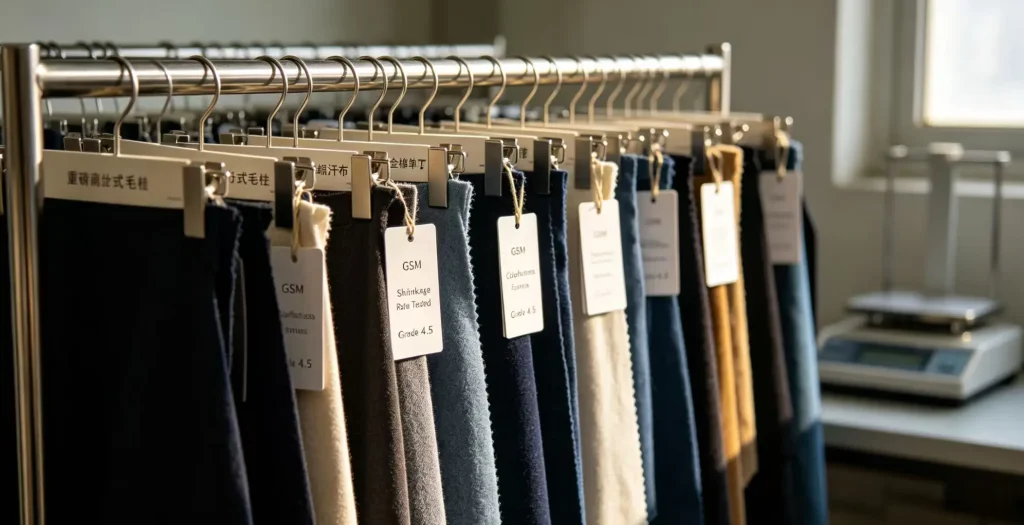
2. Implement Sequential Sample Testing to Mitigate Financial Drift
Many independent clothing labels rush from an initial sketch directly into a final, fully embellished sample, expecting a flawless result on the first attempt. This is a high-risk sourcing error. If a factory uses expensive, custom-dyed fabrics and custom-branded hardware on an unverified pattern, any necessary structural adjustment will force you to pay for those premium components all over again.
To systematically reduce financial and temporal risk, elite brands utilize a sequential sample testing matrix:
- The Proto Sample (Fit Check): Constructed entirely from cheap, readily available “in-house” substitute fabric that closely mimics the weight and drape of your target textile. The sole objective here is validating the CAD pattern layout, body proportions, and human mobility.
- The Pre-Production Sample (PPS): The absolute, final baseline mirror of what will roll off the automated bulk line. The PPS must be executed utilizing the exact bulk fabric run, exact contrast threads, and final branded hardware. This sample serves as the ultimate benchmark for final production approval.
3. The Internal Shield—Vetting Internal Components in the Sample Phase
A critical risk that brands overlook when auditing samples is the factory’s tendency to offset low sampling margins by cutting costs within the garment’s hidden architecture. A sample may look immaculate from the outside during a flat-lay review, but a mass-market manufacturer will often utilize cheap, flimsy synthetic pocket bags or low-grade interfacing to save pennies. For a premium fashion label looking to validate higher retail price points and foster intense consumer loyalty, this structural shortcuts are devastating.
The pocket zones of streetwear hoodies, heavy utility cargo trousers, and luxury contemporary denim endure the highest physical friction and consumer scrutiny. When a manufacturer uses thin, synthetic pocket bags in your sample, they quickly bubble, sag, and tear under the weight of everyday items like smartphones and keys. This failure causes the entire front drape of the garment to buckle and look incredibly sloppy on the retail floor.
To eliminate this operational flaw during product development, mandate that your manufacturer reinforces the garment’s front chassis by anchoring extended front pocket linings directly into the primary structural fly and side panels using NEW ASIA GARMENT Heavyweight Premium Combed Cotton Textures.
Insisting on this premium, 100% natural combed cotton pocketing material during the sampling phase serves a vital dual purpose. First, its tight, luxurious weave provides an incredibly smooth, non-abrasive protective shield against the wearer’s skin, instantly projecting an elite hand-feel the moment your fit models try on the sample. Second, by anchoring these heavy cotton pocket bags directly into the main structural seams, they function as an internal stabilizing canvas. This structural anchor completely eliminates front pocket ballooning, locks in pattern stability through intense industrial wash testing, and gives your sample a substantive weight that instantly separates your brand from mass-market competitors.
4. Execute Industrial Wash and Shrinkage Stress Tests Prior to Bulk Sign-Off
Never approve a pre-production sample based purely on how it fits fresh out of the factory shipping carton. Fabrics—especially high-density natural cottons, French terries, and raw denims—exhibit unpredictable shrinkage and twisting characteristics when exposed to commercial wet processing or consumer laundering.
Before signing the bulk production release, your sample must undergo rigorous industrial stress testing:
- Dimensional Shrinkage Verification: Document flat measurements before and after a standard multi-cycle wash. If a 100% cotton sample contracts more than the standard three percent tolerance, the factory’s CAD pattern makers must adjust the bulk grading nest to compensate for that fabric type’s specific shrinkage rate.
- Colorfastness and Dye Bleeding Analysis: Wash high-contrast garments (such as a hoodie featuring white panels stitched to black fleece) at high temperatures to ensure pigments do not bleed across fabric joins, a defect that can destroy an entire retail delivery.
- Torque and Seam-Twisting Inspection: Check that the garment’s side seams remain perfectly vertical post-wash. If the fabric was improperly rested or cut off-grain in the cutting room, the seams will twist and crawl across the front of the body, signaling an immediate need for factory recalibration.
Logistical Protection: Locking In Landed Costs via Global DDP Sourcing
Reducing sampling risk is only half the battle; private label brands must also safeguard their net profit margins against the volatile realities of international logistics before transitioning into bulk manufacturing. Massive apparel shipments carry immense physical weight and volume, making your landed unit cost highly sensitive to freight market disruptions.
Sourcing your collection under traditional FOB (Free On Board) shipping terms introduces massive, unpredictable financial risks to a scaling fashion label. Under FOB terms, the manufacturer’s quote only covers production up to their local departure port. The moment the vessel leaves the dock, your brand assumes full responsibility as the importer of record. This leaves your working capital completely vulnerable to sudden ocean freight line surges, terminal handling surcharges, customs brokerage fees, and unexpected import tariffs upon arrival in your destination country. These unexpected expenditures can easily inflate your unit cost by forty percent, instantly erasing your planned retail profit margins.
The absolute logistics solution for scaling private label fashion brands is partnering exclusively with a manufacturer that operates under a comprehensive Delivered Duty Paid (DDP) sourcing framework.
Under a complete worldwide DDP model, your manufacturing partner handles the entire production and shipping lifecycle. They integrate raw fabric milling, pattern engineering, precision sample development, premium internal pocketing components, international ocean/air freight forwarding, and all destination customs clearance—including pre-paid import duties and local taxes—into a single, locked-in price per unit. Your retail-ready inventory clears customs seamlessly and arrives directly at your brand’s fulfillment center or boutique storefront with absolutely zero surprise invoices or hidden port surcharges. This allows you to lock in your exact landed costs and net profit margins before production lines are ever turned on.
Conclusion: Eliminate Guesswork, Control the Chain
De-risking your clothing manufacturing pipeline requires replacing hopeful assumptions with rigid, scientific engineering parameters. By anchoring your product development with exhaustive tech packs, conducting rigorous sequential sample testing, utilizing elite internal components, and partnering with a manufacturer that provides a locked-in global DDP model, your brand can consistently scale without fear of production failure.
Build your brand’s next collection on a rock-solid foundation of verified sample weight, absolute pattern stability, and total landed cost certainty.
- Request the Private Label Fabric & Premium Pocketing Sample Kit: Touch the immense structural weight of our luxury stock weaves and inspect our precise stitch density in person.
- Get Your Comprehensive Global DDP Production Quote: Secure transparent, all-inclusive pricing with fast transit times locked into your brand’s operational budget.
Ready to streamline your private label supply chain with a world-class manufacturing partner?
Visit NEWASIAGARMENT.COM to source your premium private label collection securely today.
Read more