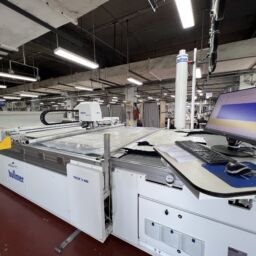

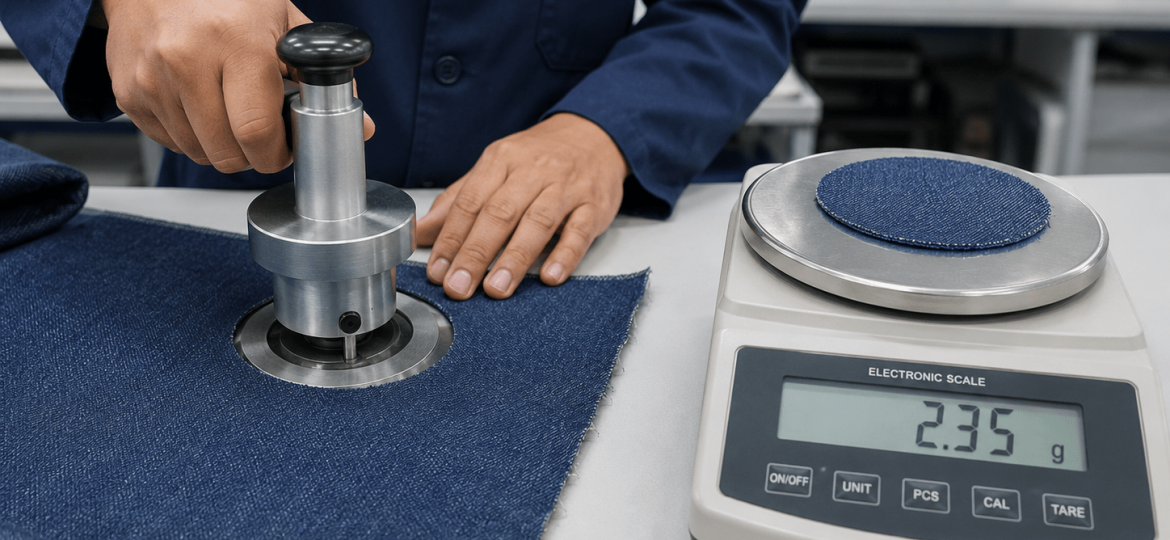
Scaling a fashion brand often leads to a pivotal moment: moving production to a clothing manufacturer China
based. While the cost efficiencies and infrastructure are unmatched, the distance introduces a
significant risk—quality variance. For denim skirts, a garment that relies heavily on “vibe” created through
washing and structural integrity, a generic QC check isn’t enough.
If you are working with an OEM factory or a private label supplier, you need a technical framework to
ensure the skirt that arrives at your warehouse matches the sample you approved. This guide breaks down
the essential Denim Skirt Quality Control (QC) checklist from a real-world factory floor perspective.
1.Fabric Integrity and Weight Verification
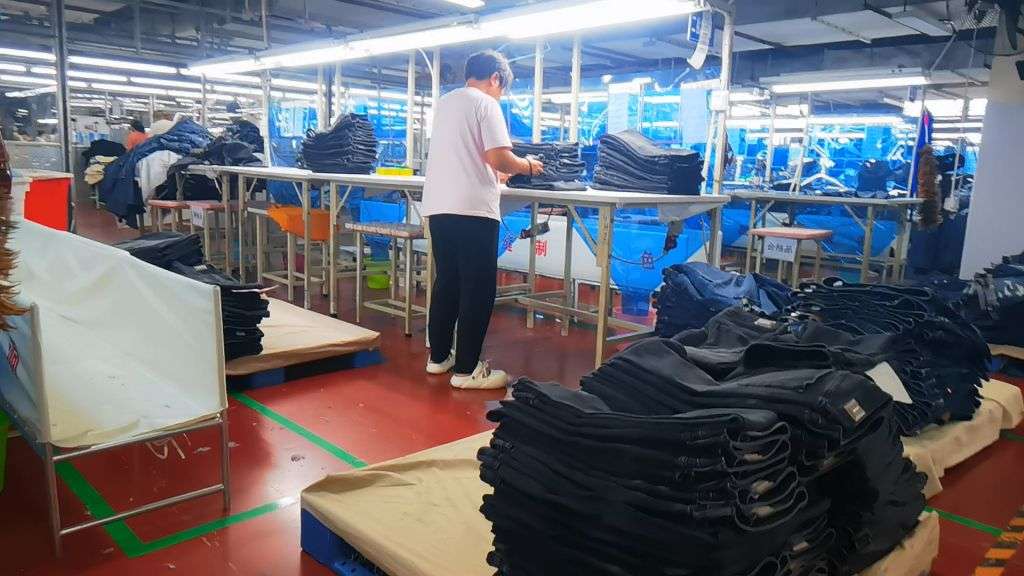
The “hand-feel” of denim is determined by its GSM (Grams per Square Meter). A common issue when
working with a low MOQ clothing factory is the substitution of fabric to save costs. If your tech pack calls
for 12oz denim but the factory uses 10oz, the skirt will lack the structural “A-line” shape intended.
- Odor Check: High-sulfur dyes used in budget denim leave a “rotten egg” smell. This is a major red flag in
QC. - Stretch Recovery:For denim skirts with spandex, pull the fabric to its limit and release. It should snapback instantly. “Bagging” at the seat is a sign of low-grade elastane.
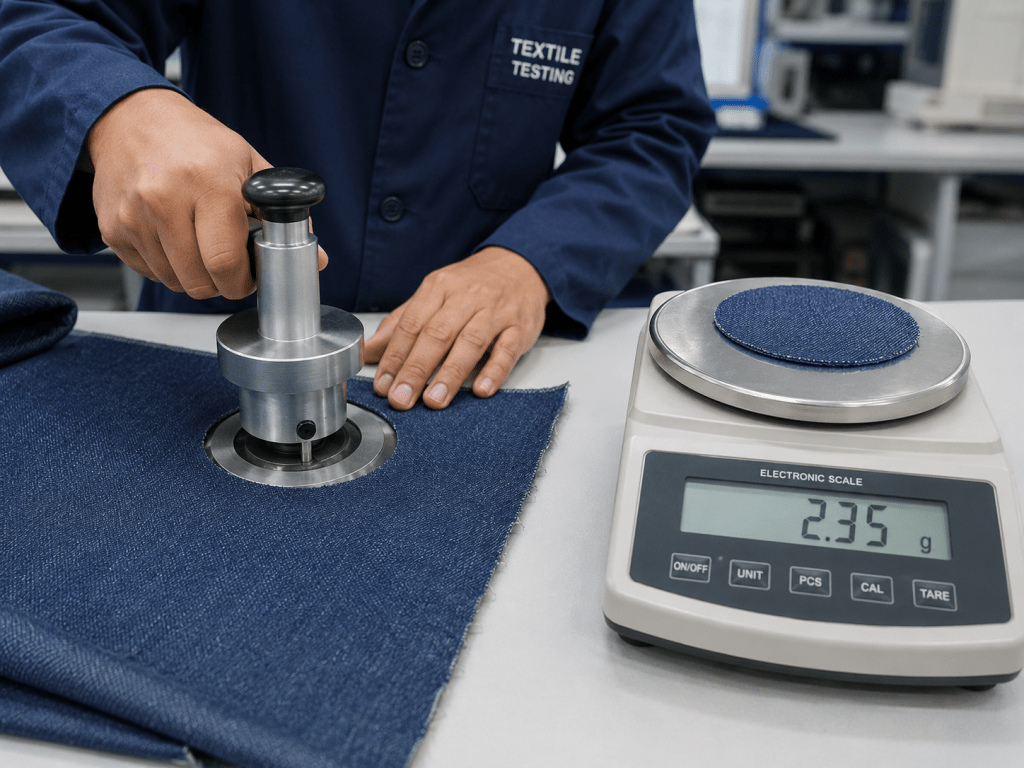
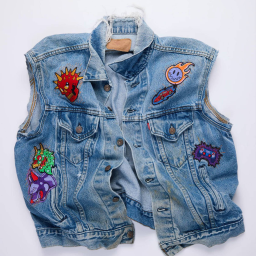
2.The “Wash” Consistency: The Hardest Part of Denim
Denim is unique because the finished look is achieved through destructive processes (stone washing, acid
washing, enzyme washing). When auditing a denim factory in China, look for consistency across a single
batch. Even a professional clothing manufacturing China setup can struggle with “shading” (color variance
between pieces).
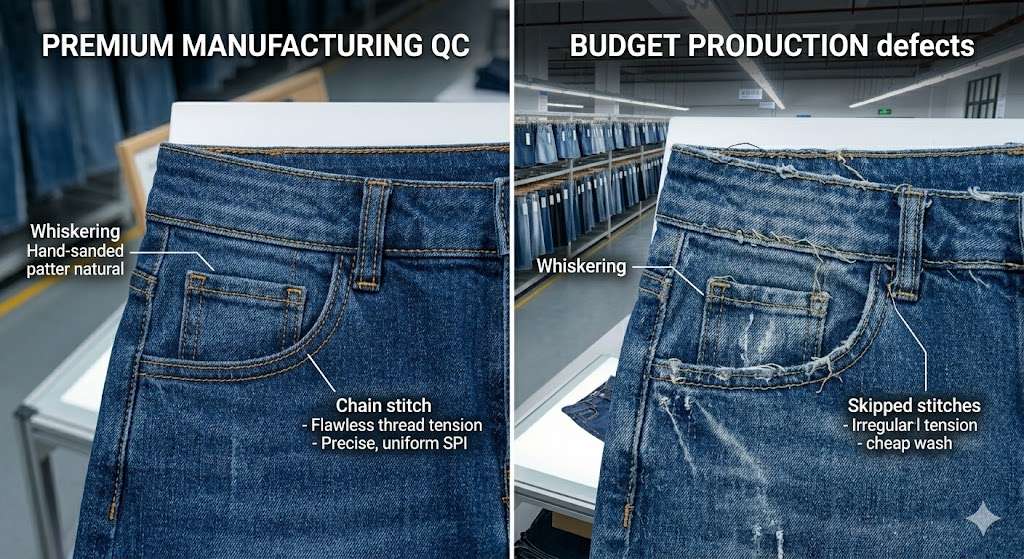
Check the “whiskering” and “honeycombs” (the faded lines near the crotch and back of knees). Are they
positioned naturally, or do they look like cheap, printed-on stripes? In high-quality production, these are
hand-sanded, meaning every piece is slightly unique but within a 5% tolerance of the master sample.
3.Stitching and Construction Standards
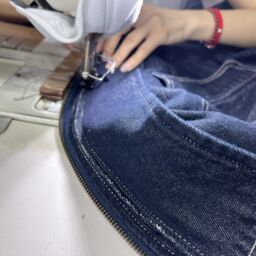
Denim requires heavy-duty machinery. A custom clothing manufacturer should be using “chain stitching”
on the hem and waistband for durability.
- SPI (Stitches Per Inch): For denim, 8-10 SPI is standard. Too few stitches lead to seam bursting; too
many can weaken the fabric (perforation effect). - Thread Tension: Check the “top-stitching” (usually contrasting orange or gold thread). It should beperfectly straight. Any “bird-nesting” (tangled thread) on the inside of the garment indicates poor machine calibration.
4.Hardware and Trim Durability
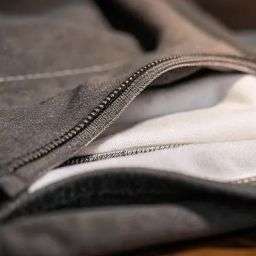
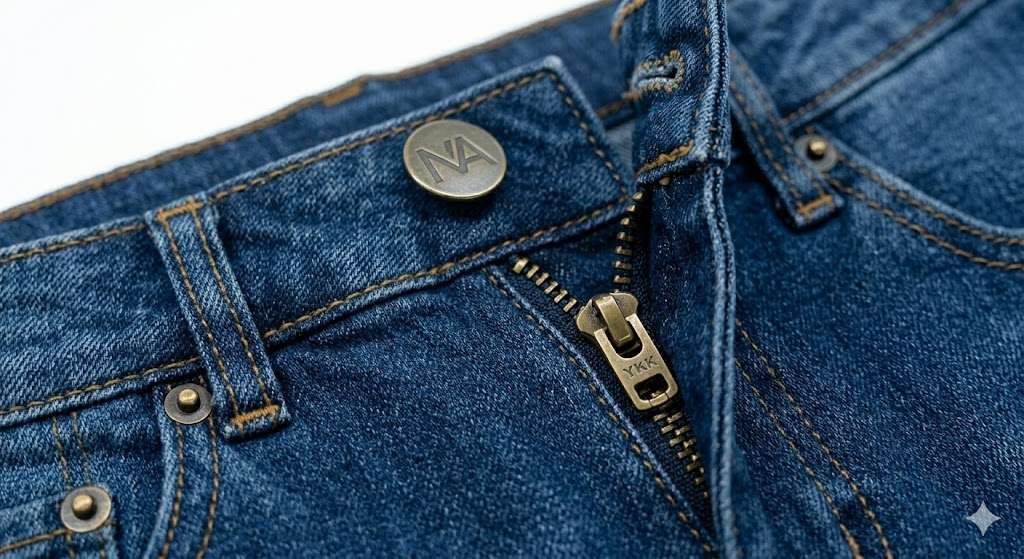
A denim skirt is only as good as its zipper. Many apparel suppliers try to cut costs here. Ensure your
clothing supplier China is using YKK or high-quality SBS zippers.
- Button Pull Test: The shank button (the main metal button) must be able to withstand 90 Newtons of
pull force. - Rivets: Check that rivets are hammered in straight. If they are slanted, they will eventually snag on the
wearer’s skin or other clothing.
THE QUICK QC CHECKLIST FOR BULK PRODUCTION
- Compare bulk color against the “Golden Sample” under D65 light source.
- Measure waistband, hip, and length against the size chart (Tolerance: +/- 1cm).
- Check for “Puckering” at the side seams—a sign of dull needles.
- Verify all labels (care label, size label) are sewn in the correct orientation.
- Ensure no “loose threads” longer than 0.5cm remain on the garment.
Comparison: Premium vs. Budget Denim Manufacturing
Understanding the difference between a high-end OEM factory and a budget-tier workshop is crucial for your margins and brand reputation.
| Feature | Premium Manufacturing | Budget Manufacturing |
|---|---|---|
| Fabric Source | Ring-spun, indigo dyed, heavy GSM. | Open-end yarn, sulfur dyed (smell issues). |
| Washing Process | Eco-friendly laser/ozone fading. | Heavy chemical bleaching/stone wash. |
| Hardware | Branded zippers (YKK) & brass rivets. | Generic zinc alloy (prone to rusting). |
| Inside Finish | Overlocked seams with bound edges. | Rough overlocking with frayed ends. |
Finding the Right Partner
When searching for a clothing manufacturer China, don’t just look at the price. A wholesale clothing manufacturer that quotes 30% lower than the market average is likely cutting corners in the washing house or using “deadstock” fabric that may have hidden defects. If you are a startup, look for a low MOQ clothing factory that specializes specifically in denim, as they will have the specialized machines (like bartackers and eyelet hole machines) required for a professional finish[cite: 1].
SEO FAQ: Common Denim Sourcing Questions
1. How do I prevent my denim skirts from smelling like chemicals?
This is usually caused by leftover sulfur dyes. Inform your private label supplier during the tech pack stage that you require “neutralization” washes. A final ozone wash or a thorough vinegar-based rinse at the factory level can eliminate this[cite: 1].
2. What is the standard MOQ for a denim skirt factory in China?
While a standard clothing manufacturer China[cite: 1] might ask for 300-500 pieces per style[cite: 1], many low MOQ clothing factories[cite: 1] now accept 100 pieces[cite: 1]. However, expect to pay a “surcharge” for fabric dyeing if you want a custom wash at low volumes[cite: 1].
3. Can a private label supplier handle the design for me?
Yes[cite: 1]. An ODM factory[cite: 1] (Original Design Manufacturer) has an in-house design team that can provide “white label” designs you can simply add your logo to[cite: 1]. An OEM factory[cite: 1] requires you to provide the full tech pack[cite: 1].
4. Why do my denim skirts shrink after the first wash?
Denim is prone to shrinkage[cite: 1]. Professional clothing manufacturing China[cite: 1] facilities perform “pre-shrinking” or “sanforization” before cutting the fabric[cite: 1]. If your skirts are shrinking, the factory skipped the fabric stabilization stage[cite: 1].