

Introduction
Zara’s fast fashion model has made it a global leader, but shoppers and businesses often research “zara fabric types quality sustainability manufacturing costs” to understand its product ecosystem. Zara (Inditex) uses a mix of synthetic, natural, and recycled fabrics with a focus on affordability, while pushing sustainability goals like 100% eco-fabrics by 2025 . Quality is maintained through audits (e.g., OEKO-TEX), but manufacturing costs impact margins amid climate risks . This guide explores each aspect, drawing from sources like McKinsey and Martin Roll.
Newasia Garment Co.,Ltd. offers customizable , providing high-quality, sustainable fabrics at competitive costs. We are also a partner of brands such as American Eagle Outfitters, Uniqlo, Gap, Zara, Levi’s, and Lee, specializing in tailored apparel. We can customize fabric types, ensuring quality and sustainability while controlling manufacturing costs—perfect for brands seeking personalized, eco-friendly solutions with low MOQs.
What Fabric Types Does Zara Use?
Zara’s fabric strategy is designed around speed, cost efficiency, and trend adaptability.
Common Fabric Types in Zara Products
| Fabric Type | Usage |
|---|---|
| Cotton & BCI Cotton | T-shirts, shirts, dresses |
| Recycled Polyester | Outerwear, knitwear |
| Viscose / Rayon | Dresses, blouses |
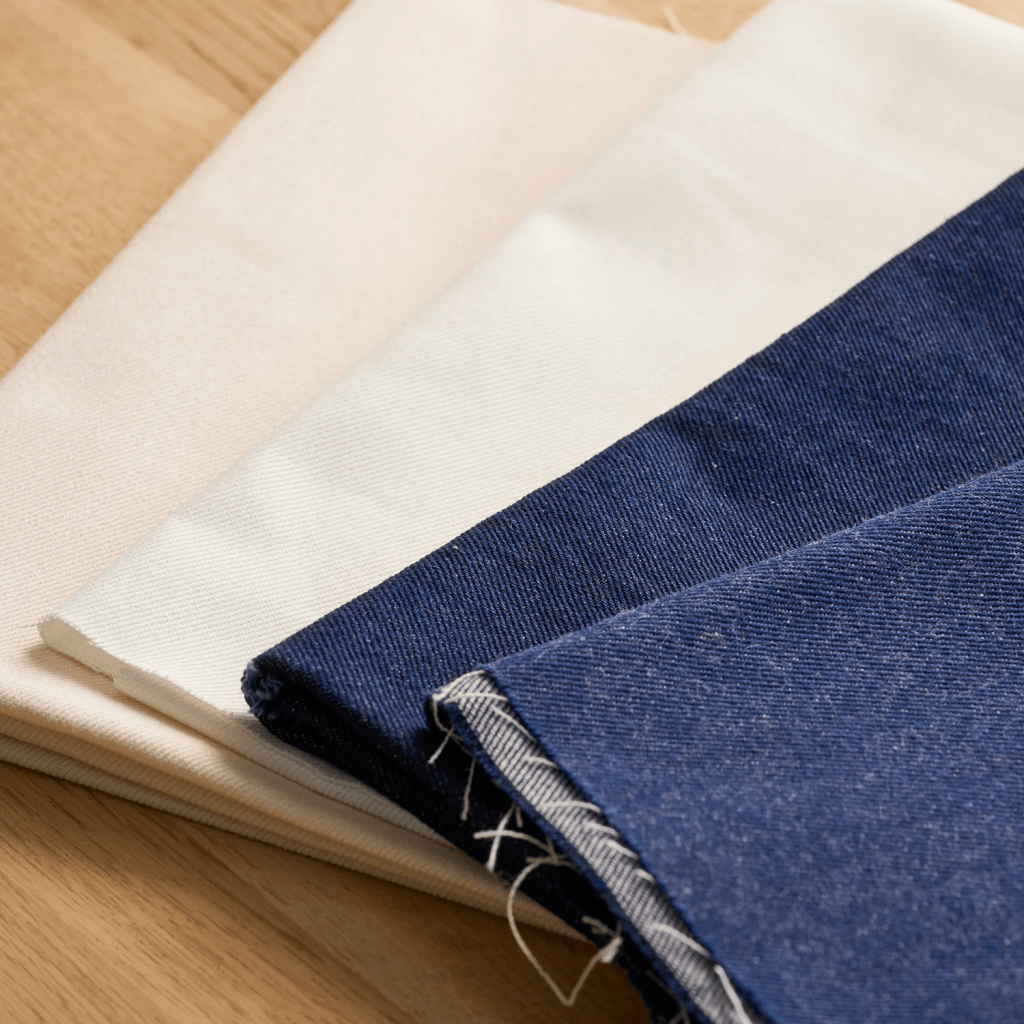
| Denim (Cotton blends) | Jeans, jackets |
| Fabric Blends | Improved drape & cost control |
Zara rarely relies on luxury fabrics. Instead, it focuses on optimized blends that balance appearance, durability, and price.
How Is Zara’s Fabric Quality Positioned?
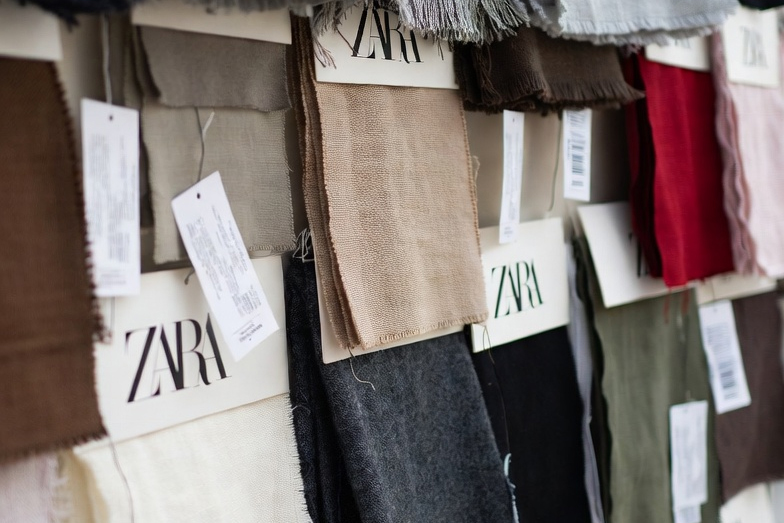
Zara’s fabric quality sits in the mid-market fast fashion tier.
Key Characteristics:
- Designed for short-to-medium lifecycle
- Prioritizes visual appeal and comfort
- Consistent quality across global suppliers
- Controlled via standardized testing protocols
Zara does not aim for premium longevity like luxury brands. Instead, its quality strategy matches consumer expectations for trend-driven apparel.
Zara’s Sustainability Strategy in Fabric Sourcing
Sustainability is not optional in Zara’s supply chain — it is structurally embedded.
Core Sustainability Practices:
- BCI & Organic Cotton
- Recycled Polyester (GRS certified)
- Reduced water usage in dyeing
- Restricted chemical compliance (ZDHC)
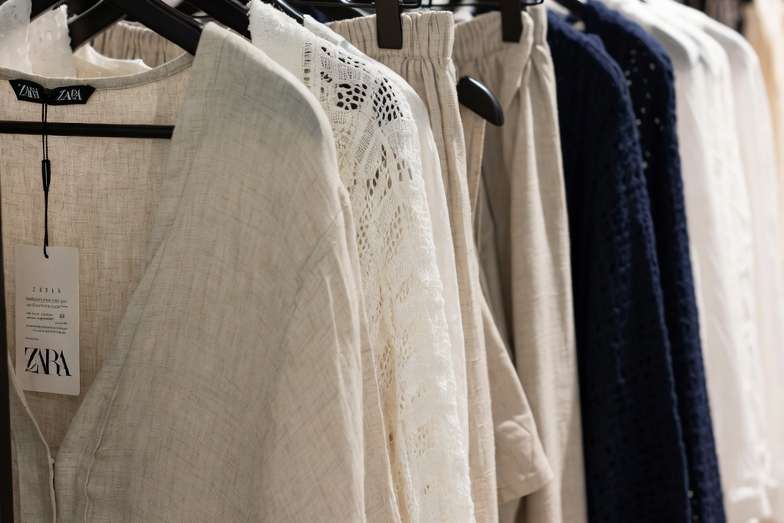
Zara’s “Join Life” initiative pushes suppliers to meet material and process benchmarks, not marketing claims.
Manufacturing Costs Behind Zara Fabrics
Zara controls fabric-related manufacturing costs through:
1. Scale & Volume Leverage
Large volume sourcing reduces per-meter fabric cost.
2. Fabric Simplification
Limited fabric variations across styles reduce complexity.
3. Strategic Sourcing Regions
- China: Fabric innovation & stability
- Turkey & Spain: Speed-sensitive items
- South Asia: Cost-optimized production
Manufacturing Cost Structure
1 Cost Breakdown (Approximate)
| Cost Component | Percentage | Details |
|---|---|---|
| Materials (Fabric+Trims) | 35-45% | Varies by fabric type and origin |
| Labor | 15-25% | Higher in Europe, lower in Asia |
| Manufacturing Overhead | 10-15% | Factory operations, quality control |
| Transport & Logistics | 5-8% | Air freight for new collections, sea for basics |
| Tariffs & Duties | 2-6% | Varies by destination market |
| Profit Margin | 15-20% | Varies by product category |
2 Regional Cost Comparison
| Region | Labor Cost/Hour | Lead Time | Quality Level | Sustainability Focus |
|---|---|---|---|---|
| Spain/Portugal | $12-18 | 2-3 weeks | High | High (regulatory compliance) |
| Turkey | $4-8 | 3-4 weeks | High | Medium-High |
| Morocco | $3-6 | 3-5 weeks | Medium-High | Medium |
| Bangladesh | $0.5-1.0 | 4-6 months | Medium | Improving |
| Vietnam | $0.8-1.5 | 4-6 months | Medium-High | Medium |
| China | $3-6 | 3-6 months | Variable | Increasing |
3 Speed vs. Cost Trade-offs
- European production: 40-60% higher cost, but 75% faster
- Air freight: 10-15x sea freight cost, but enables 2-week delivery
- Small batch premium: 20-30% higher unit cost vs. mass production
- Sustainable material premium: 15-40% higher fabric costs
Sustainability vs. Cost Analysis
1 Cost Premiums for Sustainable Options
| Sustainable Feature | Cost Increase | Consumer Willingness to Pay |
|---|---|---|
| Organic Cotton | 20-30% | +10-15% |
| Recycled Polyester | 10-25% | +5-10% |
| Tencel/Lyocell | 30-50% | +15-20% |
| Water-saving Dyes | 5-15% | Minimal direct recognition |
| Fair Trade Certified | 15-25% | +10-15% |
2 Zara’s Sustainability Cost Strategy
- Absorption: Covering 50-70% of sustainability premiums internally
- Premium positioning: Passing 30-50% to consumers in “Join Life” lines
- Volume scaling: Using scale to reduce sustainable material costs
- Technology investment: €300M+ in sustainable innovation (2020-2025)
Fabric Innovation & Technology Costs
1 R&D Investment Areas
- Digital printing: Reducing water use by 95%, but higher initial costs
- Laser finishing: For denim, reducing chemical/water use (20-30% higher cost)
- 3D knitting: Reducing waste but requiring €500k+ machines
- RFID integration: €0.10-0.15 per garment, improving inventory accuracy
2 Cost Recovery Timeline
- Water-saving technologies: 2-3 year ROI through reduced utility costs
- Automation: 3-5 year ROI via labor reduction
- Sustainable materials: Difficult to quantify direct ROI, brand value driven
Challenges & Future Directions
1 Current Challenges
- Cost-pressure conflict: Balancing sustainability with fast-fashion pricing
- Greenwashing accusations: Despite progress, criticized for overall volume
- Quality perception: Inconsistent across price points
- Supply chain complexity: Managing dual-speed (fast/slow) production
2 Future Cost Trends
- 2025+ Sustainability goals: Targeting 100% sustainable fabrics (cost impact: +25-40%)
- Carbon pricing: Potential €5-15/ton CO2 impact on manufacturing
- Circularity investments: Significant upfront costs for recycling infrastructure
- Living wage requirements: Potential 10-20% labor cost increases in Asia
How Zara Balances Cost, Quality, and Sustainability
Zara does not maximize any single variable.
Instead, it optimizes the triangle:
Acceptable quality + Scalable sustainability + Controlled cost
This is achieved through:
- Approved fabric libraries
- Supplier audits
- Modular garment design
- Continuous cost benchmarking
Can Other Brands Replicate Zara’s Fabric Strategy?
Yes — but not by copying styles.
Brands must replicate:
- Fabric decision logic
- Supplier collaboration models
- Cost-quality trade-off frameworks
This requires a manufacturer capable of:
- Fabric development
- Cost engineering
- Sustainability compliance
- Flexible production volumes
Why Choose Our OEM & ODM Clothing Services?

Our designers and manufacturing Team have years of experience in the clothing industry.

We work with you to create clothing that fits your brand’s unique look.

We use only the best fabrics for your products.


Our Process Setup is Optimized for Mass Production
Handle Customer’s Inquiry
Send us an inquiry and share more details about your projects, and our dedicated team will handle it.
Make Quotation
If your project is suitable for our standard MOQ and production, then we offer an initial quotation based on the techpack, selected fabric quality, and quantity.
Sample Development
After the customer’s approval of the quotation, we proceed with sample development to confirm quality before starting bulk production.
Bulk Production
Following order confirmation and a deposit, we initiate bulk production with all specifications carefully followed.
Quality Control
We follow strictly our QC procedures, ensuring 100% end-line inspections. We also apply AQL 2.5 for final inspections. Third-party QC is always welcome.
Packaging & Shipping
Once the quality is confirmed, the finished products are carefully packaged and shipped in bulk to your warehouse.
Benefits of Buying Direct from tank tops Manufacturers
When you buy directly from a wholesale ladies denim jeans manufacturer like Newasia Garment Co.,Ltd., you gain multiple advantages that streamline your supply chain and boost your margins.

We maintain consistency and high standards, from fabric selection and dyeing to stitching and final packaging.

The more you order, the better the pricing structure, allowing you to maximize your profitability and margin.

Ideal for brands that want unique products—control over colors, GSM, fits, and all branding elements.

In-house, modern production ensures timely delivery, cutting down the typical delays associated with third-party vendors.

Buy factory-direct to cut out unnecessary distribution costs and get the most competitive rates always.
OUR PROCESS




Choose Newasia Garment Co.,Ltd. The Real Veteran for Startup Clothing Brands
Different from other clothing manufactures, Newasia Garment Co.,Ltd. is committed to providing better and better services to help grow your business.
- Direct Factory, No Middle Man
- One-Stop Services, 5 Times of Quality Check
- 39 years of extensive apparel manufacturing experience
- 140 Production lines, Hundreds of Equipment
- High Customer satisfaction, High Repeat Order Rate
We sincerely invite you to be our next customer.
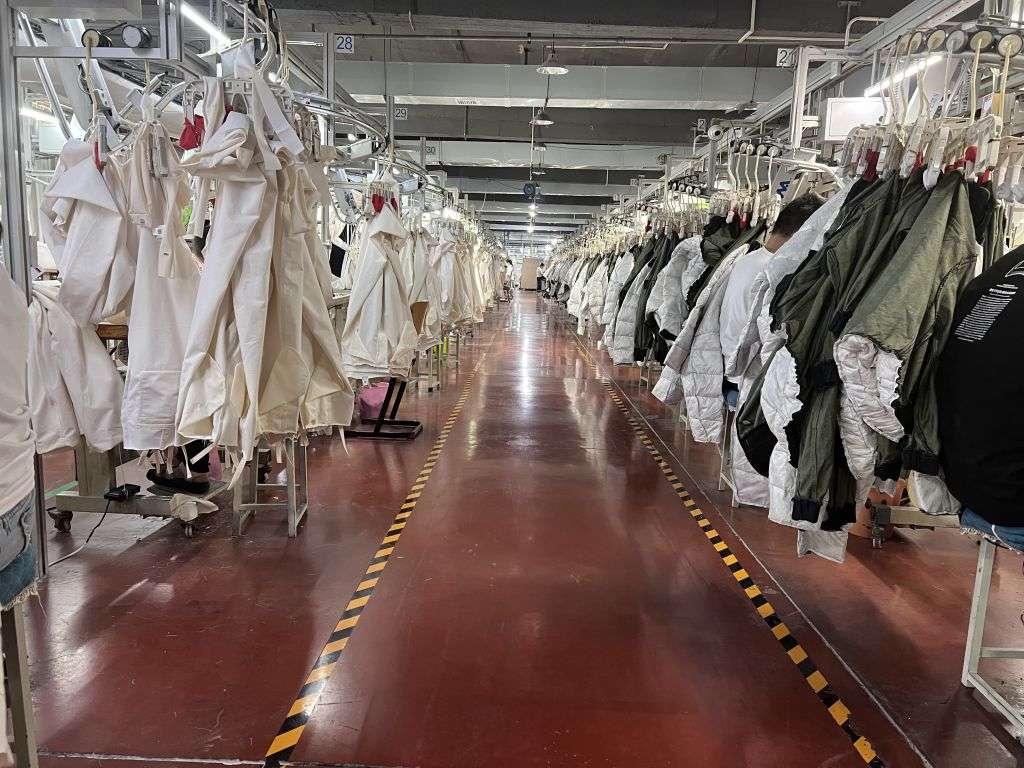
Certified Professional Clothing Producer
We are very proud of these certificates! They represent Newasia Garment Co.,Ltd. ’s amazing achievements and accreditations. They show how much we care about quality, safety, and professionalism.
We’re proud to say that we have obtained BSCI and ISO 90001 certificates, and inspection certificates for filling materials such as down and cotton. We follow international standards throughout our production process and take responsibility for the quality of our products.
As one of China’s leading clothing manufacturers, we are pleased to be recognized by respected organizations. These certifications underscore our reliability as a trusted supplier to the global apparel industry.
Trusted Certificates:
Why Choose Us
 Independent base We have our own laboratory and can independently develop fabrics , China  Professional certification Certification: ISO 9001, ISO 14001,BSCI,GRS |  Full-equipped Full-equipped, from fiber manufacturing, yarn spinning, weaving, dyeing and processing to finished product production  Rich experience Professional, large and experienced design team, combined with the latest artificial intelligence technology |  Our Facilities 12,000 skilled employees, daily production capacity exceeds 100,000 pieces  Fashion exhibition Participated in domestic and foreign fashion weeks and exhibitions many times |
Trusted by Global Clients
Frequently Asked Questions
Q1: What is your Minimum Order Quantity (MOQ)?
We specialize in flexible production solutions to support emerging brands and growing businesses.
- For highly customised or technical garments (such as specialised denim washes or intricate embroidery), MOQ requirements may range from 200 to 300 units.
- Our standard MOQ ranges from 100 to 300 units per design, depending on fabric availability and production complexity.
- For best pricing efficiency, MOQ is typically based on 300 per style per colour.
- You can mix colors and sizes within the same style and fabric for greater flexibility.
Q2: What Services Do You Offer?
We provide full-cycle fashion support, including:
- Sourcing: Local and global raw material, fabric R&D, and procurement (trims) with cost optimization.
- Manufacturing: Custom manufacturing with quality control checkpoints.
- Design & Development: Assistance with tech packs, trend research, and collection building.
- Logistics: Shipping coordination to your warehouse or 3PL.
- Sustainability Consulting: Eco-fabric sourcing, ethical production planning.
Q3: Can I Customize My Designs Fully?
We work with both OEM (your design, our production) and ODM (our templates customized for you) models. Customization options include:
- Fabric type and color
- Fit and sizing
- Printing (screen, DTG, sublimation, embroidery)
- Accessories (zippers, buttons, cords)
- Labels, hangtags, branded packaging
Q4: What are your sustainability practices?
We’re committed to responsible manufacturing through:
- Waste reduction programs and ethical labor practices (BSCI certified)
- GOTS-certified organic cotton and recycled material options
- OEKO-TEX® certified dyes and processing
- Energy-efficient production technology
Q5: What Are Your Lead Times?
For in-stock items: ships worldwide within 3–7 days For custom orders: production lead time 15–30 days Urgent / Express Options: Available at a premium. Timing can vary depending on fabric development, approval cycles, and order complexity.
Q6: What is your production capacity?
Our facility employs 12,000 skilled employees, daily production capacity exceeds 100,000 pieces. We handle orders from 100 pieces to 50,000+ units across:
- Activewear and sportswear
- Denim and casual wear
- Children’s clothing
- Technical apparel
Q7: Where are your garments produced?
Our headquarters are based in China, where we operate our own vertically integrated factory. Our infrastructure and strategically placed worldwide manufacturing facilities allow us to offer extremely competitive pricing for fully custom clothing. offer flexible production options tailored to your needs. All manufacturin
Conclusion
Zara’s fabric strategy is not about luxury — it is about precision.
By carefully selecting fabric types, controlling quality standards, integrating sustainability, and managing manufacturing costs, Zara maintains global competitiveness.
Brands seeking similar results need manufacturing partners who understand fabric engineering, cost control, and sustainability execution.
📩 Contact Newasia Garment Co.,Ltd. to explore customized fabric and manufacturing solutions.
Read more: Zara Fabric Types, Quality, Sustainability & Manufacturing Cost Analysis- The Ultimate Guide to Sourcing T-Shirt Vendors in China (2026 Update)
- One Stop T-shirt Manufacturer With The Best Quality in China
- Are There Any Cotton T-Shirt Manufacturers in Washington State
- A T-Shirt Manufacturer Planning to Expand Its Workforce: What It Means for Brands & Buyers
- One-Stop “A New Day” T-Shirt Manufacturer – Design to Delivery, Custom Packaging