
Introduction
Uniqlo is known for its ability to deliver high-quality, affordable apparel with impressive speed and efficiency. But how does it manage to keep up with demand and offer trendy products consistently? The answer lies in its global manufacturing strategy. Uniqlo manufactures its clothing in a number of countries, each chosen for its unique strengths in production capacity, cost-efficiency, and proximity to key markets.
Newasia Garment Co.,Ltd. is also this brand’s manufacturer, offering customizable alternatives with innovative craft. We are also a partner of brands such as American Eagle Outfitters, Uniqlo, Gap, Zara, Levi’s, and Lee, specializing in tailored apparel. We can customize Uniqlo-style clothing, ensuring high-quality production craft at competitive costs—ideal for brands with low MOQs.
Where Are Uniqlo’s Factories Located?
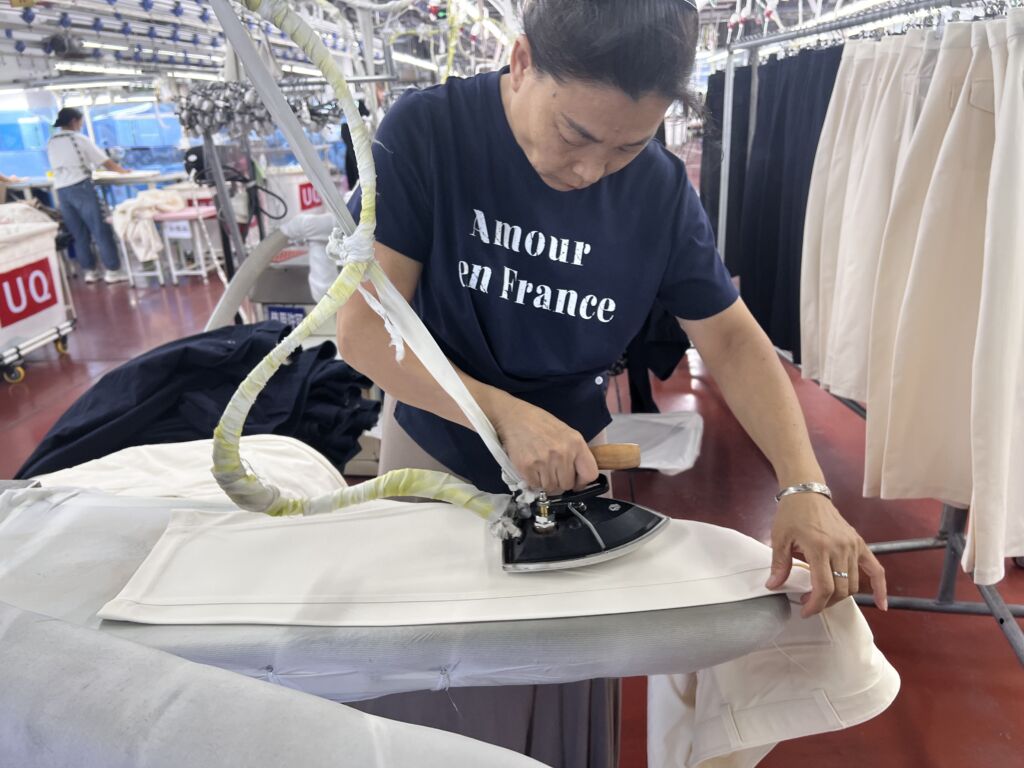
Uniqlo operates its manufacturing process across various regions to maximize efficiency and minimize costs. The key manufacturing hubs for Uniqlo include Japan, China, Vietnam, Bangladesh, India, and Indonesia. These locations play specific roles in meeting the global demand for Uniqlo’s diverse product range.
Key Manufacturing Locations for Uniqlo:
- Japan: Known for its innovative fabrics and high-tech clothing like HeatTech, AIRism, and BlockTech, Japan plays a vital role in producing premium, technology-driven items.
- China: A major hub for producing basic apparel like T-shirts, jeans, and other staple items. China is cost-efficient, highly capable in mass production, and equipped with advanced manufacturing techniques for more complex garments.
- Vietnam: A fast-growing production center known for affordable, high-quality basics. It’s a key supplier of T-shirts, socks, and other everyday wear, benefiting from its proximity to other Asian markets.
- Bangladesh: Uniqlo taps into Bangladesh’s highly skilled labor force for high-volume garment production. This is where many of Uniqlo’s basic cotton items are produced, due to the low labor costs.
- India: Similar to Bangladesh, India focuses on producing price-sensitive and high-volume items, making it a key player in Uniqlo’s global supply chain for basic apparel.
- Indonesia: An emerging manufacturing location, particularly for basic wear such as socks, undergarments, and easy-to-produce casual wear.
Why Does Uniqlo Manufacture in These Countries?
Uniqlo strategically selects its manufacturing locations based on cost-efficiency, proximity to key markets, and production capacity. Let’s break down why these countries are critical to Uniqlo’s global supply chain:
Country-Specific Reasons for Production:
- Japan: Premium quality and innovation are key here. Uniqlo produces its high-tech fabric lines in Japan, where there is a strong tradition of textile innovation and manufacturing expertise.
- China: Cost-effectiveness and large-scale production make China a dominant player in Uniqlo’s supply chain. It can produce a wide variety of clothing, from basic garments to more complex designs, all at competitive prices.
- Vietnam: Vietnam offers low labor costs and shorter lead times, allowing Uniqlo to produce basic clothing at a rapid pace, while benefiting from its geographical proximity to Asian markets.
- Bangladesh: High-volume, low-cost production is key for Uniqlo’s basic garments, and Bangladesh offers one of the most cost-efficient labor forces in the world for clothing manufacturing.
- India: India’s strong cotton production and affordable labor make it an ideal location for producing affordable basics, such as T-shirts, sweatshirts, and other staple garments.
- Indonesia: Cost-effective manufacturing and a growing garment industry make Indonesia an attractive location for basic wear production, especially for items like socks and undergarments.
Why Uniqlo Uses Multi-Country Production
Uniqlo’s diversified manufacturing strategy is driven by four key factors:
1. Cost Optimization
Different countries offer different labor and operating costs, allowing Uniqlo to balance pricing and margins.
2. Technical Specialization
Some regions specialize in knitwear, others in denim, outerwear, or performance fabrics.
3. Logistics Efficiency
Multi-region sourcing shortens delivery times and reduces shipping risks.
4. Risk Management
Geopolitical, pandemic, or regulatory disruptions are minimized through diversification.
This structure makes Uniqlo’s supply chain highly resilient.
How Uniqlo Maintains Consistent Quality Across Countries
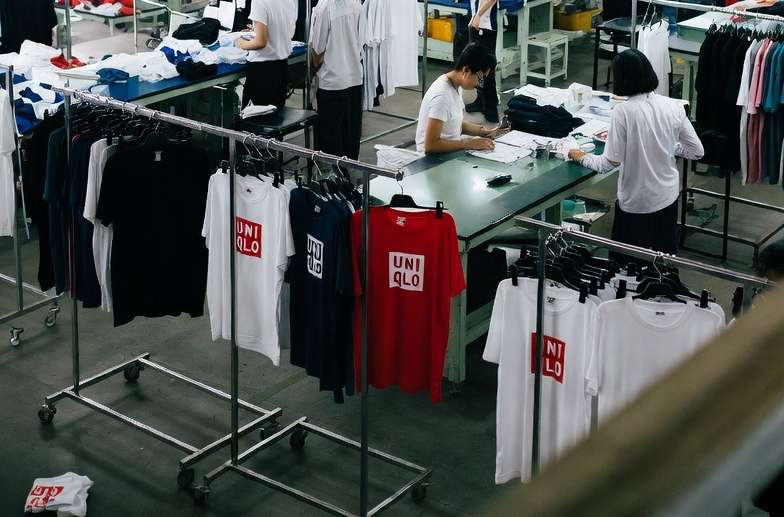
Despite manufacturing in multiple countries with varying cost structures, Uniqlo maintains exceptional quality consistency through:
1. Centralized Quality Standards
- Global Technical Team: Japanese technical experts oversee all manufacturing locations
- Unified Specifications: Detailed construction standards applied uniformly worldwide
- Standard Operating Procedures: Every factory follows identical production protocols
2. Comprehensive Factory Partnership Program
- Long-term Relationships: Strategic partnerships rather than transactional contracts
- Technology Transfer: Uniqlo invests in factory equipment and training
- Joint Development: Collaborative problem-solving and continuous improvement
3. Multi-Layer Quality Control System
- Pre-production Testing: All fabrics tested in centralized labs
- Inline Inspections: Quality checks at every production stage
- Final Random Inspection: Statistical sampling before shipment
- Mystery Shopping: Market purchases for independent quality verification
4. Ethical & Sustainable Standards
- Fast Retailing Code of Conduct: Applied uniformly across all manufacturing partners
- Regular Audits: Social, environmental, and quality compliance checks
- Transparency Initiatives: Increasing supply chain visibility and accountability
How does Uniqlo control production costs?
Uniqlo does not follow traditional fast fashion trends. Instead, it creates a “lifewear” collection—timeless pieces that stay in stock for years. This allows for bulk production, reducing per-unit costs.
Unlike many brands that rely on seasonal fashion cycles, Uniqlo’s consistent designs lower material waste and factory retooling expenses. They partner with a select number of high-efficiency suppliers, ensuring stable costs and long-term quality.
Where does Uniqlo get their clothes from?
Uniqlo sources its products through a highly optimized supply chain. But where are their factories, and how do they keep costs so low?
Uniqlo works with manufacturers in China, Vietnam, Bangladesh, and Indonesia. They establish long-term contracts with suppliers, ensuring stability in material costs and production efficiency. This enables them to maintain consistent pricing.
How does Uniqlo’s supplier strategy differ from other brands?
Unlike brands that frequently switch suppliers to chase lower prices, Uniqlo builds long-term relationships. Their “Takumi” system—Japanese textile experts overseeing overseas production—ensures that suppliers maintain quality while improving efficiency.
Most clothing brands negotiate prices seasonally, leading to cost fluctuations. Uniqlo’s stable partnerships mean predictable pricing and better quality control.
Does Uniqlo own its factories?
No, Uniqlo does not own factories. Instead, they work closely with third-party manufacturers to optimize production. By not investing in factory ownership, they keep overhead costs low while maintaining flexibility in supplier selection.
Is Uniqlo actually good quality?
Low prices often mean poor quality, but Uniqlo has built a reputation for durability. Is it really worth the price?
Uniqlo focuses on functional, well-designed clothing made from quality fabrics. They invest in textile innovation, such as HeatTech and Airism, to enhance comfort and longevity. This makes their products a good value for money.
Key Reasons to Work With Us
- Low MOQ & Fast Turnaround
- 100pcs minimum order – Perfect for testing designs or small businesses.
- 5-10 days for sample and 15-30 days to produce – Quick delivery without compromising quality.
- Screen printing, embroidery, DTG, Rhinestone Application – Choose the best method for your logo.
- Free design support – Our team helps optimize artwork for the best results.
- Located in the heart of China’s textile hub(Guangzhou), ensuring fast material sourcing & lower costs.
- 2000+ fabric options – From organic cotton to performance blends.
- Quality You Can Trust
- Strict QC process – Every piece inspected before shipping.
- OEKO-TEX®, ISO and BSCI certificate – Safe, durable, and eco-friendly materials.
Global Shipping & Easy Communication
- Door-to-door logistics (DDP available).
- 24/7 support via WhatsApp, Email, WeChat.
OUR PROCESS




Comprehensive Manufacturing Services
End-to-end solutions tailored to your brand’s specific requirements with flexible production options and dedicated support.

Complete production services based on your designs and specifications with guaranteed quality standards.
✅Your design, our expertise
✅Flexible MOQ options
✅Cost-effective solutions
✅Fast turnaround times

Full service from concept to production including design development and trend analysis.
✅Complete design solutions
✅Trend research & analysis
✅Technical development
✅Market-ready products

Build your brand with comprehensive private label manufacturing and white label options.
✅Brand development support
✅Custom labeling & packaging
✅Exclusive product lines
✅Market positioning advice

Rigorous quality control systems ensuring international standards and customer satisfaction.
✅AQL 2.5 inspection standards
✅OEKO-TEX certified fabrics
✅ISO quality management

Worldwide shipping solutions with real-time tracking and comprehensive logistics support.
✅Global shipping network
✅Real-time tracking
✅Insurance coverage
✅Customs clearance support

Eco-friendly production processes with sustainable materials and responsible practices.
✅Recycled materials
✅Water conservation
✅Energy efficient processes
✅Carbon footprint reduction
Sustainable Fabrics & Precision Craftsmanship
If you’re upgrading your clothing product line, we provide advanced stitching and premium fabric options like laser-bonded seams — tailored for Western body types and luxury fit.

Four-needle six-thread stitching
Provides strong, flexible seams that resist tearing and ensure long-lasting wear — ideal for high-stretch yoga movements.

Laser cutting, bonded seams
Delivers clean, precise edges and smooth finishes without irritation. Bonded seams enhance comfort and create a sleek, modern look.

Silicone / Embroidery / Heat Transfer
Multiple logo options to match your brand aesthetic. From subtle silicone prints to premium embroidery, all techniques ensure durability and style.

Naked feel, buttery-soft fabric
Ultra-soft, second-skin texture that feels weightless yet supportive. Perfect for luxury yoga collections demanding both comfort and performance.
Certified Professional Clothing Producer
We are very proud of these certificates! They represent Newasia Garment Co.,Ltd. ’s amazing achievements and accreditations. They show how much we care about quality, safety, and professionalism.
We’re proud to say that we have obtained BSCI and ISO 90001 certificates, and inspection certificates for filling materials such as down and cotton. We follow international standards throughout our production process and take responsibility for the quality of our products.
As one of China’s leading clothing manufacturers, we are pleased to be recognized by respected organizations. These certifications underscore our reliability as a trusted supplier to the global apparel industry.
Trusted Certificates:
Why Choose Us
 Independent base We have our own laboratory and can independently develop fabrics , China  Professional certification Certification: ISO 9001, ISO 14001,BSCI,GRS |  Full-equipped Full-equipped, from fiber manufacturing, yarn spinning, weaving, dyeing and processing to finished product production  Rich experience Professional, large and experienced design team, combined with the latest artificial intelligence technology |  Our Facilities 12,000 skilled employees, daily production capacity exceeds 100,000 pieces  Fashion exhibition Participated in domestic and foreign fashion weeks and exhibitions many times |
Trusted by Global Clients
Frequently Asked Questions
Q1: What is your Minimum Order Quantity (MOQ)?
We specialize in flexible production solutions to support emerging brands and growing businesses.
- For highly customised or technical garments (such as specialised denim washes or intricate embroidery), MOQ requirements may range from 200 to 300 units.
- Our standard MOQ ranges from 100 to 300 units per design, depending on fabric availability and production complexity.
- For best pricing efficiency, MOQ is typically based on 300 per style per colour.
- You can mix colors and sizes within the same style and fabric for greater flexibility.
Q2: What Services Do You Offer?
We provide full-cycle fashion support, including:
- Sourcing: Local and global raw material, fabric R&D, and procurement (trims) with cost optimization.
- Manufacturing: Custom manufacturing with quality control checkpoints.
- Design & Development: Assistance with tech packs, trend research, and collection building.
- Logistics: Shipping coordination to your warehouse or 3PL.
- Sustainability Consulting: Eco-fabric sourcing, ethical production planning.
Q3: Can I Customize My Designs Fully?
We work with both OEM (your design, our production) and ODM (our templates customized for you) models. Customization options include:
- Fabric type and color
- Fit and sizing
- Printing (screen, DTG, sublimation, embroidery)
- Accessories (zippers, buttons, cords)
- Labels, hangtags, branded packaging
Q4: What are your sustainability practices?
We’re committed to responsible manufacturing through:
- Waste reduction programs and ethical labor practices (BSCI certified)
- GOTS-certified organic cotton and recycled material options
- OEKO-TEX® certified dyes and processing
- Energy-efficient production technology
Q5: What Are Your Lead Times?
For in-stock items: ships worldwide within 3–7 days For custom orders: production lead time 15–30 days Urgent / Express Options: Available at a premium. Timing can vary depending on fabric development, approval cycles, and order complexity.
Q6: What is your production capacity?
Our facility employs 12,000 skilled employees, daily production capacity exceeds 100,000 pieces. We handle orders from 100 pieces to 50,000+ units across:
- Activewear and sportswear
- Denim and casual wear
- Children’s clothing
- Technical apparel
Q7: Where are your garments produced?
Our headquarters are based in China, where we operate our own vertically integrated factory. Our infrastructure and strategically placed worldwide manufacturing facilities allow us to offer extremely competitive pricing for fully custom clothing. offer flexible production options tailored to your needs. All manufacturing is supervised by our quality control team to ensure consistent standards.
Conclusion
Uniqlo’s global manufacturing strategy is based on a well-coordinated network of factories across key regions like Japan, China, Vietnam, Bangladesh, India, and Indonesia. By strategically selecting these locations for cost-efficiency, proximity to markets, and technical expertise, Uniqlo is able to maintain high production speeds while delivering high-quality products at affordable prices.
Through this hybrid model of in-house production and outsourced manufacturing, Uniqlo remains agile and efficient in the fast-paced fashion industry.
Read more: Where Are Uniqlo Clothes Manufactured