
If you’re searching for “uniqlo clothing factory” or “where are Uniqlo clothes manufactured”, you’re likely curious about the real production story behind Uniqlo’s affordable, high-quality basics. Uniqlo is a Japanese brand (owned by FAST RETAILING Co., Ltd.), but the vast majority of its clothing is not made in Japan. Instead, Uniqlo outsources production to a network of third-party factories in Asia — primarily China, Vietnam, Bangladesh, Indonesia, Cambodia, and India.
This model allows Uniqlo to keep prices low while maintaining consistent quality through strict supplier standards. However, many shoppers are surprised to learn that only a very small portion (high-end or special items) is produced in Japan.
Newasia Garment Co.,Ltd. is also a manufacturer for Uniqlo, meaning we produce garments to the same rigorous quality and technical specifications that Uniqlo demands. We are also a proud partner of global brands such as American Eagle Outfitters, Uniqlo, Gap, Zara, Levi’s, and Lee — which means our production standards, ethical compliance, and delivery reliability meet the highest international requirements.
What Is the Uniqlo Clothing Factory Model?
Uniqlo, as part of Fast Retailing Group, uses a globalized sourcing and manufacturing network rather than owning most of its factories. This approach combines the advantages of flexibility, cost control, and strategic specialization.
Key features of Uniqlo’s production model include:
✔ Long-term partnerships with qualified manufacturers
✔ Multi-regional production to balance cost and speed
✔ Centralized quality and compliance systems
✔ Integrated logistics and forecasting
✔ Technical support during product development
This model allows Uniqlo to scale rapidly while maintaining high quality.
The UNIQLO Factory Network: Key Partnerships
Strategic Manufacturing Partners by Region:
| Country | Factory Type | Key UNIQLO Products Made | Why UNIQLO Partners Here |
|---|---|---|---|
| 🇨🇳 China | Large-scale technical factories | HEATTECH, AIRism, Ultra Light Down, Blocktech | Advanced sewing tech, fabric handling expertise, massive scale |
| 🇻🇳 Vietnam | Modern knit & woven specialists | Supima cotton tees, sweaters, casual wear | Competitive costs, skilled workforce, growing technical capability |
| 🇧🇩 Bangladesh | High-volume basic apparel factories | Basic tees, underwear, loungewear | Exceptional cost efficiency for simple items |
| 🇮🇩 Indonesia | Versatile mid-scale factories | DRY-EX activewear, knit tops, lightweight outerwear | Good quality-cost balance, flexible production |
| 🇯🇵 Japan | Premium & prototype facilities | Uniqlo U, +J, selvedge denim, first samples | Top-tier craftsmanship, R&D innovation |
Why Does Uniqlo Use Multiple Factories Worldwide?
Uniqlo’s decision to manufacture in multiple countries is part of a strategic approach that allows the brand to balance costs, quality, and supply chain efficiency. By diversifying production across several hubs, Uniqlo can:
- Minimize Risk: Reducing reliance on any single country or region helps mitigate risks such as labor disruptions or natural disasters.
- Optimize Costs: Different countries offer unique advantages, such as low labor costs in Bangladesh or advanced manufacturing technologies in China.
- Ensure Product Quality: With strong relationships with trusted suppliers and frequent quality checks, Uniqlo ensures that products meet high standards, no matter where they are made.
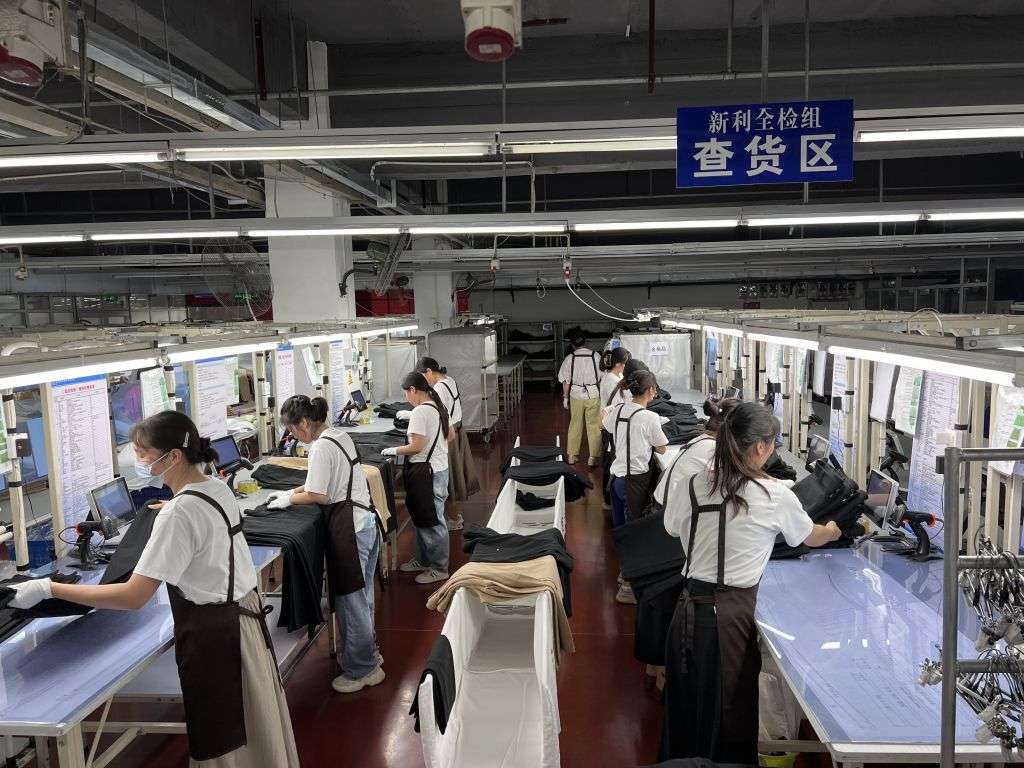
Inside a Typical UNIQLO Partner Factory
1. Production Setup & Standards:
- Dedicated UNIQLO Lines: Factories often dedicate specific production lines exclusively to UNIQLO orders
- Standardized Layout: Workstations organized for maximum efficiency following Japanese “kaizen” principles
- Technical Support: UNIQLO engineers work on-site during new product launches
- Visual Management: Clear signage, quality checkpoints, and real-time production tracking
2. Quality Control Infrastructure:
Raw Material Inspection → Fabric Testing Lab → Cutting QC → Sewing Line Checks
       ↓                      ↓                  ↓              ↓
    Approved            Performance Data     Pattern Accuracy  Stitch Quality
       ↓                      ↓                  ↓              ↓
    Final Assembly → Post-Wash Inspection → Final Audit → Packaging
3. Specialized Equipment Common in UNIQLO Factories:
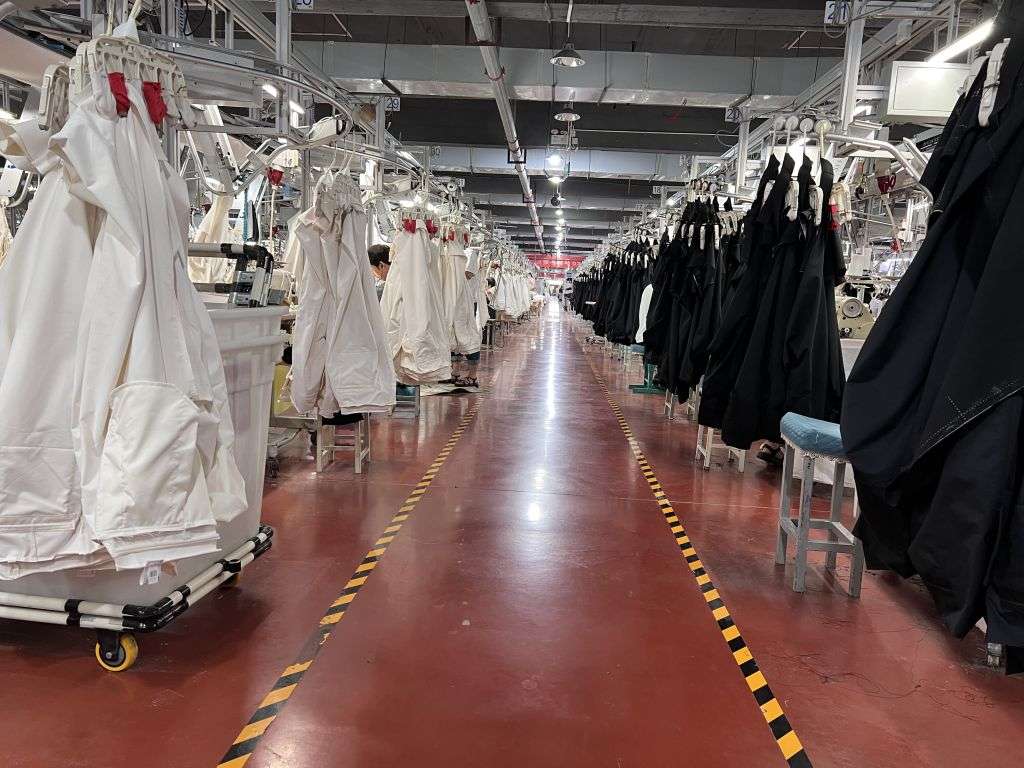
- Auto-spreading machines: Precise fabric layering for cutting
- Computerized cutting: Laser or blade systems for accuracy
- Specialized sewing machines: Cover stitch, overlock, blind stitch for specific applications
- Down filling stations: Controlled environment for Ultra Light Down
- Thermal bonding equipment: For seam sealing on waterproof items
- Washing & finishing: Ozone, laser, enzyme wash capabilities
Sustainability in UNIQLO Factories
Environmental Standards:
- Water Recycling: Required in denim washing facilities
- Energy Efficiency: LED lighting, solar panels where feasible
- Chemical Management: ZDHC (Zero Discharge of Hazardous Chemicals) compliance
- Waste Reduction: Fabric recycling programs, optimized cutting patterns
Social Compliance:
- No forced or child labor
- Reasonable working hours (monitored via electronic time systems)
- Safe working conditions (regular safety drills, proper ventilation)
- Grievance mechanisms for workers
Factory Locations & Supply Chain
Geographic Clustering:
- China: Guangdong, Zhejiang, Jiangsu provinces
- Vietnam: Ho Chi Minh City area, Hanoi region
- Bangladesh: Dhaka, Chittagong
- Indonesia: Jakarta, Bandung areas
- Japan: Tokyo area, Okayama (denim)
Supply Chain Coordination:
- Fabric Hubs: Factories located near textile mills when possible
- Logistics Centers: Regional distribution hubs optimize shipping
- Quick Response: Some factories near ports for faster turnaround
Our Connection to UNIQLO’s Factory Network
Newasia Garment Co., Ltd. operates within this ecosystem as a manufacturing partner. Our facilities embody the UNIQLO approach to apparel production:
How We Mirror UNIQLO Factory Standards:
- Dedicated Quality Teams: Separate from production, reporting directly to management
- Advanced Equipment: Matching the technical requirements of premium brands
- Ethical Employment: Fair wages, reasonable hours, safe conditions
- Continuous Improvement: Regular process optimization and worker training
- Transparent Operations: Open communication with brand partners
Our Production Capabilities:
- Technical Apparel: Similar to UNIQLO’s HEATTECH/AIRism production
- Precision Manufacturing: For consistent quality at scale
- Sustainable Practices: Eco-friendly processes and materials
- Flexible Capacity: From sampling to full production runs
For Brands Seeking UNIQLO-Level Manufacturing
If you want to produce apparel with similar quality consistency, ethical standards, and technical capability, our experience with UNIQLO-level production provides valuable insights:
What We Can Help You Achieve:
- Factory Selection: Identifying partners with the right capabilities
- Quality Systems: Implementing rigorous control processes
- Technical Development: From fabric selection to final production
- Ethical Compliance: Ensuring responsible manufacturing
- Supply Chain Optimization: Cost, speed, and reliability balance
Advanced Manufacturing Capabilities
State-of-the-art production facilities equipped with cutting-edge technology and skilled workforce delivering superior quality leggings at scale.
Production Excellence

140 fully automated production lines with advanced cutting and sewing technology for consistent quality.

In-house testing facility ensuring fabric durability, color fastness, and performance standards.

Eco-friendly manufacturing processes with recycled materials and water conservation systems.
| 100,000+ Daily Capacity |
| 140+ Production Lines |
| 99.5% Quality Pass Rate |
| 12,000+ Skilled Workers |
Comprehensive Manufacturing Services
End-to-end solutions tailored to your brand’s specific requirements with flexible production options and dedicated support.

Complete production services based on your designs and specifications with guaranteed quality standards.
✅Your design, our expertise
✅Flexible MOQ options
✅Cost-effective solutions
✅Fast turnaround times

Full service from concept to production including design development and trend analysis.
✅Complete design solutions
✅Trend research & analysis
✅Technical development
✅Market-ready products

Build your brand with comprehensive private label manufacturing and white label options.
✅Brand development support
✅Custom labeling & packaging
✅Exclusive product lines
✅Market positioning advice

Rigorous quality control systems ensuring international standards and customer satisfaction.
✅AQL 2.5 inspection standards
✅OEKO-TEX certified fabrics
✅ISO quality management

Worldwide shipping solutions with real-time tracking and comprehensive logistics support.
✅Global shipping network
✅Real-time tracking
✅Insurance coverage
✅Customs clearance support

Eco-friendly production processes with sustainable materials and responsible practices.
✅Recycled materials
✅Water conservation
✅Energy efficient processes
✅Carbon footprint reduction
Certified Professional Clothing Producer
We are very proud of these certificates! They represent Newasia Garment Co.,Ltd. ’s amazing achievements and accreditations. They show how much we care about quality, safety, and professionalism.
We’re proud to say that we have obtained BSCI and ISO 90001 certificates, and inspection certificates for filling materials such as down and cotton. We follow international standards throughout our production process and take responsibility for the quality of our products.
As one of China’s leading clothing manufacturers, we are pleased to be recognized by respected organizations. These certifications underscore our reliability as a trusted supplier to the global apparel industry.
Trusted Certificates:
Trusted by Global Clients
Frequently Asked Questions
Q1: What is your Minimum Order Quantity (MOQ)?
We specialize in flexible production solutions to support emerging brands and growing businesses.
- For highly customised or technical garments (such as specialised denim washes or intricate embroidery), MOQ requirements may range from 200 to 300 units.
- Our standard MOQ ranges from 100 to 300 units per design, depending on fabric availability and production complexity.
- For best pricing efficiency, MOQ is typically based on 300 per style per colour.
- You can mix colors and sizes within the same style and fabric for greater flexibility.
Q2: What Services Do You Offer?
We provide full-cycle fashion support, including:
- Sourcing: Local and global raw material, fabric R&D, and procurement (trims) with cost optimization.
- Manufacturing: Custom manufacturing with quality control checkpoints.
- Design & Development: Assistance with tech packs, trend research, and collection building.
- Logistics: Shipping coordination to your warehouse or 3PL.
- Sustainability Consulting: Eco-fabric sourcing, ethical production planning.
Q3: Can I Customize My Designs Fully?
We work with both OEM (your design, our production) and ODM (our templates customized for you) models. Customization options include:
- Fabric type and color
- Fit and sizing
- Printing (screen, DTG, sublimation, embroidery)
- Accessories (zippers, buttons, cords)
- Labels, hangtags, branded packaging
Q4: What are your sustainability practices?
We’re committed to responsible manufacturing through:
- Waste reduction programs and ethical labor practices (BSCI certified)
- GOTS-certified organic cotton and recycled material options
- OEKO-TEX® certified dyes and processing
- Energy-efficient production technology
Q5: What Are Your Lead Times?
For in-stock items: ships worldwide within 3–7 days For custom orders: production lead time 15–30 days Urgent / Express Options: Available at a premium. Timing can vary depending on fabric development, approval cycles, and order complexity.
Q6: What is your production capacity?
Our facility employs 12,000 skilled employees, daily production capacity exceeds 100,000 pieces. We handle orders from 100 pieces to 50,000+ units across:
- Activewear and sportswear
- Denim and casual wear
- Children’s clothing
- Technical apparel
Q7: Where are your garments produced?
Our headquarters are based in China, where we operate our own vertically integrated factory. Our infrastructure and strategically placed worldwide manufacturing facilities allow us to offer extremely competitive pricing for fully custom clothing. offer flexible production options tailored to your needs. All manufacturing is supervised by our quality control team to ensure consistent standards.
Conclusion
Uniqlo’s success is not only built on its iconic clothing designs but also on its carefully optimized global manufacturing network. By sourcing clothes from factories in China, Vietnam, Bangladesh, Indonesia, and Japan, Uniqlo achieves its mission of offering high-quality, affordable, and functional clothing to customers worldwide. Whether it’s a HeatTech thermal layer made in China, a Supima cotton T-shirt crafted in Vietnam, or a +J collaboration piece produced in Japan, Uniqlo’s commitment to innovation and quality control shines through in every product.
Understanding where and how Uniqlo clothing factories operate gives you insight into global apparel manufacturing standards. Whether you aim to launch a private label, source high-quality garments, or scale production, partnering with a capable manufacturer is essential.
Newasia Garment Co., Ltd. provides professional, scalable, and compliant manufacturing solutions — from design to delivery.
👉 Contact us today for samples, quotations, and a tailored production plan.
Read more: UNIQLO Clothing Factory: Inside the Global Production System