

Introduction: Inside the Making of Pepe Jeans
Pepe Jeans, founded in 1973 in London’s Portobello Road Market, has grown into one of the most recognized denim brands worldwide. Known for its European street style and premium denim quality, Pepe Jeans has always placed craftsmanship and innovation at the core of its brand identity.
Many fashion enthusiasts and apparel entrepreneurs often wonder: how are Pepe Jeans actually made? Understanding the manufacturing process of Pepe Jeans not only reveals the level of craftsmanship behind each pair but also offers valuable insights for brands seeking to produce similar high-quality jeans.
This article will take you through the complete Pepe Jeans manufacturing process, from design concept to the finished product — and then compare it with modern denim production capabilities in China, where manufacturers like Newasia Garment Co., Ltd. have mastered advanced, sustainable production systems.
Overview: Why the Pepe Jeans Manufacturing Process Stands Out
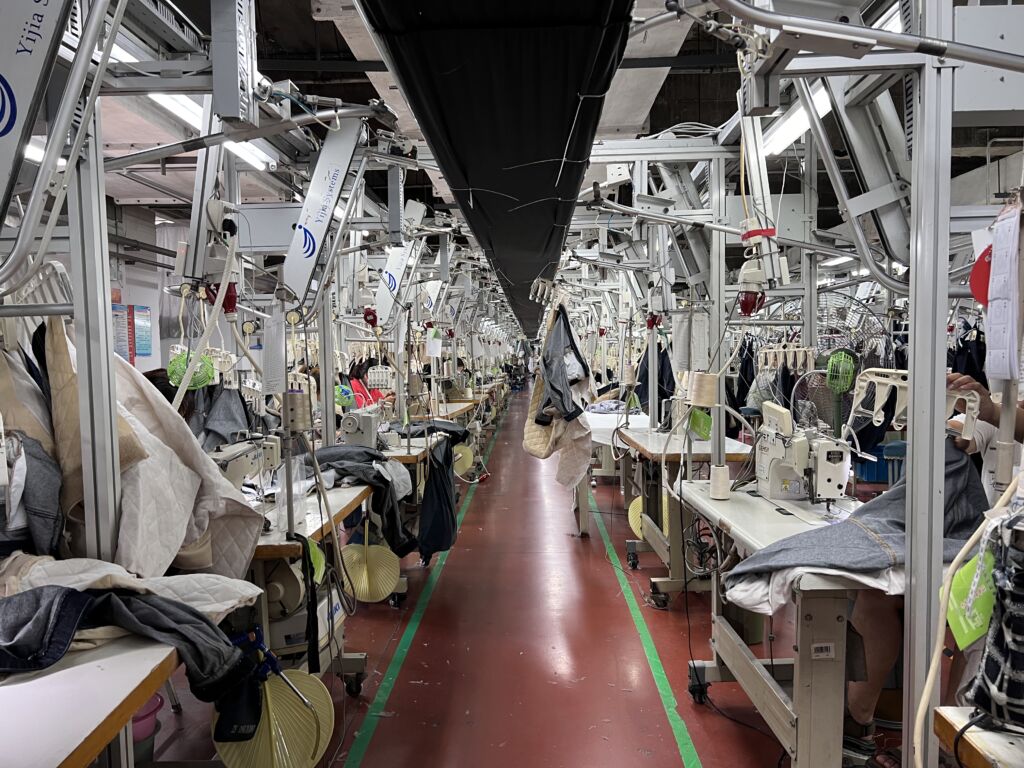
Pepe’s process is a masterclass in scalable sustainability, producing millions of pairs yearly while cutting environmental footprints. Key pillars: Vertically integrated facilities for control, 6-month lead times optimized via outsourcing, and certifications like OEKO-TEX. This efficiency supports global expansion, making India/Europe their largest markets by 2025.
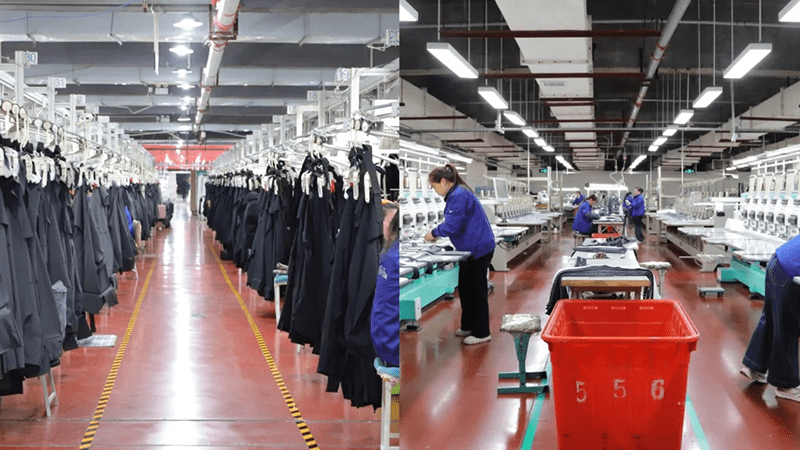
The journey spans 8-10 stages, from raw cotton to ready-to-wear. We’ll break it down step-by-step, drawing from Pepe’s Tru-Blu® and Wiser Wash® innovations. Whether you’re a denim aficionado or sourcing pro, understanding this unlocks replication potential.
Step-by-Step Manufacturing Process of Pepe Jeans
Step 1: Design and Pattern Development
The process begins at the heart of Pepe Jeans’ London design studio. Each new collection starts with extensive trend research, fabric innovation, and mood boards that define the upcoming season’s aesthetic.
Pattern makers then translate the sketches into precise technical patterns, ensuring perfect fit, comfort, and consistency across sizes. These digital patterns are shared with manufacturing facilities in India, Bangladesh, and Turkey, where sample garments are created for approval.
This design-first approach ensures that Pepe Jeans’ products stay fashion-forward while maintaining the brand’s signature craftsmanship.
Step 2: Fabric Selection and Sourcing
Pepe Jeans uses premium cotton denim, sourced mainly from India and Turkey, two of the world’s leading cotton producers.
The brand prefers ring-spun cotton yarns for their durability and softness. Many of Pepe Jeans’ premium lines use stretch denim fabrics that blend cotton with elastane (spandex) for flexibility.
Additionally, Pepe Jeans is increasingly turning toward sustainable raw materials such as organic cotton, recycled polyester, and eco-friendly dyes as part of its environmental commitment.
Step 3: Denim Dyeing Process
Once the fabric is sourced, the next stage is dyeing — a key factor that determines the final look and feel of the jeans.
Pepe Jeans primarily uses the indigo rope dyeing method, which gives the denim its rich blue tone while keeping the yarn core white. This is what allows jeans to fade beautifully over time.
Steps in the denim dyeing process include:
- Yarn preparation and cleaning.
- Rope dyeing in multiple indigo baths.
- Oxidation between each bath to fix color.
- Drying and winding for weaving.
Modern Pepe Jeans suppliers are also adopting low-water and eco-dyeing systems to reduce environmental impact, aligning with sustainable denim manufacturing trends.
Step 4: Cutting, Stitching, and Assembly
Once the dyed denim fabric is ready, it’s transferred to the cutting department, where automated cutting machines ensure precision for each pattern piece.
Skilled workers then proceed with stitching, using high-tensile polyester threads and specialized sewing machines designed for denim’s thickness. Common techniques include:
- Flat-felled seams for durability.
- Double-needle stitching on pockets and sides.
- Bar-tack reinforcements in high-stress areas like belt loops.
During assembly, the jeans take their shape — waistband, zippers, pockets, rivets, and buttons are added to complete the structure.
Step 5: Washing and Finishing
Pepe Jeans are known for their unique washes and finishes — a vital stage that defines the final product’s personality.
The finishing process includes:
- Stone washing for vintage effects.
- Enzyme washing for softness.
- Sandblasting and hand scraping for distressed looks.
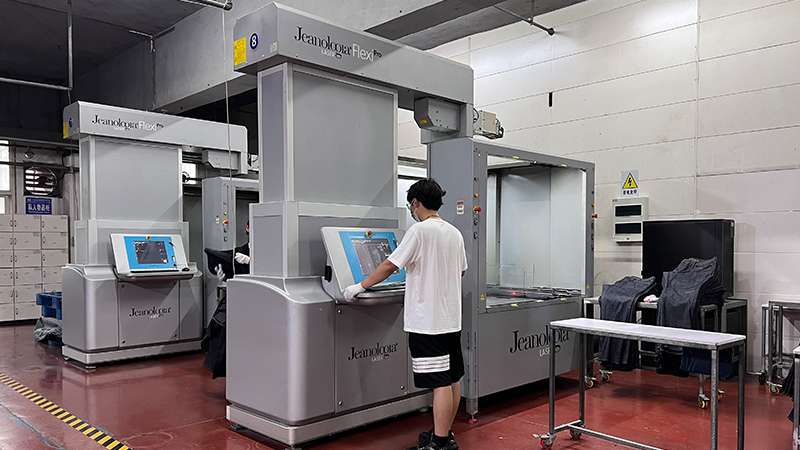
- Laser fading and ozone washing for sustainability.
These processes give Pepe Jeans their characteristic worn-in style and color depth that customers love.
Step 6: Quality Control and Packaging
Before shipping, every Pepe Jeans pair undergoes strict quality control checks to ensure fit accuracy, color consistency, and stitching strength.
Inspections cover:
- Fabric defects.
- Stitch alignment.
- Wash uniformity.
- Measurement tolerance.
Once approved, jeans are pressed, tagged, and packaged for distribution to Pepe Jeans retail stores and wholesale partners around the globe.
OUR PROCESS






How Do We Guarantee the Quality
Our quality assurance begins with designing and planning, then continues through every step of the production and post-production inspections. Delivery is not an ending. We still offer money-back guarantee for quality issues.
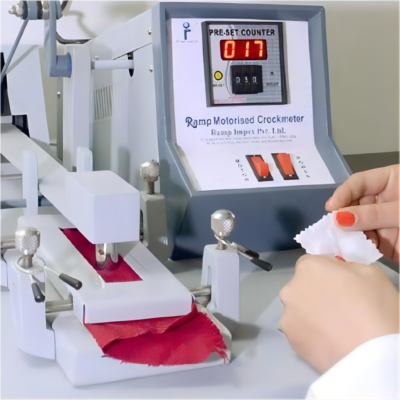
When sourcing fabrics, we will check all related fabric certificates from our suppliers.
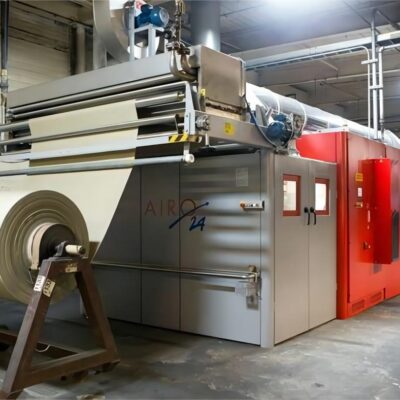
We make sure the fabric is well pre-washed to meet the standards before cutting.
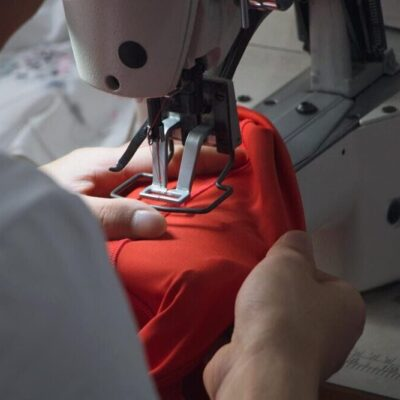
All our workers are well-trained and have many years of experience in the garment industry. They are all local workers with high stability.
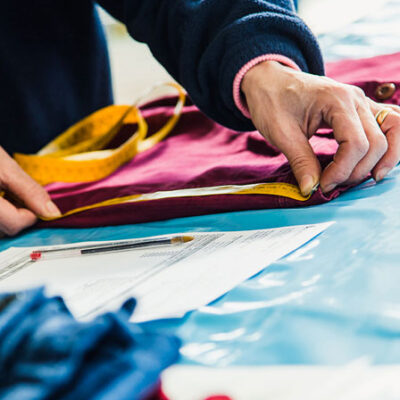
Our quality team will follow SOPs to conduct five times of quality checks before shipping.
Sustainability in the Pepe Jeans Manufacturing Process
Pepe leads with eco-innovations: 100% sustainable cotton goal by 2025, chemical-free washes, and blockchain traceability. Outsourcing to vetted Asian partners reduces carbon (20% vs. Europe), per Good On You ratings. For replicators, these aren’t add-ons—they’re core.
Pepe Jeans employs a globalized manufacturing strategy typical of contemporary fashion brands, producing its garments across multiple international locations to balance cost, quality, and efficiency.
Where Are Pepe Jeans Manufactured?
Primary Manufacturing Regions
1. Asia – The Production Powerhouse
- China: Serves as a key manufacturing base for large-volume orders, particularly for styles requiring advanced washing techniques and intricate processing.
- India: A significant production hub with strong textile and denim expertise, offering competitive pricing and full-package solutions.
- Bangladesh & Pakistan: Utilized for cost-effective production of core denim styles and large-quantity orders, leveraging established garment industries.
2. Europe – Quality and Speed
- Turkey & Italy: Trusted for premium and mid-to-high-end collections, especially those featuring Turkish or Italian denim fabrics. These regions offer shorter lead times for European markets and excel in craftsmanship.
- Spain & Morocco: Occasionally used for specific lines requiring fast turnaround to serve European retail demand.
Production Model
Pepe Jeans primarily relies on outsourced manufacturing through audited partner factories worldwide. For certain product categories like accessories, it may engage in licensed production agreements.
Key Takeaway
There is no single “country of origin” for Pepe Jeans. The brand strategically diversifies its production across China, India, Bangladesh, Turkey, and Italy, among others. This approach enables Pepe Jeans to:
- Optimize costs through Asian manufacturing
- Maintain quality and design sophistication via European production
- Enhance supply chain resilience and flexibility
To confirm the origin of a specific product, always refer to the care label, which will state the country of production (e.g., “Made in China,” “Made in Turkey”).
Pepe Jeans Production vs. China’s Manufacturing Capabilities
While Pepe Jeans has deep roots in India, China remains the global powerhouse for denim and garment manufacturing.
Why China Leads in Denim Production
- Advanced automation: Cutting-edge laser finishing, digital pattern systems, and robotics improve efficiency.
- Sustainability leadership: Many Chinese factories now use zero-water dyeing, bio-washing, and renewable energy systems.
- Scalability and flexibility: From small MOQ to mass production, Chinese suppliers can cater to both startups and major labels.
- Integrated supply chain: Fabric, trims, packaging, and shipping are all handled locally for faster turnaround.
Newasia Garment Co., Ltd.
Founded in 1986, Newasia Garment Co., Ltd. is a leading Chinese OEM/ODM apparel manufacturer with 39 years of experience in denim, streetwear, hoodies, and casualwear.
Advantages of working with Newasia:
✅ Sustainable and ethical production practices.
✅ OEM & ODM design flexibility.
✅ Low MOQ support for startups.
✅ Strong quality control and on-time delivery.
With a reputation built on trust and innovation, Newasia stands as one of the most reliable alternatives for brands seeking Pepe Jeans-level craftsmanship at more competitive pricing.
Replicate the Pepe Process with Newasia’s OEM Expertise
Inspired by Pepe’s pipeline? Newasia Garment Co., Ltd. ) masters it through 20+ years of premium denim OEM. As partners to American Eagle Outfitters, Uniqlo, Gap, Levi’s, and Lee, we customize every step for your brand—Tru-Blu®-style finishes to low-MOQ sourcing.
Why Newasia for Pepe-Style Manufacturing?
- End-to-End Control: From CAD patterns to ozone washing; 500,000+ pairs/month capacity.
- Sustainable Matching: GOTS/OEKO-TEX certified; 40% water savings mirroring Pepe.
- Proven Scalability: Handled Levi’s volumes with 99% on-time; MOQ: 300 for trials.
- Innovation Edge: Laser distressing and recycled blends for urban vibes.
We can provide
We are a clothing manufacturing group that focuses on producing high-quality clothing and adhering to the concepts of environmental protection and sustainable development.
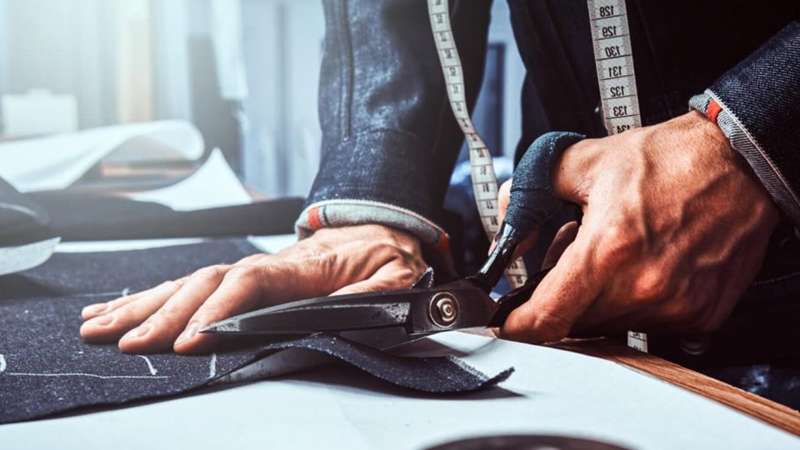
Fully custom garments, designed and produced to your specifications by a trusted clothing manufacturer.
Jackets | Denim | streetwear | Sports wear | And more
MOQ: Starts at 300 pieces per model/color
Personalize our premium blank apparel with prints, embroidery, labeling, and more, from a reliable garment manufacturer.
MOQ: 100 pieces per model/color.
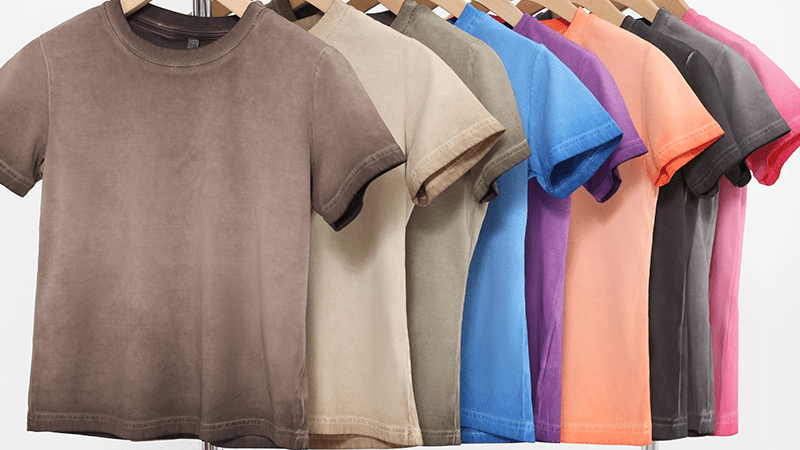
High-quality, ready-to-brand apparel Made in China in our clothing manufacturer for startups for premium garments.
No MOQ | No minimum quantities
What Printing Methods Do We Use in Our OEM Clothing Manufacturing Process?
See how we print your clothing here

Ideal for large, complex designs but is only compatible with light fabrics such as polyester.

A top choice for consumers looking for bulk printing designs in a short amount of time.
Best for high-quality, photo-realistic, and colorful designs. It is particularly suited for promotional events, novelty gifts, etc.

For high-quality mass production, this is an excellent choice. But it may not be suitable for every type of printing.

Perfect for consumers who prefer small order quantities and want to experiment with various styles.

It can produce easy-to-maintain, low-cost, and prints that are compatible with all types of fabrics.
Custom OEM Services: Tailor the Pepe Jeans Process
Adapt Pepe’s steps to your needs with Newasia:
- Design Collaboration: Free CAD tweaks for custom fits.
- Sourcing Flexibility: Ethical mills like Pepe’s—organic or stretch denim.
- Finishing Customization: Eco-washes, embroidery; 35-day turnaround.
- QC & Shipping: Full audits; global DHL integration.
For customized OEM services, please contact us—from concept to catwalk.
Clothing Manufacturer – Customized Clothing Solutions For Every Concept
We deliver fully integrated, end-to-end apparel manufacturing that seamlessly blends design intent with technical execution. Our in-house fabric R&D lab develops proprietary textiles—from advanced performance blends to sustainable cottons and recycled polymers—ensuring material innovation aligns with your brand’s aesthetic and functional needs.
Through precision pattern engineering and fabric mapping, we create tailored through relaxed silhouettes optimized for drape, movement, and consistency. Each collection is supported by comprehensive development services: tech pack preparation, size grading, garment dyeing, custom washes, and specialty finishes. With full control over the entire supply chain—from yarn to final garment—we guarantee quality, scalability, and brand integrity across every piece we produce.
Trusted Certificates:


Trusted by Global Clients















FAQ
Q1: Are Pepe Jeans still made in the UK?
No. Although Pepe Jeans originated in London, most of its manufacturing now takes place in India and other Asian countries.
Q2: What fabric does Pepe Jeans use?
Pepe Jeans primarily uses 100% cotton denim, stretch denim, and sustainable blends with organic or recycled fibers.
Q3: Can Chinese factories produce denim like Pepe Jeans?
Yes. Modern Chinese manufacturers such as Newasia Garment Co., Ltd. have advanced washing, dyeing, and finishing capabilities that meet or exceed global denim standards.
Q4: How long does it take to manufacture jeans?
Typically, 25–40 days, depending on design complexity, washing type, and production volume.
Q5: Can I create my own denim brand with OEM/ODM services?
Absolutely. Newasia Garment Co., Ltd. offers full OEM/ODM denim production, including design, fabric sourcing, sampling, and branding.
Conclusion: The Art and Future of Denim Manufacturing
The manufacturing process of Pepe Jeans reveals an intricate balance of craftsmanship, innovation, and sustainability — from the initial sketch to the final wash.
If you’re inspired to launch your own denim line or want to understand how to replicate premium-level production, collaborating with a reliable manufacturer is key.
👉 For brands seeking OEM/ODM services, custom production, or private label denim solutions, we recommend working with manufacturers like Newasia Garment Co., Ltd. — a trusted name combining factory expertise, 39 years of experience, and modern eco-friendly production systems.
Read more: Manufacturing Process of Pepe Jeans- The Ultimate Guide to Sourcing T-Shirt Vendors in China (2026 Update)
- One Stop T-shirt Manufacturer With The Best Quality in China
- Are There Any Cotton T-Shirt Manufacturers in Washington State
- A T-Shirt Manufacturer Planning to Expand Its Workforce: What It Means for Brands & Buyers
- One-Stop “A New Day” T-Shirt Manufacturer – Design to Delivery, Custom Packaging