

Introduction
When producing denim jeans at scale, one of the most important stages before cutting fabric is marker making — the process of arranging pattern pieces on fabric to maximize efficiency and minimize waste.
Whether you’re new to apparel production or planning to launch your own denim brand, understanding how markers are made helps you optimize cost, improve consistency across sizes, and ensure high-quality output.
In this guide, we explain how to make a marker for denim jeans manufacturing, why it matters, In the fast-paced world of denim jeans manufacturing, mastering marker making is essential for optimizing fabric use, reducing environmental impact, and boosting profitability. Whether you’re a small designer or a large-scale factory, understanding how to make a marker can transform your production process. As leaders in garment solutions at Newasia Garment Co.,Ltd., we’ve helped countless clients— including partners like American Eagle Outfitters, Uniqlo, Gap, Levi’s, and Lee—create efficient, custom markers that align with their unique designs and sustainability goals.
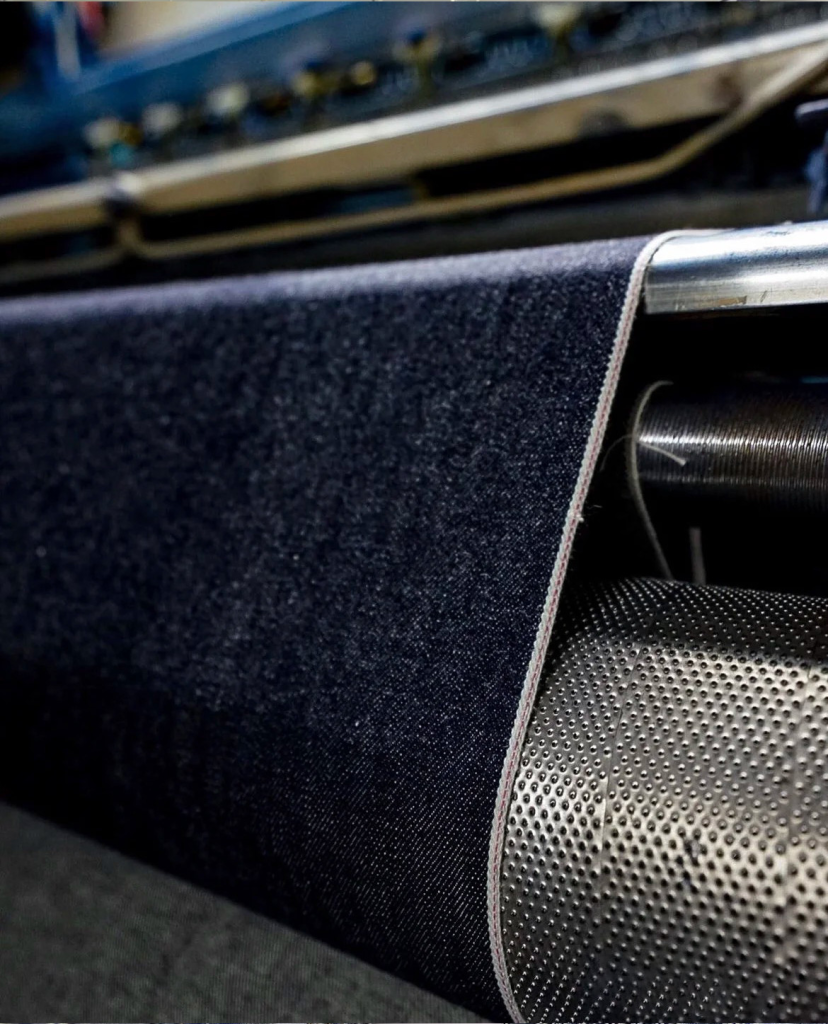
What Is a Marker in Denim Manufacturing?
A marker is a template or layout that shows how all the denim pattern pieces — front legs, back legs, pockets, waistbands, yokes, and facings — are positioned on a roll of fabric before cutting.
Instead of cutting each piece one by one, a marker groups all pattern pieces in an efficient layout to reduce fabric waste.
Think of it as a cutting blueprint — the smarter the marker, the less fabric you waste and the lower your production cost per jean.
Why Marker Making Matters in Denim
- Cost impact: Fabric can be 40–50% of the jeans’ cost. Efficient markers reduce waste and save money.
- Quality control: Proper grain alignment ensures jeans fit, fade, and wear as designed.
- Sustainability: Less fabric waste means a smaller environmental footprint.
Key Steps to Create a Marker for Denim Jeans
Step 1: Finalize Pattern Pieces
- Prepare all pattern components:
- Front panels
- Back panels
- Pockets (front, back, coin)
- Belt loops
- Fly pieces
- Waistband
- Ensure patterns are graded into all required sizes (e.g., 28–38 waist, various lengths).
Step 2: Determine Fabric Parameters
- Fabric width: Denim is typically 58–60 inches wide.
- Fabric type: Consider selvage (narrow width) vs. wide-width denim.
- Shrinkage allowance: Denim shrinks after washing, so patterns must include shrinkage margins (usually 2–3% in length, 1–2% in width).
- Directional/nap considerations: Denim may have a slight directional texture or wash effect (e.g., twill direction).
Step 3: Choose Marker Making Method
Two common approaches:
| Method | Description | Best For |
|---|---|---|
| Manual Marker Making | Pattern pieces are physically arranged on paper or fabric. | Small batches, sample development, or complex styles. |
| CAD-Based Marker Making | Digital layout using software (e.g., Gerber Accumark, Lectra, Optitex). | Large-scale production, efficiency optimization, repeat orders. |
Step 4: Arrange Pattern Pieces (Rules to Follow)
- Grain alignment: Most pieces (especially front/back panels) must be placed parallel to the selvage.
- Fabric symmetry: For asymmetrical fabrics (e.g., slub denim, colored weft), ensure pieces face the same direction.
- Nesting: Place curved edges against straight edges to reduce gaps.
- Shade grouping: Keep pieces that will be sewn together (e.g., left and right legs) from the same shade zone of the fabric roll to avoid color variation.
- Spacing: Leave enough space between pieces for cutting blades (usually 3–6 mm).
Step 5: Optimize Layout for Efficiency
- Fabric utilization rate: Aim for 85–92% efficiency (fabric used vs. waste).
- Cutting order: Group pieces by size and type to streamline the cutting process.
- Multiple plies planning: Plan for spreading fabric in multiple layers (often 50–100 layers for bulk cutting).
Step 6: Create and Validate the Marker
- Manual: Tape paper patterns onto marker paper, trace, and label.
- Digital: Use CAD to generate layout, then plot on large-format paper or send directly to an automated cutter.
- Check: Verify that all pieces are included, grain lines are correct, and shrinkage allowance is applied.
Step 7: Transfer to Cutting Table
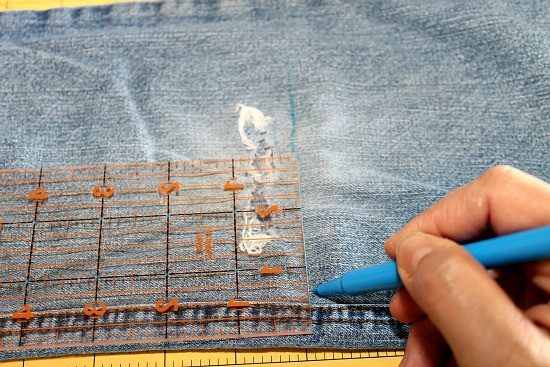
- The marker is laid on top of the fabric spread (multiple layers of denim).
- For automated cutting, the digital marker is uploaded to the cutting machine (e.g., Gerber cutter, laser cutter).
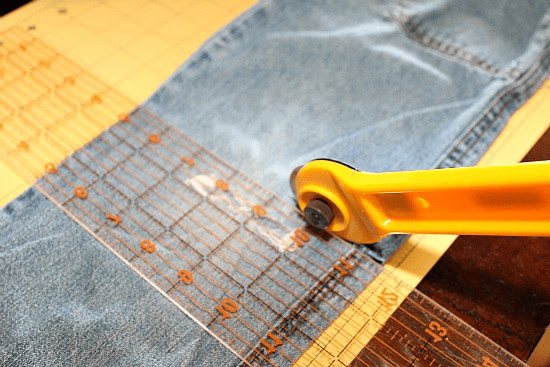
- For manual cutting, the cutter follows the marked lines with a straight knife or round knife.
Special Considerations for Denim
| Factor | Why It Matters |
|---|---|
| Shrinkage | Pre-shrink patterns to avoid size issues after washing. |
| Selvage Denim | Narrow width (∼30 inches) requires careful, efficient layout. |
| Stretch Denim | Grain alignment is critical to maintain recovery and fit. |
| Wash Effects | Pieces must be cut in the same direction to ensure consistent fading. |
| Fabric Defects | Markers may need to skip flawed sections (common with raw denim). |
Tools & Software Used in Marker Making
Marker making combines technical pattern knowledge with layout software. Common tools include:
| Tool / Software | Purpose |
|---|---|
| Gerber AccuMark | Industry-standard marker and pattern system |
| Lectra Modaris | Pattern design and marker planning |
| Optitex | 2D/3D pattern and cutting optimization |
| Tukatech | Affordable marker making and grading software |
| Manual Layout | Hand-drawn markers (still used in small batches) |
For high-volume denim production, software-assisted markers significantly improve accuracy and fabric utilization.
Common Marker Types in Denim Production
| Marker Type | Use Case |
|---|---|
| Single-size Marker | All pieces for one size laid out together. Easier for small runs. |
| Multi-size Marker | Mixes sizes in one layout. Maximizes fabric use for large orders. |
| Sectional Marker | Used when fabric is spread in sections (e.g., for very high lays). |
Step-by-Step: How to Make a Marker for Denim Jeans
Here’s a simplified workflow:
1. Prepare Graded Patterns
Ensure all pattern pieces (front, back, pocket bags, waistbands, fly pieces) are graded for the full size range.
2. Import Patterns into Marker Software
Upload DXF/PLT pattern files into marker making software like Gerber or Lectra.
3. Set Marker Parameters
Define:
- Fabric width (e.g., 150 cm)
- Grain direction (important for denim)
- Spacing rules (seam allowances, notches)
4. Arrange Pattern Pieces
Place pattern pieces in an optimized layout considering:
- Size sequence
- Grainline orientation (denim warp flow)
- Nesting to reduce gaps
- Repeat patterns for full sizes
Marker software automatically suggests layouts, but experienced planners also adjust manually for optimal efficiency.
5. Review & Validate
Check for overlapping pieces, ensure seam allowances are correct, and confirm size groupings make sense.
6. Output the Marker
Export marker files for cutting (PLT/PDF). This becomes the guide for spreading and cutting the denim fabric in production.
Common Marker Best Practices for Denim
- Respect Denim Grain and Stretch: Always align patterns with the warp direction for structural integrity.
- Group Similar Sizes: Helps simplify cutting and reduces fabric turnings.
- Minimize Fabric Waste: Nest smaller pieces in gaps between larger ones if possible.
- Account for Wash Shrinkage: Allow extra when necessary if the denim will be washed after cutting.
- Quality Check: Always run a test marker before bulk cutting.
How Newasia Handles Marker Making for Denim Jeans
At Newasia Garment Co., Ltd., marker making is part of our full OEM/ODM workflow:
🎯 Integrated Marker Planning
We handle pattern grading and marker layout using industry-standard software to ensure:
- High fabric utilization
- Consistent sizing across collections
- Reduced cutting costs and time
🤝 Custom Fit & Style Support
Whether your jeans are classic straight, tapered, relaxed, or fashion-forward fits, our marker planning adapts to:
- Customized size ranges
- Branding specifications
- Special trims and pocket layouts
📦 Aligned With Production
Markers are coordinated directly with:
- Fabric spreading
- Cutting teams
- Sew lines
so your production pipeline runs smoothly — from tech pack to final garment.
This integrated approach is why global brands like American Eagle Outfitters, Uniqlo, Gap, Levi’s, and Lee trust us with their denim programs.
Our Denim Jeans Manufacturing Services
We support a full spectrum of services for denim brands:
| Service | Description |
|---|---|
| Tech Pack Development | Fit specs, patterns, trims, wash details |
| Pattern Grading | Multi-size technical pattern scaling |
| Marker Planning | Efficient fabric layout for cutting |
| Fabric Sourcing | Denim fabric and components |
| Cut – Sew Production | Quality assembly lines |
| Wash & Finish | Stone, enzyme, vintage, custom |
| Branding & Packaging | Woven labels, tags, retail packaging |
Our end-to-end support ensures your denim jeans are made efficiently, consistently, and ready for retail.
Comprehensive Jeans Manufacturing Services Tailored to Your Brand
As a denim specialist we we supply pure turn key production solutions. From fully fleshed-out “tech packs” ready to manufacture, or just drawings or even just a few ideas–we’re here to help you take the next step from idea to finished product!
We bring your design ideas to life in a retail ready form.
-
 Custom Jeans Design & Development: We help you refine your designs, create precise digital patterns, and produce a perfect prototype. Our expertise ensures your fit is dialed in before bulk production begins.
 -
 Denim Fabric Sourcing and R&D & Selection: Access our vast, curated network for every type of denim imaginable. We source premium raw denim, Japanese selvedge, organic cotton, durable twills, and innovative stretch blends with recycled content.
  Cut & Sew Manufacturing: Our factory floor is optimized for denim. We execute precision cutting and expert sewing for all classic and contemporary styles, including skinny, slim-fit, straight-leg, bootcut, relaxed fit, and wide-leg jeans.
 Advanced Wash & Finishing Customization: Denim’s soul is in its wash. We offer a mastery of techniques: stone wash, acid wash, enzyme wash, sandblasting, laser whiskering, distressing, custom tints, and complex garment dyeing.
 Branding & Trim Services: Differentiate your brand down to the last detail. We provide custom-molded buttons and rivets, jacron and leather patches, woven labels, screen-printed pocket bags, and branded hang tags.
🌟 Private Label & White Label Denim: Launch your line quickly using our proven, ready-to-brand base styles, or collaborate with us for a fully bespoke private label program that is uniquely yours.
Wholesale jeans Suppliers for Resellers & Startups
If you are starting your own clothing business or selling online on platforms like Amazon, Meesho, Flipkart, or Instagram, Newasia Garment Co.,Ltd. is your ideal partner.
We understand the challenges small resellers face, so we offer:


Tailored OEM & ODM Custom Clothing Manufacturer for your Clothing Line
Create your custom clothing line with expert manufacturing services. From design to delivery, we bring your vision to life.
Are you a new brand starting your first clothing line? Or Or are you a company that requires trustworthy apparel? Our OEM & ODM custom clothing manufacturing services are made just for you. We’re here from the very first design ideas to the final product. Whether you need casual wear, custom sports uniforms, or denim clothes, we’ll make sure your brand shines through every cloth we produce for you.
Why Choose Our OEM & ODM Clothing Services?

Our designers and manufacturing Team have years of experience in the clothing industry.

We work with you to create clothing that fits your brand’s unique look.

We use only the best fabrics for your products.


Our Process Setup is Optimized for Mass Production

Handle Customer’s Inquiry
Send us an inquiry and share more details about your projects, and our dedicated team will handle it.

Make Quotation
If your project is suitable for our standard MOQ and production, then we offer an initial quotation based on the techpack, selected fabric quality, and quantity.

Sample Development
After the customer’s approval of the quotation, we proceed with sample development to confirm quality before starting bulk production.

Bulk Production
Following order confirmation and a deposit, we initiate bulk production with all specifications carefully followed.

Quality Control
We follow strictly our QC procedures, ensuring 100% end-line inspections. We also apply AQL 2.5 for final inspections. Third-party QC is always welcome.
Packaging & Shipping
Once the quality is confirmed, the finished products are carefully packaged and shipped in bulk to your warehouse.
Benefits of Buying Direct from denim jeans Manufacturers
When you buy directly from a wholesale ladies denim jeans manufacturer like Newasia Garment Co.,Ltd., you gain multiple advantages that streamline your supply chain and boost your margins.

We maintain consistency and high standards, from fabric selection and dyeing to stitching and final packaging.

The more you order, the better the pricing structure, allowing you to maximize your profitability and margin.

Ideal for brands that want unique products—control over colors, GSM, fits, and all branding elements.

In-house, modern production ensures timely delivery, cutting down the typical delays associated with third-party vendors.

Buy factory-direct to cut out unnecessary distribution costs and get the most competitive rates always.
OUR PROCESS






Clothing Manufacturer – Customized Clothing Solutions For Every Concept
We deliver fully integrated, end-to-end apparel manufacturing that seamlessly blends design intent with technical execution. Our in-house fabric R&D lab develops proprietary textiles—from advanced performance blends to sustainable cottons and recycled polymers—ensuring material innovation aligns with your brand’s aesthetic and functional needs.
Through precision pattern engineering and fabric mapping, we create tailored through relaxed silhouettes optimized for drape, movement, and consistency. Each collection is supported by comprehensive development services: tech pack preparation, size grading, garment dyeing, custom washes, and specialty finishes. With full control over the entire supply chain—from yarn to final garment—we guarantee quality, scalability, and brand integrity across every piece we produce.
Trusted Certificates:



Trusted by Global Clients






Why Choose Us?

Loyal Customer base of many clothing brands World Wide

We have served over 200 customers.

12,000 skilled employees and 140 production lines.Dedicated Design

Low Minimum Order Quantities 100PCS each Size is acceptable.

Factory pricing directly for made to order stuff, no middle man.

With latest communication tool: Whatsapp.

Our total daily production capacity exceeds 100,000 pieces

Timely factory news could be referred to customer.
Frequently Asked Questions (FAQ)
Q1: What is a marker in garment manufacturing?
A marker is a plan that lays out all pattern pieces on fabric for cutting. It maximizes fabric use and minimizes waste.
Q2: Is marker making done before or after washing?
Marker making is done before cutting. Pre-washing fabric is rare except for specific pre-wash design effects.
Q3: Do you create markers for custom brands?
Yes — Newasia creates markers tailored to your denim design, size range, and production volumes.
Q4: Does marker planning affect cost?
Absolutely — better markers reduce fabric waste, lowering cost per garment.
Q5: Can marker software automate the process?
Modern tools like Gerber or Lectra improve efficiency, but experienced planners still optimize manually for best results.
Conclusion — Marker Making and Custom Denim Manufacturing
Understanding how to make a marker for denim jeans manufacturing is essential for efficient production, cost control, and consistent quality. From pattern grading to marker layout and cutting, the process sets the stage for successful denim production.
At Newasia Garment Co., Ltd., we bring expert marker planning together with full denim OEM/ODM services — trusted by global brands including American Eagle Outfitters, Uniqlo, Gap, Levi’s, and Lee — so you get high-quality, retail-ready denim jeans with optimized production costs.
Read more: How to Make Marker for Denim Jeans Manufacturing
- Compression Fabric Technology: Advanced Materials, Performance & Supplier Guide
- Seamless Knitting Machines: The Future of High-Performance Apparel Manufacturing
- The Ultimate Guide to Activewear Manufacturing
- Sportswear Manufacturing: Key Processes and Innovations
- Track Jacket Lining Materials: Materials for Warmth and Breathability