

The Art and Engineering of Industrial Denim Washing Techniques
For contemporary fashion directors, denim brand founders, and apparel sourcing executives worldwide, a raw pair of jeans is merely a blank slate. Unlike traditional woven garments whose value lies primarily in the initial fabric construction, premium denim earns its soul on the wet processing and finishing floor. The visual texture, localized fades, subtle whiskers, and distinct tactile softness that define a luxury pair of jeans are entirely engineered through a series of complex chemical and mechanical operations.
Sourcing your collection from an elite production facility that masters advanced denim washing techniques is the single most critical step in safeguarding your retail margins, capturing luxury market share, and ensuring absolute batch consistency. Understanding the precise science behind industrial denim laundry allows your brand to align creative visions with reliable, repeatable factory outputs.
1. The Chemistry of Color Depletion: Traditional vs. Sustainable Bleaching
The characteristic depth of indigo denim stems from ring-dyeing, where the dye molecules saturate only the outer surface of the cotton yarn, leaving a pure white core intact. Industrial washing techniques exploit this structural characteristic by stripping away the outer indigo layers to reveal the white core underneath.
- Sodium Hypochlorite and Potassium Permanganate (PP): Historically, factories achieved light ice-blue tones or localized white highlights using harsh chemical bleaches or sprayed-on PP solutions. While highly effective at stripping color, these aggressive oxidizers require intensive neutralization washes to prevent chemical degradation of the underlying cotton fibers.
- Eco-Friendly Ozone Bleaching: Modern global factories are rapidly standardizing on ozone technology. By injecting ozone gas (O₂)into dry or slightly damp washing drums, technicians safely strip indigo molecules with minimal water and zero harsh chemicals. The ozone naturally converts back into oxygen (O₂) upon discharge, protecting the environment while leaving the structural tensile strength of the cotton entirely uncompromised.
2. Mechanical Abrasion: From Pumice Stones to Synthetic Alternatives
Achieving an authentic, lived-in texture requires physical friction to wear down the indigo-coated surfaces along seams, hems, and high-contact panels.
- Classic Stone Washing: Raw jeans are tumbled in massive industrial washing wheels loaded with natural pumice stones. The porous, abrasive surfaces of the stones scrape against the denim, yielding soft, high-contrast, chalky seam distress. However, pumice stones break down into fine grit during the cycle, requiring extensive rinsing and manual stone-picking from pockets.
- Enzyme Washing (Bio-Stonewashing): To optimize water usage and eliminate grit, premium manufacturers utilize acid or neutral cellulase enzymes. These bio-enzymes selectively digest the microscopic protruding cellulose fibers on the cotton yarn, loosening the surface indigo dye. This chemical abrasion replicates the soft hand-feel and tonal contrast of traditional stone washing without causing physical damage to the loom machinery or the garment hems.
3. The Internal Skeleton: Preserving Silhouette Integrity During Harsh Wash Carousels
While wet chemical treatments and high-friction tumbling create stunning visual aesthetics, they subject the garment to severe kinetic stress. Industrial wash wheels exert tremendous G-forces on raw denim panels, spinning hundreds of wet, heavy pairs simultaneously at high speeds.
To offer an alluringly cheap initial quote, budget factories routinely use thin synthetic threads or flimsy mesh inside the high-friction structural zones of their jeans—such as waistband tracks, zipper fly boundaries, and internal pocket bags.
Under the brutal stress of stone or enzyme carousels, these cheap synthetic components shrink unevenly, fray, or shred apart. This forces the heavy outer denim shell to buckle and warp, turning a pristine custom pattern into a twisted, misshapen pair of jeans that fails quality control and drives up e-commerce return rates.
The inner waist track and pocket lining act as the structural anchor of your entire garment pattern. To safeguard your silhouette and ensure a luxury tactile experience across every wash batch, your tech packs must explicitly mandate high-density, long-staple internal components. Sourcing these premium foundations through a dedicated supplier like New Asia Garment Heavyweight Premium Industrial Cotton Lining Textiles provides a durable internal skeleton.
This tight, high-density cotton weave acts as a stabilizer that holds your custom waistband geometry perfectly in place, resisting distortion during heavy industrial washing while giving the consumer a smooth, comfortable barrier against the skin.
4. Manual Surface Artistry: Dry Finishing and Localized Distress
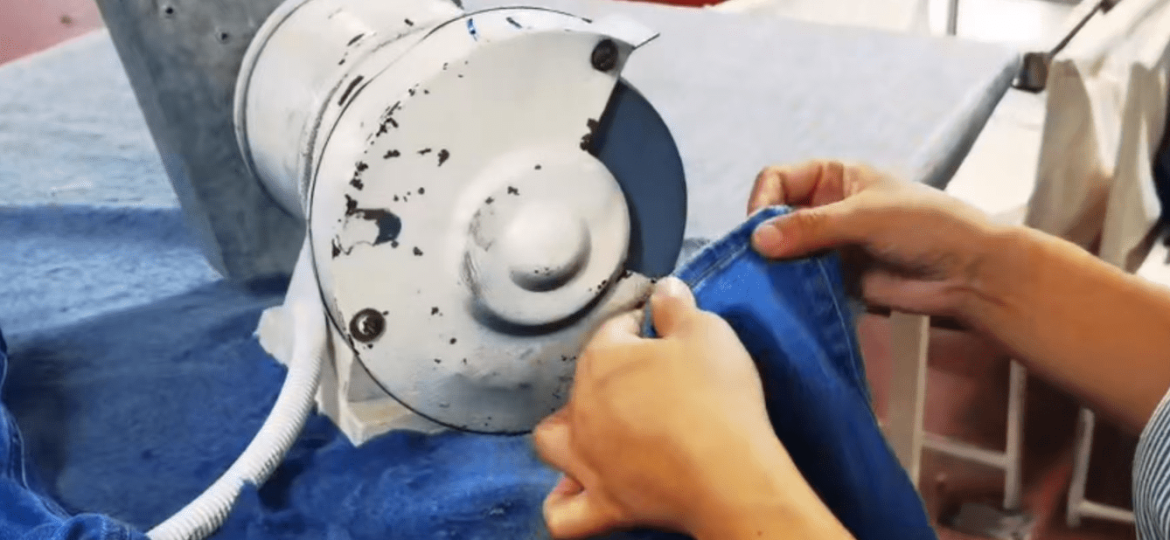
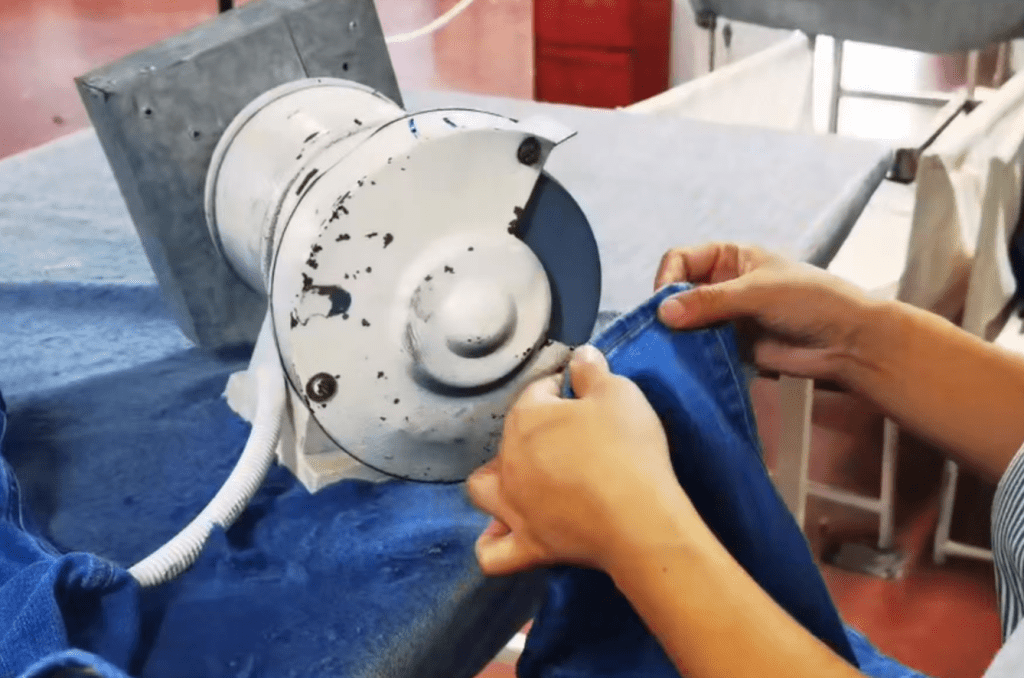
The most iconic visual elements of premium denim—such as wear whiskers across the crotch or honeycomb fades behind the knees—are meticulously applied by hand before the jeans ever enter a wet washing machine.
- 3D Whiskering and Scraping: Artisans slide raw jeans onto expandable rubber scraping balloons. Using specialized sandpaper sheets or flexible abrasive brushes, they manually abrade the indigo surface along pre-marked fold lines. This precision scraping replicates natural creasing patterns with extreme accuracy.
- Laser Finishing: For maximum consistency across high-volume production lines, elite manufacturers utilize high-precision carbon dioxide (CO₂) lasers. The laser computer reads a digital grayscale image of a vintage fade pattern and fires a concentrated thermal beam across the denim surface. The intense heat vaporizes the surface indigo dye in fractions of a second, perfectly replicating whiskers, scrapings, and even holes without weakening the underlying fabric base.
5. Securing Landed Margins via Fixed Global DDP Logistics
Perfecting your vintage washes and sourcing luxury raw denim means absolutely nothing if your final retail profit margins are wiped out by volatile international shipping lines, sudden port clearance delays, and complex customs documentation fees at your domestic border. Heavy denim apparel involves significant physical weight and volume, making your landed unit costs highly sensitive to global freight market disruptions.
Sourcing your collection under traditional FOB (Free On Board) terms exposes a growing fashion house to heavy financial risks. Once your cargo leaves the factory’s local port, you become the legal importer of record, leaving your limited capital vulnerable to sudden ocean freight surcharges, terminal handling fees, customs storage delays, and unexpected import VAT and tariff bills at your domestic border.
The definitive logistical solution for modern global fashion labels is partnering exclusively with a manufacturing partner that operates under a comprehensive, fixed Delivered Duty Paid (DDP) framework.
Under a complete DDP shipping model, your manufacturer manages international shipping, customs brokerage, and import duties. Your custom, retail-ready clothing inventory is delivered straight to your fulfillment center or warehouse with zero hidden fees or border surprises. This allows you to lock in exact net margins long before your collection launches online.
6. Standardize Your Brand on Manufacturing Precision
Successfully scaling a denim brand requires replacing online sourcing guesswork with strict material testing, precise tech pack implementation, and disciplined manufacturing alignment. By anchoring your product line with calculated fabric shrinkage algorithms, high-density internal cotton foundations, and a locked-in global DDP delivery model, your label can scale seamlessly from a limited drop to an international fashion presence.
Stop risking your seed capital with unverified middlemen or basic promotional workshops. Standardize your production on a foundation of direct-factory transparency, absolute pattern stability, and total engineering precision.
To build your next denim collection on verified material quality and direct-factory expertise, review our denim manufacturing capabilities before requesting a production review.
Read more
- How to Validate Pocket Function and Placement Before Bulk Production
- How to Standardize Fabric Hand Feel Across Production Lots
- Movement Fit Testing for Apparel: How to Check Ride-Up, Slippage, and Range of Motion
- Pre-Production Sample Approval: What Brands Should Lock Before Bulk Production
- Custom Sports Jersey Manufacturing Quality Control: A Global Manufacturing Guide