

Levi’s is one of the world’s most iconic denim brands, and for decades, “Made in the USA” was a core part of its identity. But why did the company shift production overseas?
The answer lies in economics and efficiency. Rising labor costs, global competition, and the pressure to keep prices competitive made domestic manufacturing increasingly challenging. By the early 2000s, producing jeans in the U.S. was no longer sustainable for mass-market lines.
Levi’s closed its last U.S. factories in 2003. Today, most jeans are produced abroad, though limited premium and special-edition collections are still made domestically. This move reflects broader trends in the apparel industry—globalization, cost optimization, and supply chain efficiency—while U.S.-based manufacturers continue to serve niche markets for premium, ethical, and fast-turnaround apparel.
Understanding this shift provides insights for brands deciding between domestic and overseas production and highlights the realities of modern denim manufacturing.
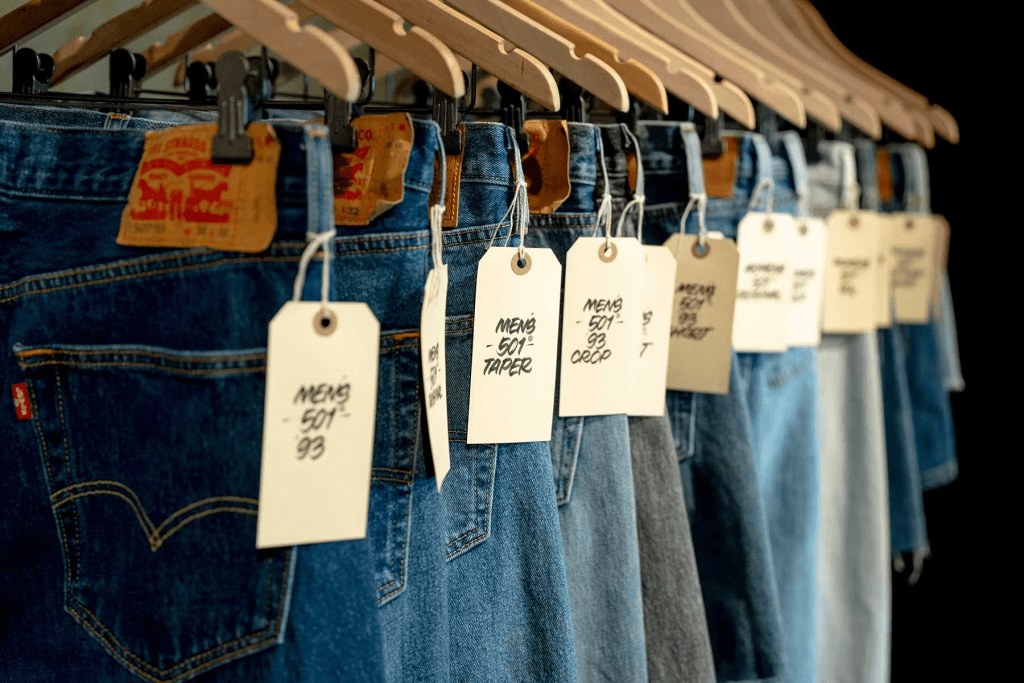
When Did Levi’s Stop Major U.S. Production?
Levi’s stopped manufacturing in the USA mainly due to high labor costs, increasing global competition, and the need for more efficient supply chains. The company closed its last U.S. factories in 2003 and shifted production overseas.
You remember the era when every pair of Levi’s seemed indestructible. That era officially ended in 2003, when Levi’s closed its last large-scale U.S. factories, including the San Antonio, Texas plant that produced the iconic 501® Shrink-to-Fit jeans.
This marked a turning point for American denim and the apparel industry. The closures were not abrupt—they were the culmination of years of economic pressures and competitive challenges.
The History Behind Levi’s U.S. Production
Levi’s originally manufactured all its jeans domestically, ensuring strict quality control and supporting American jobs. Several factors led to the shift away from U.S. production:
- Rising Labor Costs: Domestic wages and operating expenses increased significantly, impacting profit margins.
- Globalization of Supply Chains: Brands moved production to countries with lower labor and material costs while maintaining high quality.
- Efficiency and Scale: Overseas factories offered larger production volumes and faster turnaround times.
This trend reflects a broader apparel industry shift, helping B2B buyers understand the benefits of partnering with experienced international manufacturers.
Why Levi’s Left the U.S.
1. Rising Labor Costs
American manufacturing became increasingly expensive. Compared to factories in Mexico, China, Vietnam, or Bangladesh, U.S. labor costs were several times higher. To maintain competitive retail pricing for mass-market jeans, Levi’s needed lower-cost production options.
Example:
- U.S. hourly wage for garment workers: $12–$18/hour (early 2000s)
- Mexico or China: $2–$6/hour
2. Global Competition
By the 1990s and early 2000s, Levi’s faced competition from international brands and cheaper imports. Competitors could produce similar jeans at lower prices overseas, which forced Levi’s to rethink domestic production to stay profitable.
3. Scale and Efficiency
Large-volume production requires flexible supply chains, quick reorders, and integrated textile networks. U.S. factories were not optimized for fast fashion or mass-market scale, whereas Asia offered vertically integrated supply chains capable of handling:
- Spinning, weaving, and denim finishing
- Complex washes and laser treatments
- Large seasonal orders
4. Shifting Business Strategy
Levi’s shifted focus from solely durability to balancing cost, style, and volume. Moving production abroad allowed the company to:
- Maintain competitive pricing for mainstream customers
- Diversify manufacturing to reduce risk from a single location
- Introduce global collections with varying fits and washes
5. Automation and Technology Abroad
Overseas factories increasingly used advanced finishing technologies, like water-saving washes, laser distressing, and automated stitching. These processes reduced costs and ensured consistency across high-volume production—something U.S. factories at the time couldn’t achieve economically.
Countries Where Levi’s Manufactures Today
While Levi’s has reduced U.S. production, it still manufactures globally in countries such as:
- Mexico
- China
- Bangladesh
- India
- Turkey
- Honduras
Each location is carefully selected to maintain quality standards and meet global demand.
Are Any Levi’s Still Made in the USA?
You hope that some Levi’s still carry that original U.S. craftsmanship. And yes, a very small number of jeans are produced domestically:
- Levi’s Vintage Clothing (LVC) and Levi’s Authorized Vintage lines are made in the U.S.
- These premium collections replicate historical models using selvedge denim and authentic construction techniques.
- They are small-batch, high-priced, and targeted at enthusiasts seeking heritage quality.
How This Change Impacts Consumers
Quality
Levi’s ensures strict quality control across all manufacturing countries. Jeans made outside the USA still meet the durability and style expectations that the brand is known for.
Pricing
Producing overseas allows Levi’s to keep prices more competitive, making their jeans accessible to a wider audience.
Authenticity
Genuine Levi’s jeans will always indicate the country of manufacture on the inner tag. While most are now made abroad, special heritage lines still proudly bear the “Made in USA” label.
The Revival of Made-in-USA Levi’s
In recent years, Levi’s has brought back small-scale U.S. production for premium lines like the Levi’s Vintage Clothing Collection. These jeans are crafted using traditional techniques and high-quality fabrics, offering collectors and denim enthusiasts an authentic American experience.
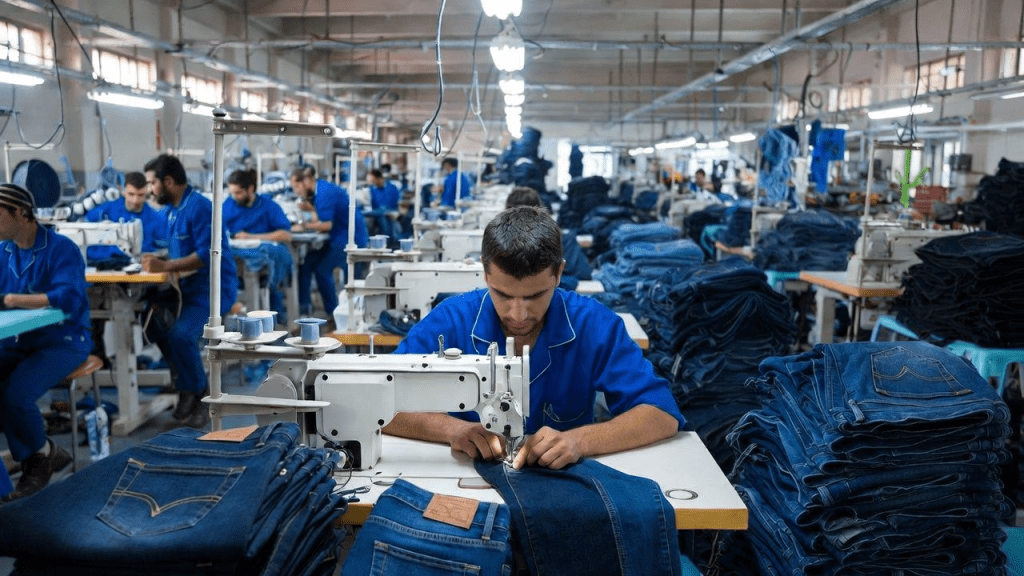
Does Where Levi’s Jeans Are Made Affect Quality?
Not necessarily. Levi’s jeans maintain consistent quality through brand-specific standards and manufacturing systems, regardless of the country of production.
- Fabric Source
Quality is determined primarily by the fabric. Factories using the same batch from the same mill produce jeans with similar durability and feel, no matter the country. - Production Standards and Quality Control
Levi’s applies uniform global standards for stitch density, hardware, size tolerances, and finishing. This ensures a consistent wearing experience across factories worldwide. - Washing Techniques
Differences in regional craftsmanship may affect style and minor quality variations. For example, Turkish washing is more suited for trendy designs, while Pakistan prioritizes stable mass production. Superior craftsmanship may lead to higher-end finishes, but all factories meet Levi’s standards. - Product Line Positioning
Quality varies by product line, not country. Basic models use standard fabrics, while premium or limited editions require advanced materials and higher craftsmanship. - What This Means for Buyers & Private Labels
Levi’s global strategy shows that consistent quality comes from supply chain structure, not location:
- Diversify manufacturing locations
- Balance cost and time-to-market
- Use standardized materials and processes
- Match product lines with factory capabilities
For buyers and private labels, the key is choosing the right country for the right product and
Newasia Garment Co.,Ltd. – Professional Denim Manufacturing Partner
Newasia Garment Co.,Ltd. is an experienced garment manufacturer specializing in high-quality apparel production.
With strong expertise in denim and casualwear manufacturing, Newasia supports international fashion brands and clothing startups.
Our services include:
- denim jeans manufacturing
- OEM and ODM garment production
- product development and fabric sourcing
- washing and finishing technologies
- large-scale apparel manufacturing
OEM Manufacturing Insights from Newasia Garment Co., Ltd.
As a professional clothing manufacturer and OEM partner, Newasia Garment Co., Ltd. helps global brands produce custom denim shirts, jackets, and jeans that meet Levi’s-level quality standards.
| OEM Capability | Description |
|---|---|
| MOQ | 100 pcs per design |
| Lead Time | For in-stock items: ships worldwide within 3–7 days For custom orders: production lead time 15–30 days |
| Fabric Sourcing | China, Turkey, Japan |
| Customization | Wash, embroidery, fit, trims |
| Certifications | ISO 9001, ISO 14001,BSCI,GRS |
🧵 Whether you want the timeless durability of Levi’s or premium denim precision, Newasia Garment Co., Ltd. delivers high-quality, sustainable, and flexible production solutions.
Certified Professional Clothing Producer
We are very proud of these certificates! They represent Newasia Garment Co.,Ltd. ’s amazing achievements and accreditations. They show how much we care about quality, safety, and professionalism.
We’re proud to say that we have obtained BSCI and ISO 90001 certificates, and inspection certificates for filling materials such as down and cotton. We follow international standards throughout our production process and take responsibility for the quality of our products.
As one of China’s leading clothing manufacturers, we are pleased to be recognized by respected organizations. These certifications underscore our reliability as a trusted supplier to the global apparel industry.
Trusted Certificates:


Why Choose Us
 Independent base We have our own laboratory and can independently develop fabrics , China  Professional certification Certification: ISO 9001, ISO 14001,BSCI,GRS |
 Full-equipped Full-equipped, from fiber manufacturing, yarn spinning, weaving, dyeing and processing to finished product production  Rich experience Professional, large and experienced design team, combined with the latest artificial intelligence technology |
 Our Facilities 12,000 skilled employees, daily production capacity exceeds 100,000 pieces  Fashion exhibition Participated in domestic and foreign fashion weeks and exhibitions many times |
Trusted by Global Clients











Conclusion
Levi’s stopped manufacturing in the U.S. due to a combination of high labor costs, global competition, scale requirements, and strategic shifts toward cost efficiency.
While mainstream Levi’s are now a global product, the brand preserves American heritage in premium LVC lines, where true U.S.-made craftsmanship lives on.
This story reflects a broader trend in apparel: global supply chains became essential for balancing price, quality, and availability while keeping iconic brands like Levi’s competitive worldwide.
For B2B buyers seeking a reliable denim manufacturer, Newasia Garment Co., Ltd. offers proven expertise, high-quality production, and flexible solutions, partnering with Levi’s, Gap, Uniqlo, Zara, Lee, and American Eagle Outfitters.
Read more: Why Levi’s Stopped Manufacturing in the USA- Custom T-Shirt Manufacturers China: Private Label Service for Your Brand
- Custom T-Shirt OEM China: Sample + Bulk One-Stop Service
- Best T-Shirt Manufacturers: India vs China (Global Compliance Guide 2026)
- T Shirt Manufacturing in Portugal vs China: Which is More Cost-Effective?
- Bangladesh vs China T-Shirt Manufacturers: Which Has Better Capacity for Large Orders?