

Levi’s is one of the most recognizable denim brands in the world. Founded in 1853, the company built its reputation on durable jeans and classic American style.
However, many consumers and industry professionals often ask the same question:Where are Levi’s manufactured today?
The answer reveals a complex global supply chain involving multiple countries and specialized garment manufacturers.
Understanding where Levi’s jeans are made also helps explain how large fashion brands manage production, control quality, and scale globally.
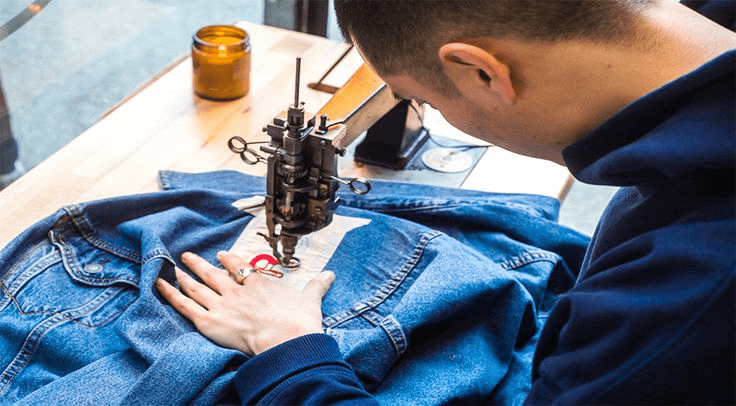
Levi’s Manufacturing: A Global Overview
Levi’s, officially known as Levi Strauss & Co., has a rich history dating back to 1853. While it started in San Francisco, California, today Levi’s production spans several countries. The brand has strategically diversified its manufacturing to meet global demand while maintaining high-quality standards.
Why People Care About Levi’s Production Countries
Levi’s is widely associated with American denim culture. When consumers see labels like “Made in China” or “Made in Vietnam,” it can spark surprise or raise concerns about quality and authenticity. This makes the production country a common consideration for shoppers, resellers, and brand enthusiasts.
For B2B buyers, the production country has practical implications beyond perception. It affects pricing, import duties, and supply chain logistics. U.S. buyers, for example, may favor Mexico or Central America to reduce shipping times, while European importers might prefer Turkey or South Asia for smoother logistics. Understanding Levi’s global manufacturing footprint enables buyers to make more informed sourcing decisions.
Is Levi’s Still Made in the USA?
Yes, but only on a limited scale. By the early 21st century, economic pressures and global demand led Levi’s to shift most of its production overseas. Today, only a small number of high-end or retro-style jeans are occasionally manufactured in the U.S.
“Made in the USA” Levi’s items now carry more heritage and branding value than they do large-scale production significance.
The Main Countries Where Levi’s Jeans Are Made
Levi’s now operates one of the most globalized denim supply chains in the apparel industry. The brand works with over 25 approved manufacturing countries, though production is not evenly distributed. Some regions focus on mass-market jeans, while others handle premium collections or special lines.
Below is a breakdown of Levi’s global manufacturing footprint.
Quick Overview: Levi’s Main Manufacturing Countries
| Region | Main Countries | Strengths | Typical Levi’s Products |
|---|---|---|---|
| Asia | China, Vietnam, Bangladesh, India | Large capacity, lower cost, mature denim ecosystem | Mass-market jeans, classic fits, women’s jeans |
| North America | Mexico | Fast delivery to U.S., mid–high quality | Mid-range and premium jeans for NA market |
| South America | Colombia, Brazil (small volume) | Regional supply, niche capacity | Special orders or limited runs |
| Europe | Turkey, Italy | High-end denim finishing, premium craftsmanship | Special collections, premium washes |
1 Asia – The Core Production Region
Asia accounts for the largest share of Levi’s global output. It offers a complete supply chain, abundant skilled labor, and advanced denim finishing technologies, enabling stable quality at competitive costs.
China
China remains one of Levi’s most reliable production hubs, with vertically integrated supply chains covering spinning, weaving, and sewing. Chinese factories excel in flexible production, complex washes, and strict compliance. A significant portion of Levi’s products sold worldwide is made here.
Vietnam
Vietnam is one of the world’s most advanced apparel exporters. Levi’s relies on Vietnamese factories for stable output, consistent quality, and fast delivery. Modern manufacturing parks and strong worker training systems help reduce lead times during seasonal reorder cycles for U.S. and European retailers.
Bangladesh
Bangladesh supports Levi’s volume-driven product lines, particularly for developing markets and value segments. While pricing is competitive, Levi’s ensures strict quality control and social compliance by working with selected factories.
India
India plays a dual role by producing high-quality denim fabric and manufacturing finished jeans. With abundant cotton resources and large textile capacity, Indian factories support Levi’s fabric development, regional distribution, and the production of men’s and women’s denim products.
2 North & South America
Mexico
Mexico is a strategic production hub for the North American market. Proximity to the U.S. allows Levi’s to respond quickly to demand, reduce shipping times, and manage inventory efficiently. Mexican factories often produce mid-range and premium lines, including jeans with advanced finishing techniques like laser fading and water-saving washes.
Other Latin American Countries
Countries such as Colombia, Brazil, and Nicaragua occasionally handle smaller production runs. These facilities supply regional markets and provide backup capacity, helping Levi’s balance production between Asia and North America. While not major production centers, they play a supportive role.
3 Europe – Small Volume, High Quality
Europe contributes a smaller portion of Levi’s global output, but products made here are typically high-end or special-edition items.
Turkey
Turkey is known for advanced denim finishing and washing technologies, producing high-quality jeans with premium hand-feel and detailed craftsmanship. Levi’s sources special-edition items from Turkish factories.
Italy
Italy’s long history of luxury denim and textile innovation supports Levi’s with premium fabrics and limited collections aimed at fashion-conscious consumers. Italian-made Levi’s are rare but prized for quality and sophisticated washes.
Why Levi’s Manufactures in Different Countries
1. Costs and Labor Efficiency
Jeans production is labor-intensive, so Levi’s spreads manufacturing across multiple countries to reduce costs and ensure stable global output. For example, Pakistan’s self-sufficient fabric production lowers procurement costs, while Bangladesh offers skilled labor at low wages. Cost-effectiveness comes from matching the right product type with the right production base, not just cheap labor.
2. Proximity to Key Markets
Levi’s places factories near major markets to speed delivery and manage inventory efficiently. Mexico serves North America with fast replenishment and trade advantages, while Turkey supports Europe with strong washing and design capabilities, enabling quick style updates.
3. Supply Chain Risk Management
Levi’s diversifies production to avoid overreliance on a single country or supplier, mitigating risks from tariffs, disruptions, or auditing changes. Core production is concentrated in a few countries, with backup capacity allocated across others. This approach, also used by brands like Adidas, allows Levi’s to adapt sourcing strategies as market conditions evolve.
Levi’s Supply Chain, Sustainability, and Industry Position
Global Supply Chain Management
Levi Strauss & Co. operates a complex, multi-tiered supply chain combining owned facilities and contract manufacturers. Dedicated teams oversee everything from raw materials to final garment distribution, ensuring quality, ethical labor practices, and environmental responsibility through internal audits and third-party monitoring.
Sustainability Initiatives
Levi’s is a leader in eco-conscious denim production, with innovations like Water<Less® finishing, recycled fabrics, and FLX laser technology that reduce water and chemical use. Compared with peers such as Gap Inc., Levi’s emphasizes heritage-driven, innovation-focused sustainability.
Industry Position
Leveraging its iconic status as the originator of blue jeans, Levi’s competes on brand legacy and authenticity rather than price alone. While rivals focus on value or fast-fashion trends, Levi’s balances global mass-market production with premium U.S.-made lines, targeting both aspirational consumers and broad global markets.
Does Where Levi’s Jeans Are Made Affect Quality?
Not necessarily. Levi’s jean quality depends on brand-specific standards, fabric, and production processes—not simply the country of manufacture.
1. Fabric Matters Most
Jeans made from the same fabric batch have consistent feel and durability, regardless of where they are produced.
2. Uniform Production Standards
Levi’s enforces global standards for stitching, hardware, and sizing, ensuring similar quality across all factories.
3. Regional Craftsmanship Differences
Specialized techniques like stone washing or distressing can vary by region. For example, Turkey excels at trendy washes, while Pakistan focuses on stable mass production. These differences reflect specialization, not substandard quality.
4. Product Line Positioning
Quality varies by product line—basic models versus high-end limited editions—not by country.
5. Global Strategy for Buyers
Levi’s diversifies production, matches product lines to factory capabilities, and standardizes materials and processes. Buyers should focus on the right production location for the specific product, balancing cost, lead time, and quality, rather than relying solely on “Made in” labels.
How to Find High-Quality Jeans Suppliers Like Levi’s
Finding Levi’s direct suppliers is nearly impossible, but you can source premium denim manufacturers in the same regions using these strategies:
1. Online Sourcing Platforms
Use sites like Alibaba, Global Sources, or Made-in-China with smart filters:
- Target manufacturers in China, Vietnam, Bangladesh, Mexico, or Turkey.
- Look for verified suppliers with positive reviews.
- Check MOQ, private-label capabilities, and request samples before bulk orders.
2. Industry Trade Shows
Meet suppliers and inspect quality firsthand:
- Denim Première Vision (Europe) – Premium denim & sustainability.
- Kingpins Show (Amsterdam, NY, HK) – Top-tier denim mills.
- Canton Fair (China) – Wide range of apparel manufacturers.
- Texworld (Paris, NY) – Global textile connections.
3. Work with Sourcing Agents
Agents have insider knowledge of factories that meet high standards, handle quality control, and ensure ethical practices, saving you time and reducing risk.
4. Research Denim Mills
Look at Levi’s fabric suppliers, like Cone Denim, Candiani, or Orta Anadolu. Factories sourcing from these mills often maintain premium quality.
5. Check Certifications
Reputable factories often hold:
- WRAP, BSCI – Ethical labor and safe working conditions
- GOTS – Organic textiles
- OEKO-TEX 100 – Chemical-free fabrics
Using these methods helps you find factories capable of producing Levi’s-level quality while maintaining ethical and sustainable practices.
Newasia Garment Co.,Ltd – A Trusted Manufacturing Partner
One example of a professional garment manufacturer in the global apparel supply chain is Newasia Garment Co.,Ltd.
Newasia specializes in high-quality garment production and works with well-known international brands.
The company has established itself as a reliable partner for global fashion companies by providing:
- professional denim and apparel manufacturing
- large-scale production capability
- strict quality control systems
- experienced garment technicians
Newasia Garment Co.,Ltd. is also a partner of brands such as American Eagle Outfitters, Uniqlo, Zara, Gap, Levi’s, and Lee.
This level of collaboration reflects the high standards required to support international fashion brands.
By combining modern manufacturing equipment with experienced craftsmanship, Newasia helps brands deliver consistent product quality to global markets.
Why Levi’s Manufacturing Strategy Matters for Buyers and Brands
Levi’s global production network shows how leading apparel brands balance cost, quality, and delivery speed. For importers and private-label brands, this strategy offers practical lessons for planning your own denim sourcing:
- Asia delivers the strongest cost efficiency, thanks to integrated textile clusters and competitive labor.
- Mexico supports fast delivery to the U.S., making it ideal for time-sensitive programs.
- South Asia handles large-volume production, especially for basic denim styles.
- Multi-country sourcing spreads risk, protecting brands from delays or material shortages.
If your business is developing denim products, understanding how Levi’s allocates production can help you choose the right region and supplier. You don’t need to copy their model, but the logic behind it can guide smarter sourcing decisions—whether you’re working with China, Southeast Asia, or a mix of regions.
Trusted by Global Clients









Conclusion
Levi’s jeans are manufactured in multiple countries through a global network of specialized garment factories.
This international production model allows the brand to maintain high standards while serving customers worldwide.
Behind every successful fashion brand are experienced manufacturing partners who ensure that each garment meets strict quality requirements.China, in particular, remains a strong option thanks to its mature denim ecosystem, reliable workmanship, and clear pricing advantages.
Companies like Newasia Garment Co.,Ltd. represent the type of professional manufacturing partners that global brands rely on to bring their products to life.Whether you need private-label jeans, bulk production, or a factory that meets Levi’s-level quality standards, Newasia Garment Co., Ltd. is here to help. And ensure your orders run smoothly from start to finish
As the fashion industry continues to grow, the role of trusted garment manufacturers will remain essential to the success of international apparel brands.Contact Newasia Garment Co., Ltd. today for a free quote and start sourcing with confidence.
FAQ
Q1: Where are Levi’s jeans manufactured?
A1: Levi’s jeans are manufactured mainly in China, Vietnam, Bangladesh, Mexico, and the USA, depending on product line and production volume.
Q2: Does Newasia Garment Co., Ltd. produce jeans for Levi’s?
A2: Yes, we are a trusted manufacturing partner for Levi’s and other global brands, providing high-quality denim production.
Q3: Can Newasia produce private-label denim for other brands?
A3: Absolutely. We specialize in custom denim manufacturing for brands worldwide.
Q4: How does Newasia ensure quality and compliance?
A4: We follow strict quality control, ethical labor practices, sustainable production methods, and international standards.
Read more: Where Are Levi’s Manufactured? Inside the Global Denim Supply Chain
- Custom T-Shirt Manufacturers China: Private Label Service for Your Brand
- Custom T-Shirt OEM China: Sample + Bulk One-Stop Service
- Best T-Shirt Manufacturers: India vs China (Global Compliance Guide 2026)
- T Shirt Manufacturing in Portugal vs China: Which is More Cost-Effective?
- Bangladesh vs China T-Shirt Manufacturers: Which Has Better Capacity for Large Orders?