

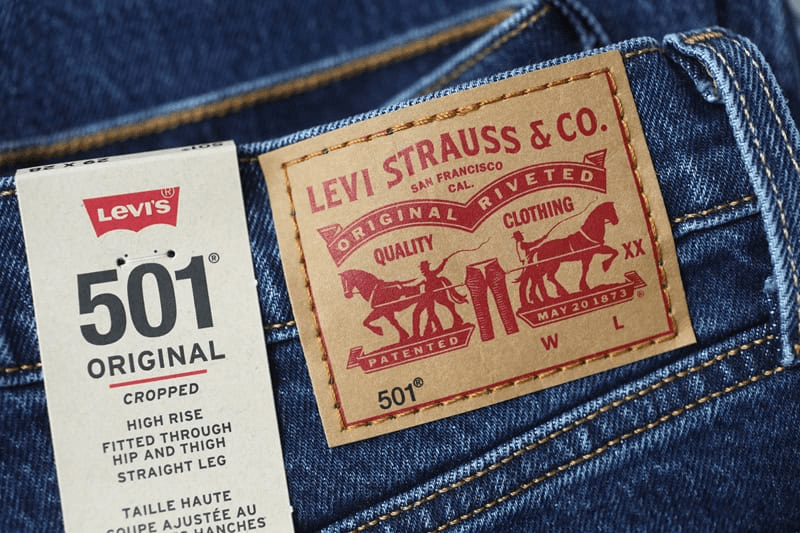
Levi 501 jeans are one of the most iconic denim products in fashion history. Since their introduction in 1873, the Levi 501 has become a symbol of classic American style and durable workwear.
Known for their classic button-fly, timeless fit, and rugged durability, the 501 has been a wardrobe staple for over a century. But if you’re wondering, where are Levi 501 jeans made, you’re not alone. In this guide, we’ll explore the manufacturing locations, production process, and what it means for quality and authenticity.
A Brief History of Levi 501 Jeans
Introduced in 1890, the Levi 501 jeans were originally designed as durable workwear for miners and laborers. Over the years, they evolved into a fashion statement worn by everyone from rebels to rock stars.Upon its appearance, the Levi’s 501® quickly gained popularity among workers because the pants could be adapted to their tough working conditions. Surprisingly, thanks to stars like James Dean and Marlon Brando wearing them, Levi’s 501® quickly gained popularity again among young people in the 1950s, and jeans were officially transformed from workwear to a fashion trend. Despite global expansion, Levi Strauss & Co. has maintained strict quality standards for the 501 line, no matter where it’s produced
Where Are Levi’s 501 Jeans Made
Levi’s 501 jeans are manufactured in multiple countries worldwide. The exact production location varies depending on the market, style, and supply chain logistics at the time of production.
Quick Overview: 501 Jeans Manufacturing Countries
| Region | Main Countries | Strengths | Typical 501 Jeans Products |
|---|---|---|---|
| North America | U.S., Mexico | Close to key markets, faster delivery, mid–high quality | Mid-range and premium 501s, classic fits |
| Asia | China, Vietnam, Bangladesh, India | Large capacity, skilled labor, cost-effective | Mass-market 501s, standard washes, high-volume production |
| Europe | Turkey, Italy | Premium craftsmanship, advanced finishing | Special editions, high-end 501s, fashion-forward washes |
North America
The U.S. and Mexico produce 501s primarily for the North American market. Factories here allow faster delivery, responsive inventory, and advanced finishing for premium lines.
Asia
China, Vietnam, Bangladesh, and India handle the bulk of mass-market 501 production. These countries provide high capacity, cost efficiency, and skilled denim finishing.
Europe
Turkey and Italy produce limited or high-end 501s, featuring premium craftsmanship, specialty washes, and fashion-focused designs.
Why Levi’s Manufactures Jeans in Multiple Countries
Global apparel brands rarely rely on a single factory.
Instead, they work with multiple manufacturing partners to ensure stability and scalability.
Several reasons explain this strategy.
Production capacity
Levi’s sells millions of jeans every year. Meeting this demand requires factories with large production capabilities.
Specialized denim expertise
Denim production involves complex processes such as:
- indigo dyeing
- garment washing
- distressing techniques
- reinforced stitching
Experienced factories specialize in these processes.
Supply chain efficiency
Producing garments in different regions helps brands reduce shipping times and manage global distribution.
Why This Matters for Finding High-Quality Suppliers
Levi’s rigorous production standards set the benchmark for premium denim quality. When looking for alternative suppliers, focus on manufacturers that demonstrate:
- Expertise in water-efficient and sustainable denim finishing.
- Compliance with global labor and environmental standards.
- Proven skill in durable stitching and reinforced designs.
Partnering with suppliers who meet these criteria ensures you can produce jeans that rival Levi’s in both craftsmanship and sustainability.
What Levi’s Global Manufacturing Strategy Means for Buyers & Private Labels
Levi’s shows that consistent denim quality depends on supply chain structure, not the country of production. Key principles include:
- Diversify manufacturing locations to reduce risk.
- Balance cost and time to market for efficiency.
- Use standardized materials and processes to ensure consistent quality.
- Match product lines with factory capabilities to optimize output.
For buyers, retailers, and private-label brands, success comes from selecting the right country for the right product. Applying this logic effectively requires experience with factories, fabrics, compliance standards, and risk management. That’s why many businesses partner with sourcing experts rather than relying solely on “Made in” labels or price.
How Levi’s 501 Jeans Are Made
Understanding how Levi’s 501 jeans are produced helps you evaluate suppliers and understand what goes into maintaining their consistent quality and durability.
1. Product Design and Development
Levi’s design team develops 501 jeans based on current market trends while preserving the iconic 501 vintage style. Fabric selection emphasizes high-quality denim, durable hardware like rivets and zippers, and increasingly sustainable materials such as organic cotton and recycled fibers. This ensures both a classic look and environmentally responsible production.
2. Cutting and Sewing
To prevent shrinkage and maintain fit, Levi’s pre-shrinks denim before cutting. During sewing, panels are carefully assembled and reinforced with metal rivets at stress points, such as pocket seams and belt loops, ensuring the durability that 501s are known for.
3. Finishing and Wash Treatments
The vintage look of 501 jeans is achieved through specialized wash techniques, including stonewashing, acid washing, hand-rubbing, bleaching, and creasing. These treatments give each pair its distinct style while preserving fabric strength.
4. Labeling and Packaging
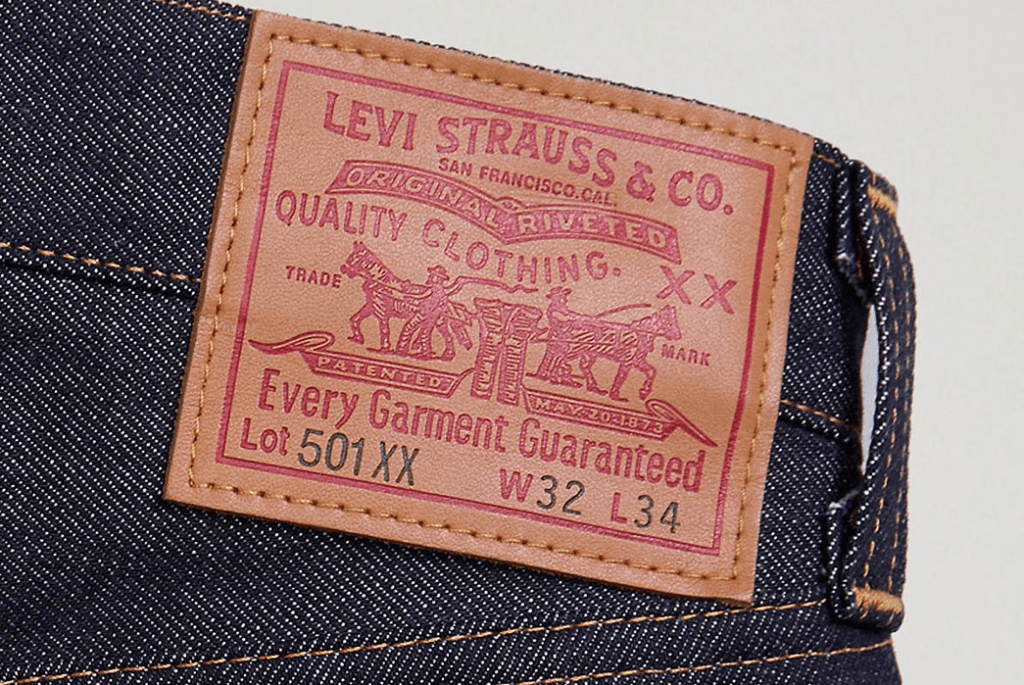
After finishing, 501 jeans receive signature Levi’s labels, including the iconic leather Two Horse Patch on the waistband. Jeans are then sorted by style and size and shipped to distribution centers worldwide.
5. Quality Control
Every stage of production undergoes strict quality checks to ensure the iconic 501 standards are met. From stitching and hardware to wash consistency and overall fit, Levi’s ensures each pair lives up to the brand’s reputation for durability and timeless style.
Are There Factories That Produce Levi’s and Also Work With Private Labels?
Yes, some factories that manufacture Levi’s products also take private-label orders. Large apparel factories often work with multiple brands, producing jeans under different labels based on client specifications.
However, these factories don’t openly advertise their connection to Levi’s due to strict confidentiality agreements. The best way to find them is by researching factories in Levi’s key manufacturing countries, such as China, Bangladesh, Vietnam, and Turkey.
You can also look for denim manufacturers with certifications like WRAP, BSCI, or ISO, as these indicate high production standards. Attending trade shows like Magic Las Vegas or Denim Première Vision and working with sourcing agents can further help you connect with these manufacturers.
If you are looking for a high-quality OEM jeans manufacturer, factories like Newasia Garment Co., Ltd. can help you source reliable suppliers that meet Levi’s quality standards.
Why Did Levi’s Move Production Overseas?
Levi’s shift from U.S.-based to overseas manufacturing was driven by rising domestic labor and operational costs, which made it harder to compete on price with brands already producing abroad. Trade agreements like NAFTA opened cost-effective pathways for sourcing materials and finished goods from developing countries.
Beyond cost savings, this global strategy provided supply chain flexibility, reduced reliance on a single region, and gave access to specialized skills and large-scale production capacity—enabling Levi’s to meet growing worldwide demand. This multi-country approach has since become standard among leading apparel brands.
How Global Brands Choose Denim Manufacturers
Choosing the right manufacturing partner is a critical decision for fashion brands.
Manufacturers must meet strict standards in several areas.
Technical capability
Professional denim manufacturers must have experience with:
- heavy denim fabrics
- advanced washing technologies
- durable stitching construction
Quality control
International brands require strict quality management systems to ensure consistency across large production runs.
Ethical manufacturing standards
Global brands must also ensure that factories follow responsible labor and environmental practices.
Newasia Garment Co.,Ltd – A Trusted Manufacturing Partner
Behind many successful fashion brands are experienced garment manufacturers who handle large-scale production.
Newasia Garment Co.,Ltd. is one of the professional manufacturers supporting global apparel brands.
The company specializes in high-quality garment production and has extensive experience working with international fashion companies.
Newasia provides:
- professional denim manufacturing
- large-scale apparel production
- strict quality control processes
- experienced technical teams
We are also a partner of brands such as American Eagle Outfitters, Uniqlo, Zara, Gap, Levi’s, and Lee.
Working with internationally recognized brands requires consistent quality standards, reliable production capacity, and strong supply chain management.
By combining modern equipment with experienced garment specialists, Newasia helps global brands produce high-quality denim products for international markets.
Why Choose Us
 Independent base We have our own laboratory and can independently develop fabrics , China  Professional certification Certification: ISO 9001, ISO 14001,BSCI,GRS |
 Full-equipped Full-equipped, from fiber manufacturing, yarn spinning, weaving, dyeing and processing to finished product production  Rich experience Professional, large and experienced design team, combined with the latest artificial intelligence technology |
 Our Facilities 12,000 skilled employees, daily production capacity exceeds 100,000 pieces  Fashion exhibition Participated in domestic and foreign fashion weeks and exhibitions many times |
Trusted by Global Clients







Conclusion
Levi 501 jeans are no longer produced in just one country. Instead, they are manufactured through a global network of specialized garment factories.
This international manufacturing model allows brands to maintain consistent quality while serving a worldwide market.
Behind every iconic denim product are skilled manufacturers who bring designs to life through precision production and strict quality control.
Companies like Newasia Garment Co.,Ltd. play an important role in the global apparel supply chain by providing the expertise and production capacity required by leading fashion brands. If you’re looking for flexible, high-quality denim manufacturing, Newasia Garment Co.,Ltd. offers tailored solutions to fit your brand’s needs. Contact us today to start your custom order and elevate your denim production!
FAQ
Q1: Where are Levi 501 jeans made?
A1: Primarily in the USA, China, Vietnam, Bangladesh, and Mexico, depending on product line and volume.
Q2: Does Newasia manufacture jeans for Levi’s?
A2: Yes, we are a trusted manufacturing partner for Levi’s and other top brands.
Q3: Can Newasia produce private-label Levi 501 style jeans?
A3: Absolutely, we specialize in custom denim manufacturing for brands globally.
Q4: How does Newasia ensure quality and sustainability?
A4: Through premium fabrics, eco-friendly processes, rigorous inspections, and ethical labor compliance.
Read more: Where Are Levi 501 Jeans Made? The Ultimate Guide
- Custom T-Shirt Manufacturers China: Private Label Service for Your Brand
- Custom T-Shirt OEM China: Sample + Bulk One-Stop Service
- Best T-Shirt Manufacturers: India vs China (Global Compliance Guide 2026)
- T Shirt Manufacturing in Portugal vs China: Which is More Cost-Effective?
- Bangladesh vs China T-Shirt Manufacturers: Which Has Better Capacity for Large Orders?