

Introduction
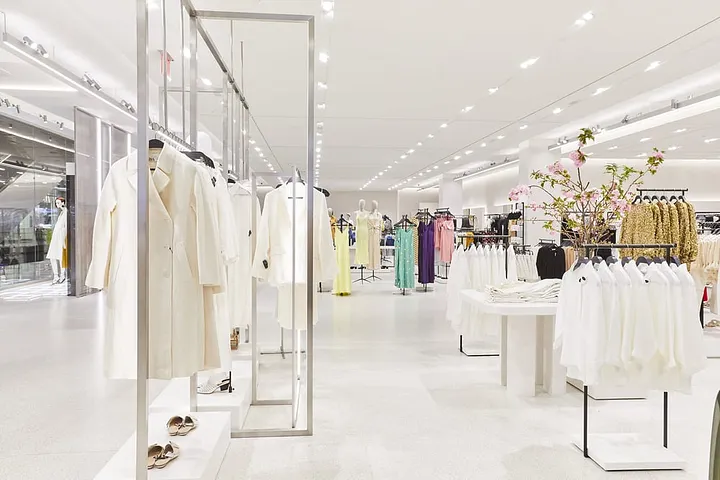
Zara is one of the world’s most successful fashion retail brands – if not the most successful one. With its dramatic introduction of the concept of “fast fashion” retail since it was founded in 1975 in Spain, Zara aspires to create responsible passion for fashion amongst a broad spectrum of consumers, spread across different cultures and age groups. There are many factors that have contributed to the success of Zara but one of its key strengths, which has played a strong role in it becoming a global fashion powerhouse as it is today, is its ability to put customers first. Zara is obsessed with its customers, and they have defined the company and the brand’s culture right from the very beginning.Zara grew from a small retailer to a $77B empire , with low unsold inventory through innovative practices.
Newasia Garment Co.,Ltd. offering customizable manufacturing that adapts Zara’s efficiency for your brand. We are also a partner of brands such as American Eagle Outfitters, Uniqlo, Gap, Zara, Levi’s, and Lee, providing ethical, tailored apparel. If Zara’s case inspires your business, our customization delivers bespoke products with low MOQs and sustainable materials.

The Zara Brand Story
Zara was founded in 1975 in Spain by Amancio Ortega and Rosalía Mera as a family business, initially offering affordable replicas of high-end fashion. The brand gained traction in Spain over 8 years, expanding to 10 stores across major cities.
In 1985, parent company Inditex was established, pioneering the “instant fashion” model—an integrated design, manufacturing, and distribution system that shortened lead times and responded quickly to trends, supported by IT investments and team-based design.
Zara then embarked on aggressive global expansion, entering markets like Portugal, the US, and France. Today, it operates 2,264 stores in 96 countries, ranking as the world’s largest fast-fashion retailer and Inditex’s flagship brand.
Inditex is now the world’s top fashion group, with over 174,000 employees, 7,400+ stores in 202 markets, and 2019 revenues of USD 23.4 billion. Its portfolio includes 7 other brands (Zara Home, Pull & Bear, Massimo Dutti, etc.) covering home goods, casual wear, luxury apparel, and accessories.
Beyond fashion, founder Amancio Ortega launched Pontegadea Inversiones, a global real estate fund managing corporate properties in 9 countries that house big names like Facebook, Amazon, and Apple.
Executive Summary
Zara’s apparel manufacturing and retail model succeeds because it:
- Integrates design, manufacturing, and retail feedback
- Uses short production cycles
- Leverages agile supply chain practices
- Minimizes inventory risks
- Responds to real-time demand
Understanding this model helps brands reduce lead time, improve quality, and scale sustainably.
Zara: A Fast Fashion Pioneer
Founded in Spain in 1975, Zara revolutionized fashion by compressing traditional apparel cycles from months to weeks. Instead of pre-planned seasonal launches, Zara often refreshes collections twice a week in stores.
The key to this responsiveness is a tight loop between manufacturing and retail.
Company Background
- Founded: 1975 in A Coruña, Spain by Amancio Ortega
- Parent Company: Inditex (world’s largest apparel retailer by market cap)
- Global Presence: 2,000+ stores in 96 countries (2023 data)
- Revenue: €32.6 billion (Inditex, 2023), with Zara contributing ~70%
- Core Philosophy: “Democratize fashion” through affordable, trend-driven apparel
Zara’s Integrated Manufacturing & Retail Strategy
1. Design & Trend Capture
Zara’s designers work closely with its retail network to capture real-time trend data.
Store managers input daily sales and customer feedback, which informs design priorities immediately.
This demand-driven design avoids traditional “forecast risk”.
2. Agile Manufacturing
Zara does not rely on massive one-time runs. Instead, it uses:
- Small batch production
- Regional, flexible suppliers
- Rapid sampling and revision
- Close coordination with logistics
This enables Zara to test products quickly and scale winners.
3. Supply Chain Coordination
Zara maintains strong control over:
- Fabric sourcing
- Production planning
- Inventory management
- Logistics and distribution
This ensures manufacturing is aligned with retail demand, not forecasts.
4. Retail Feedback Loop
Zara’s stores are not final sales points — they are real-time data collection hubs.
Daily sales data flows back to design and manufacturing teams, who adjust product assortments dynamically.
Why Zara’s Model Works: 5 Key Principles
| Principle | Impact |
|---|---|
| Demand-Driven Design | Reduces unsold inventory |
| Short Production Cycles | Faster response to trends |
| Small Batch Production | Reduces risk, increases flexibility |
| Integrated Supply Chain Data | Improves accuracy and speed |
| Close Retail-Manufacturing Sync | Ensures alignment |
Proximity Manufacturing Strategy
- European Production Hub:
- 50-60% of production within Spain, Portugal, Turkey, and Morocco
- Enables 2-3 week lead times for new designs
- Higher labor costs offset by reduced inventory and markdowns
- Asian Production for Basics:
- 40-50% in Bangladesh, Vietnam, China, India
- Used for price-sensitive, predictable items
- Longer lead times (4-6 months) planned in advance
Vertical Integration
- Inditex-owned factories: Control over 11 manufacturing complexes in Spain
- Strategic partnerships: 1,800+ external suppliers with close collaboration
- Fabric strategy:
- 50% gray fabric purchased in advance for flexibility
- In-house dyeing and printing capabilities
- Partnership with Tencel, Refibra for sustainable materials
Rapid Production Cycle
Design → Pattern → Cutting → Sewing → Quality Check → Distribution
    (2 days)  (1 day)  (1 day)   (1 week)     (1 day)       (2-3 days)
- Total lead time: 3-4 weeks for new designs vs. industry average 6-9 months
- Small batch production: Initial runs of 5,000-15,000 units per style
- Replenishment capability: Best sellers reordered within 2 weeks
Retail and Distribution Innovation
1.Store as Data Collection Point
- Manager feedback system: Daily reports on sales, customer requests, trends
- Mobile POS devices: Real-time inventory tracking and sales analysis
- Customer observation: Staff document what customers try on but don’t buy
2 Logistics Mastery
- Centralized Distribution:
- Massive automated facilities in Arteixo, Spain (500,000 m²)
- Meco, Spain distribution center serves European stores
- 80% automated sorting and packing systems
- Delivery Frequency:
- Twice weekly to all stores worldwide
- 24-hour delivery within Europe
- 48-hour delivery to Americas and Asia
- Inventory Optimization:
- 85% full-price sales (vs. industry average 60-70%)
- Just 15-20% seasonal markdowns
- 10-15 inventory turns/year (industry average: 3-4)
Technology and Data Integration
1 Design and Production Technology
- 3D design software: Virtual prototyping reduces physical samples
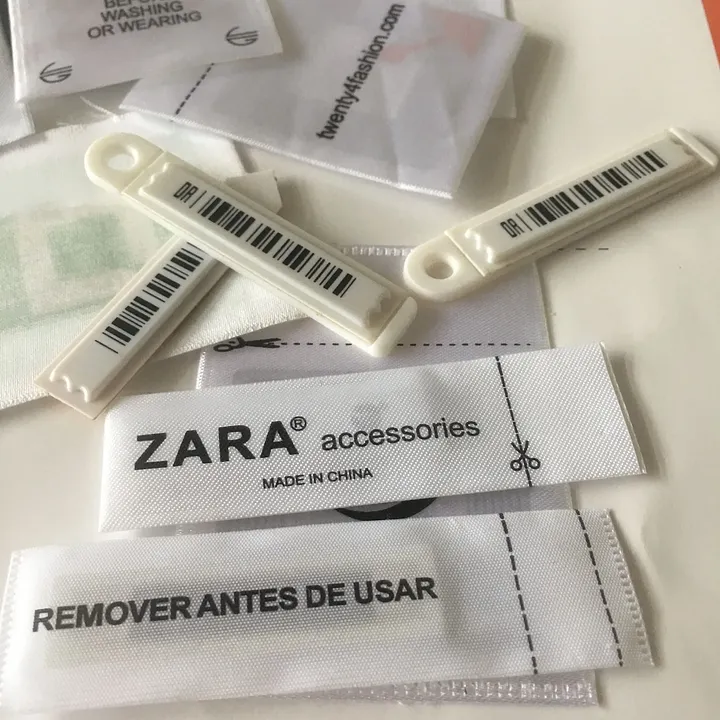
- RFID implementation: 100% of items tagged since 2020
- Automated cutting: Laser and ultrasonic technology reduces waste by 15%
- Digital printing: On-demand pattern application
2 Data Analytics
- Sales data analysis: Real-time tracking of 500 million SKUs annually
- Trend forecasting: AI analysis of social media, runway shows, street style
- Inventory algorithms: Predictive analytics for store-level stock optimization
Sustainability Initiatives and Challenges
1 Environmental Initiatives
- Join Life collection: 55% of garments with sustainable features (2023)
- Circularity programs:
- Clothing collection boxes in all stores since 2015
- 3,500+ tons of textiles collected annually
- Partnership with MIT for textile recycling research
- Supply chain transparency:
- 100% traceable cotton goal by 2025
- 80% renewable energy in owned operations
- Water reduction: 50% in dyeing processes through new technologies
2 Social Compliance
- Code of Conduct: Applied to all suppliers with regular audits
- Worker welfare programs: Partnership with ILO for factory improvements
- Living wage initiatives: Pilots in key manufacturing countries
3 Persistent Challenges
- Fast fashion criticism: Environmental footprint of rapid cycles
- Greenwashing allegations: Despite improvements, overall volume grows
- Labor practices: Occasional violations in distant supplier factories
Financial and Operational Performance Metrics
| Metric | Zara Performance | Industry Average |
|---|---|---|
| Design to Store | 3-4 weeks | 6-9 months |
| Inventory Turns | 10-12/year | 3-4/year |
| Full-price Sales | 85% | 60-70% |
| New Styles/Year | 20,000+ | 2,000-4,000 |
| Markdown Inventory | 15-20% | 30-40% |
| Gross Margin | 56.5% | 48-52% |
Competitive Advantages
1 Speed Advantages
- Trend capture: 15 days from runway observation to store availability
- Risk reduction: Small batches minimize forecasting errors
- Customer engagement: Constant newness drives 17 annual store visits (vs. 3-4 for competitors)
2 Cost Advantages
- Lower marketing costs: 0.3% of sales vs. 3-4% industry average
- Reduced inventory costs: 7.2% of sales vs. 13-15% industry average
- Higher asset turnover: 1.9x vs. 1.2x industry average
3 Customer Experience Advantages
- Scarcity effect: Limited stock creates urgency
- Local adaptation: 20-30% of assortment tailored per region
- Omnichannel integration: Online orders fulfilled from stores (since 2020)
Future Outlook and Industry Impact
1 Zara’s Evolution
- Digital expansion: 30% online sales target by 2025
- Sustainability transformation: Circular collection systems scaling
- Store reinvention: Smaller, technology-enhanced urban locations
- Personalization: AI-driven recommendations and custom options
2 Industry Implications
- New speed standards: Competitors forced to accelerate cycles
- Technology adoption: RFID, AI, and automation becoming essential
- Sustainability pressure: Entire industry facing circularity mandates
- Localization trend: Regional manufacturing gaining importance post-pandemic
Why Choose Newasia Garment Co.,Ltd.
✅ Flexible MOQ –We accept a minimum order quantity of 100 pieces, allowing you to quickly test the market.
✅ Factory-Direct Pricing – We own our production lines, so you don’t pay middleman markups.
✅If a product becomes a hot seller, we can quickly reorder within 7-10 days to ensure uninterrupted sales.
✅We produce a wide variety of products in small batches, eliminating inventory risk.
✅Like Shein, we help you build a supply chain that supports small orders and fast returns.
✅Global Shipping – Experience with international logistics and customs
✅Custom tags and packaging options for bulk buyers, full customization of washes, embroideries and trims to meet your unique needs.
✅Flexible low MOQ for boutique brands + large-scale capacity for wholesalers
✅Trusted by top denim brands worldwide (Levi’s, Lee, Diesel, AEO)
✅Production scale – 140 lines, 12,000 workers, 15–30 day lead time
✅ Wide Fabric R&D and procurement – Organic cotton, recycled polyester, stretch denim, and performance blends.
✅ Private Label Services – Labels, hangtags, packaging tailored to your brand identity.
✅ Size Inclusivity – Full range from petite to plus-size.
✅ Sustainability Certifications – International quality standards – BSCI, OEM/ODM ISO14001 manufacturing certified, organic cotton and sustainable processes
✅ Reliable Lead Times – For in-stock items: ships worldwide within 3–7 days,For custom orders: production lead time 15–30 days
✅ Fast Lead Times – Ready-to-ship stock jeans + made-to-order production.
✅ Global Shipping – FOB and DDP options to the US, EU, and worldwide.
Why Choose Our OEM & ODM Clothing Services?

Our designers and manufacturing Team have years of experience in the clothing industry.

We work with you to create clothing that fits your brand’s unique look.

We use only the best fabrics for your products.


Our Process Setup is Optimized for Mass Production

Handle Customer’s Inquiry
Send us an inquiry and share more details about your projects, and our dedicated team will handle it.

Make Quotation
If your project is suitable for our standard MOQ and production, then we offer an initial quotation based on the techpack, selected fabric quality, and quantity.

Sample Development
After the customer’s approval of the quotation, we proceed with sample development to confirm quality before starting bulk production.

Bulk Production
Following order confirmation and a deposit, we initiate bulk production with all specifications carefully followed.

Quality Control
We follow strictly our QC procedures, ensuring 100% end-line inspections. We also apply AQL 2.5 for final inspections. Third-party QC is always welcome.
Packaging & Shipping
Once the quality is confirmed, the finished products are carefully packaged and shipped in bulk to your warehouse.
Benefits of Buying Direct from tank tops Manufacturers
When you buy directly from a wholesale ladies denim jeans manufacturer like Newasia Garment Co.,Ltd., you gain multiple advantages that streamline your supply chain and boost your margins.

We maintain consistency and high standards, from fabric selection and dyeing to stitching and final packaging.

The more you order, the better the pricing structure, allowing you to maximize your profitability and margin.

Ideal for brands that want unique products—control over colors, GSM, fits, and all branding elements.

In-house, modern production ensures timely delivery, cutting down the typical delays associated with third-party vendors.

Buy factory-direct to cut out unnecessary distribution costs and get the most competitive rates always.
OUR PROCESS





Certified Professional Clothing Producer
We are very proud of these certificates! They represent Newasia Garment Co.,Ltd. ’s amazing achievements and accreditations. They show how much we care about quality, safety, and professionalism.
We’re proud to say that we have obtained BSCI and ISO 90001 certificates, and inspection certificates for filling materials such as down and cotton. We follow international standards throughout our production process and take responsibility for the quality of our products.
As one of China’s leading clothing manufacturers, we are pleased to be recognized by respected organizations. These certifications underscore our reliability as a trusted supplier to the global apparel industry.
Trusted Certificates:
Why Choose Us
 Independent base We have our own laboratory and can independently develop fabrics , China  Professional certification Certification: ISO 9001, ISO 14001,BSCI,GRS |  Full-equipped Full-equipped, from fiber manufacturing, yarn spinning, weaving, dyeing and processing to finished product production  Rich experience Professional, large and experienced design team, combined with the latest artificial intelligence technology |  Our Facilities 12,000 skilled employees, daily production capacity exceeds 100,000 pieces  Fashion exhibition Participated in domestic and foreign fashion weeks and exhibitions many times |
Trusted by Global Clients

Frequently Asked Questions
Q1: What is your Minimum Order Quantity (MOQ)?
We specialize in flexible production solutions to support emerging brands and growing businesses.
- For highly customised or technical garments (such as specialised denim washes or intricate embroidery), MOQ requirements may range from 200 to 300 units.
- Our standard MOQ ranges from 100 to 300 units per design, depending on fabric availability and production complexity.
- For best pricing efficiency, MOQ is typically based on 300 per style per colour.
- You can mix colors and sizes within the same style and fabric for greater flexibility.
Q2: What Services Do You Offer?
We provide full-cycle fashion support, including:
- Sourcing: Local and global raw material, fabric R&D, and procurement (trims) with cost optimization.
- Manufacturing: Custom manufacturing with quality control checkpoints.
- Design & Development: Assistance with tech packs, trend research, and collection building.
- Logistics: Shipping coordination to your warehouse or 3PL.
- Sustainability Consulting: Eco-fabric sourcing, ethical production planning.
Q3: Can I Customize My Designs Fully?
We work with both OEM (your design, our production) and ODM (our templates customized for you) models. Customization options include:
- Fabric type and color
- Fit and sizing
- Printing (screen, DTG, sublimation, embroidery)
- Accessories (zippers, buttons, cords)
- Labels, hangtags, branded packaging
Q4: What are your sustainability practices?
We’re committed to responsible manufacturing through:
- Waste reduction programs and ethical labor practices (BSCI certified)
- GOTS-certified organic cotton and recycled material options
- OEKO-TEX® certified dyes and processing
- Energy-efficient production technology
Q5: What Are Your Lead Times?
For in-stock items: ships worldwide within 3–7 days For custom orders: production lead time 15–30 days Urgent / Express Options: Available at a premium. Timing can vary depending on fabric development, approval cycles, and order complexity.
Q6: What is your production capacity?
Our facility employs 12,000 skilled employees, daily production capacity exceeds 100,000 pieces. We handle orders from 100 pieces to 50,000+ units across:
- Activewear and sportswear
- Denim and casual wear
- Children’s clothing
- Technical apparel
Q7: Where are your garments produced?
Our headquarters are based in China, where we operate our own vertically integrated factory. Our infrastructure and strategically placed worldwide manufacturing facilities allow us to offer extremely competitive pricing for fully custom clothing. offer flexible production options tailored to your needs. All manufacturin
Conclusion
Zara’s apparel manufacturing and retail integration is a powerful case study in supply chain optimization. It shows that speed, flexibility, and feedback loops are the real competitive advantages — not just low cost.
For brands looking to apply similar principles, choosing the right manufacturing partner is crucial.
Newasia Garment Co.,Ltd. offers agile, high-quality manufacturing services that align with fast, data-driven retail strategies.
📩 Contact us to discuss how we can support your brand.
Read more: Case Study on Zara Apparel Manufacturing and Retail- The Ultimate Guide to Sourcing T-Shirt Vendors in China (2026 Update)
- One Stop T-shirt Manufacturer With The Best Quality in China
- Are There Any Cotton T-Shirt Manufacturers in Washington State
- A T-Shirt Manufacturer Planning to Expand Its Workforce: What It Means for Brands & Buyers
- One-Stop “A New Day” T-Shirt Manufacturer – Design to Delivery, Custom Packaging